
Energy

Uttarakhand pushes India to rethink hydropower development

The Uttarakhand disaster has forced a rethink on hydro projects in the Himalayas, says India's top water planner
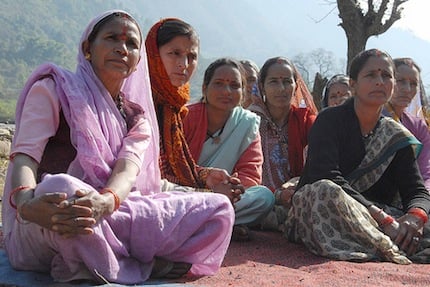
<p>Poverty rates in the mountainous Himalayan regions are much higher than national averages (Image by IRLI).</p>

Poverty rates in the mountainous Himalayan regions are much higher than national averages (Image by IRLI).

The development of hydropower in India is being reviewed after the Uttarakhand disaster, in which flash floods this year killed thousands of people and wrought immense damage in the mountainous region, a senior Indian official has said.

“After the Uttarakhand floods, high-level policymakers and bureaucrats have been in serious discussions, rethinking hydropower development in the country,” said Mihir Shah, member of the Planning Commission of India, adding that there were serious concerns regarding the current pace of hydropower development after the Uttarakhand disaster. This is the first time that a senior Indian member of the government has admitted this on record.

Concerns over hydropower

India is not alone in its concerns. Climate induced disasters are on the rise and there is urgent need to rethink development strategies in the Hindu Kush-Himalayan region, said other worried experts who gathered in Kathmandu in early December for a conference organised by the National Planning Commission of Nepal and the International Centre for Integrated Mountain Development (ICIMOD).

According to the government of India, only 23% of the total hydropower resources have been tapped so far in the country and getting to the remaining resources is a major priority. The government has set the optimum power system mix target at 40% from hydropower and 60% from other sources.

“Undoubtedly India is power hungry country and is under pressure due to increasing demand for the energy but present development of hydropower should  be reviewed and sustainability should be assured,” Shah said.

More than 200 planners, policymakers, experts and development workers brainstormed at the conference, which ended on December 4, to discuss key issues to be included in the post 2015 development goals – the UN Millennium Development Goals will be reviewed in 2015.

“Addressing poverty of the mountain people should be the priority of the countries in the region as there is high degree of inequality to access on natural resources for the mountain people,” said Phrang Roy, an expert from India on rural development.

According to ICIMOD, the poverty rate is on average 5% higher in the mountainous Hindu Kush-Himalayas, than the rate for countries as a whole.

Giving the Nepal perspective, Rabindra Shakya, vice-chair of the National Planning Commission of Nepal, said: “Hydro development is also the priority of the government of Nepal and we are clear that poverty reduction could be done by hydropower development but we are serious on minimising environmental impacts.”

Wei Fangqiang from the Chinese Academy of Sciences in Chengdu said China had been trying to balance development activities in mountains and lowlands.

“We are massively developing the mountainous region as we feel there is an urgency to address people’s needs but we have put education and technology as the priority in mountainous region which will ultimately help reducing poverty in the region,“ Wei said.

The Hindu Kush-Himalayan region extends 3,500 kilometres over all or part of eight countries from Afghanistan in the west to Myanmar in the east. It is the source of ten large Asian river systems. The Himalayas, also termed as the Third Pole, provides water to 1.3 billion people—a fifth of the world’s population.


Cookies Settings

Dialogue Earth uses cookies to provide you with the best user experience possible. Cookie information is stored in your browser. It allows us to recognise you when you return to Dialogue Earth and helps us to understand which sections of the website you find useful.

Required Cookies

Required Cookies should be enabled at all times so that we can save your preferences for cookie settings.

Dialogue Earth - Dialogue Earth is an independent organisation dedicated to promoting a common understanding of the world's urgent environmental challenges. Read our privacy policy.

Cloudflare - Cloudflare is a service used for the purposes of increasing the security and performance of web sites and services. Read Cloudflare's privacy policy and terms of service.

Functional Cookies

Dialogue Earth uses several functional cookies to collect anonymous information such as the number of site visitors and the most popular pages. Keeping these cookies enabled helps us to improve our website.

Google Analytics - The Google Analytics cookies are used to gather anonymous information about how you use our websites. We use this information to improve our sites and report on the reach of our content. Read Google's privacy policy and terms of service.

Advertising Cookies

This website uses the following additional cookies:

Google Inc. - Google operates Google Ads, Display & Video 360, and Google Ad Manager. These services allow advertisers to plan, execute and analyze marketing programs with greater ease and efficiency, while enabling publishers to maximize their returns from online advertising. Note that you may see cookies placed by Google for advertising, including the opt out cookie, under the Google.com or DoubleClick.net domains.

Twitter - Twitter is a real-time information network that connects you to the latest stories, ideas, opinions and news about what you find interesting. Simply find the accounts you find compelling and follow the conversations.

Facebook Inc. - Facebook is an online social networking service. China Dialogue aims to help guide our readers to content that they are interested in, so they can continue to read more of what they enjoy. If you are a social media user, then we are able to do this through a pixel provided by Facebook, which allows Facebook to place cookies on your web browser. For example, when a Facebook user returns to Facebook from our site, Facebook can identify them as part of a group of China Dialogue readers, and deliver them marketing messages from us, i.e. more of our content on biodiversity. Data that can be obtained through this is limited to the URL of the pages that have been visited and the limited information a browser might pass on, such as its IP address. In addition to the cookie controls that we mentioned above, if you are a Facebook user you can opt out by following this link.

Linkedin - LinkedIn is a business- and employment-oriented social networking service that operates via websites and mobile apps.