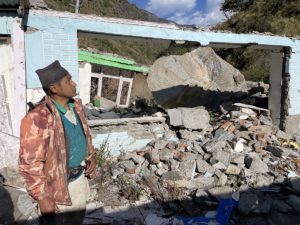
Tone Mickrow, a member of the indigenous Idu Mishmi community, lives a few hours’ drive from Etalin – the proposed site of what has been envisaged as India’s largest dam. Members of his community were elated that the government temporarily denied forest clearance to the Etalin hydroelectric project in December 2022, but Mickrow remains fearful.
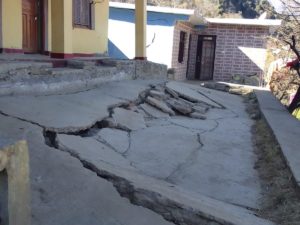
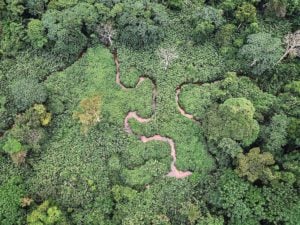
Arunachal Pradesh is one of the most fragile regions in the Himalayas. It lies in a high seismic hazard zone and is therefore prone to earthquakes. Depleting green cover means flash floods and landslides are common. Arunachal Pradesh is also one of the world’s major ecological hotspots, as it is home to many species of plants and animals, including the threatened Mishmi takin and endangered hoolock gibbon, the only apes found in India.
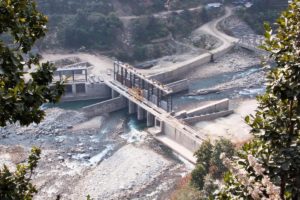
With multiple rivers and valleys, the region is a focal area for a government determined to revive hydropower generation, despite local resistance.
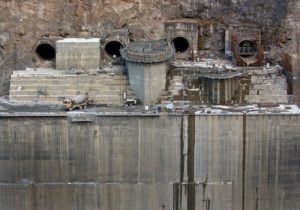
Since the inception of Etalin 14 years ago, the Idu Mishmis have opposed the project on the grounds that it will devastate their livelihoods and threaten their existence. Mickrow is sceptical about the temporary relief granted by the government, as “his experience with dams in the area” tells him the project will likely, eventually, go ahead. Work is underway on other mega-dam projects in Arunachal, such as the 2,000 MW Lower Subansiri and 2,880 MW Dibang.
“Larsen & Toubro [a multinational contractor] has already started working to build the roads and bridges for the construction of [Dibang] dam to start,” said Mickrow. The Lower Subansiri project is expected to be operational this summer.
Renewed push for hydropower
In early 2019, India recognised large hydroelectric projects (HEPs with a capacity of over 25 MW) as central to its renewable energy transition. Since then, there has been a renewed push for hydropower projects in the country, especially in the northeastern states and Jammu and Kashmir. The central government even approved a slew of measures in 2019 giving financial support to hydropower construction.
In February last year, RK Singh, the minister of power and new and renewable energy, said in Parliament: “The development of hydropower is of paramount importance as it is clean, green, sustainable, renewable, non-polluting and environmental [sic] friendly,” adding that it provided the “cheapest energy in the long run”.
The minister spoke of constructing 70 HEPs in 18 states over 10 years. He also said that 36 large HEPs in total are under construction.
Billed by many governments as a ‘clean, green alternative’ to fossil fuels, multiple studies have highlighted the socio-economic, environmental and human costs of building mega-dams. In the past, The Third Pole has reported on:
- the geological, hydrogeological and safety impacts of hydropower projects
- the displacement, corruption and conflict arising from dam building
- the hazards of the invasive design and construction of dams
- the impacts of dams on biodiversity and fisheries
- the carbon costs of mega dams
- the irreversible environmental impact of dams
This year, the Indian finance minister proposed an allocation of INR 350 billion (USD 4.27 billion) for the green transition, net-zero objectives and energy security in the 2023-24 budget, and specifically mentioned pumped hydropower.
Analysis of 2022-23 data from the Indian Ministry of Power’s responses in the Lower House of Parliament (Lok Sabha) and the Central Electricity Authority (CEA) for Arunachal Pradesh shows the extent of the government’s dam-building ambitions, and progress on projects. It is important to note that the data relates solely to large HEPs, and that there are also several smaller HEPs in Arunachal Pradesh.
The data shows as many as six large HEPs at different stages of construction, while 13 have been held up due to various reasons. From 2003 onwards, 21 dams were ‘concurred’, or appraised, in Arunachal Pradesh, of which 13 are yet to be taken up for construction. The CEA concurs projects when it is satisfied with the techno-economic aspects of the proposal.

Shripad Dharmadhikary, coordinator and researcher at Manthan Adhyayan Kendra, a Pune-based centre that monitors and analyses water and energy issues, said that when carrying out appraisals, the CEA needs to “ensure the project is optimal for the river basin” as stipulated in the Electricity Act of 2003. “However, this is hardly done,” he told The Third Pole.
Analysis of the data shows that most projects have been delayed because they are yet to receive either environmental or forest clearance.
The rationale for dams in Arunachal Pradesh
Despite delays, high costs, environmental and socio-economic risks, the Indian government has been persistent in its push for hydropower.
Fears of Chinese dam-building upstream are invoked as another justification for large hydropower projects in Arunachal. The Yarlung Tsangpo, as it is known in China, becomes the Brahmaputra when it flows into India. The two countries have the longest unresolved border dispute – of about 4,000 kilometres – in the world, which includes a dispute on the status of Arunachal Pradesh. While historically there has been calm since the short 1962 war between the two countries, in June 2020 fresh clashes broke out in Ladakh, leading to the first major casualties in 45 years.
There has been no official statement citing this as a reason for dam-building in Arunachal. But unnamed officials have been cited in numerous newspaper articles, including in The Times of India, the widest read newspaper in India, stating that India needs to build dams in Arunachal because China could unleash a “water war” through its control of upstream dams.
Nilanjan Ghosh, director of Mumbai-based thinktank the Observer Research Foundation, said the alleged threat “seems improbable and unrealistic – at best questionable”. This is not least because most of the water in the Brahmaputra comes into the river after it has entered Indian territory. He also pointed to evidence of cooperation between the two countries in the form of flood warnings during the monsoon season.
We don’t want to be refugees on our own lands… Instead, we need support for livelihoods, hospitals and community development centresTone Mickrow
The government also argues that hydropower is linked to development in the area. Ginko Lingi, the chief engineer of transmission and planning at Arunachal Pradesh’s Department of Power, said: “Once the dams start operating, surplus power will be generated. Since transmission lines are better now, the power can also be carried over to other states,” pointing out that it could generate revenue for Arunachal.
However, Mickrow and other local communities question this form of development. “We don’t want to be refugees on our own lands. The dams will cause permanent loss of land we use for grazing mithuns [a highly prized bovine species], as fishing grounds and for medicinal plants. Several villages will be cut off. Instead, we need support for livelihoods, hospitals and community development centres,” Mickrow said.
Experts cast doubt on the financial viability of most of the projects. In contrast to other energy production methods, protracted delays – sometimes decades-long – in HEP construction often result in the government giving projects back to public sector units, such as the National Hydroelectric Power Corporation Ltd.
In addition to this, at least 13 private company-owned projects have been “returned” to project authorities. This underscores the reluctance of companies to proceed with projects as they fear escalating costs and strong opposition from downstream communities.
Despite the availability of some slightly cheaper technologies, the projects are still costly and have required the government to provide subsidies in order to push for the HEPs, pointed out Dharmadhikary, from Manthan Adhyayan Kendra.
On Arunachal Pradesh’s narrative of development, Dharmadhikary said that when the projects can’t be justified on financial grounds, the narrative of development is pushed instead.
The cost of building dams in this area is much higher than the benefit generatedNilanjan Ghosh, Observer Research Foundation
Since HEPs are extremely site-specific with costs incurred from their operation as well as delays, it is difficult to come up with a uniform overall cost for projects, he said. However, two years ago he and his team calculated the costs of operating the Etalin dam, after the Forest Advisory Committee had asked the power ministry to submit its estimate on costs.
The Manthan researchers found that, even with the subsidies that the government says it will provide to make hydropower projects commercially lucrative, the power generated is still not cheaper. In fact, experts say that it needs to be bundled up with solar and wind to make it an effective package for commercial players to buy.
For example, the Lower Subansiri project which is scheduled to be operational later this year has overrun its original costs by more than 200%. The overrun cost is INR 132.11 billion (USD 1.61 billion) higher than the original cost.
Ghosh asks, “Taking into consideration all the other costs that may arise, [such as] the value of lost ecosystem services… elements such as sediments which enhance soil fertility etc – the cost of building dams in this area is much higher than the benefit generated. Also, what about the costs of rehabilitation, displacement and the social cost of conflicts?”