Wanted: a rapid transformation of one of the most complex problems in the world’s poorest continent, to take place in the middle of a food crisis.
Thirty years after the first “green revolution” transformed agriculture in Asia and Latin America, as new seed varieties and copious fertiliser enabled farmers to break out of the subsistence trap, Africa is trying to follow suit.
Throughout the 1980s and 1990s, productivity in African farming failed to keep pace with population growth. Any increases reflected the bringing of more land under cultivation rather than the lifting of yield. Farmers, agronomists and development experts say that new technology alone, particularly in the short term, will bring no radical transformation. Quicker gains can be made by improving markets and transport, which will help expand existing, under-used technologies.
But there is disagreement over whether Africa should seek an agribusiness model based on big commercial farms or concentrate on improving the lot of its millions of smallholders. Moreover, the difficulties in transforming African agriculture are manifold. Some are topological: the continent contains huge varieties of soil and climate, ranging from a Mediterranean climate in the Maghreb to tropical environments to temperate latitudes in South Africa. Crops grown and techniques used in one part often cannot be transferred to others.
So what are the prospects for improvements that will help feed a population approaching one billion? The cause was given a boost when the Alliance for a Green Revolution in Africa (AGRA) — an association of farmers, agricultural businesses, scientists and research institutions — was founded in 2006 with US$150 million from the Rockefeller Foundation — which also played a central role in funding the first green revolution — and the Gates Foundation.
Namanga Ngongi, president of Nairobi-based AGRA, says that while Asian farming systems are dominated by similar varieties of wheat and rice, Africa has a wider range of crops including cassava, sorghum, millet and maize. “One size will not fit all,” he says.
Mpoko Bokanga, executive director of the African Agricultural Technology Foundation (AATF), a public-private research partnership also based in Nairobi, points to big contrasts even within the same country. “In western Kenya, in the northern Rift Valley, there are very fertile areas with high productivity farms whose commercial potential has been well developed,” he says. “Then 50 kilometres away will be forgotten districts whose farms have a third or a quarter of their yield.”
While there are some big river systems, and some areas receive a lot of precipitation, most farming relies on unreliable rainfall: less than 5% of cultivated land is irrigated in Africa, compared with 40% in South Asia.
It will take a while for new technologies to be developed. Africa’s agricultural research capability has received almost as little attention as its soils in recent decades, its cash-strapped governments having cut back heavily on basic science. And given the dissimilarity of agronomic conditions on the continent to those elsewhere, it is not easy to piggyback on scientific breakthroughs designed for other markets.
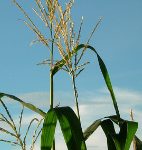
One of the AATF’s projects, for example, is to develop a “water-efficient maize” that will tolerate longer periods of drought, a trait that will become increasingly important if, as appears to be the case, climate change is making rains more variable. The foundation will take basic research donated by Monsanto, the US-based agribusiness group. The International Maize and Wheat Improvement Centre (CIMMYT) in Mexico, a non-profit research institute that played a big role in the first green revolution, will then transplant it into high-yielding maize varieties that will thrive in tropical environments. The varieties then will be distributed to African seed companies without royalties. But Bokanga says that it will be five or six years before strains are available that can be tested in the field.
Further down the road, the green revolution will have to confront one of the most controversial issues in world farming: genetically modified (GM) crops. African countries have been slow to adopt them. South Africa is the only one that has approved a GM variety, although Burkina Faso may be on the point of approving a cotton strain, following its widespread use in India, and Egypt is looking at GM maize.
Some of the aversion to GM in Africa, among governments as well as campaigners, is visceral. In 2002, Zambia refused to accept GM grain as emergency aid in the middle of a food crisis, fearing that it would contaminate local agriculture. The government even rejected offers by the European Union, which has its own deep reservations about GM, to mill the grain before distributing it, to prevent it getting into the farming system.
But Bokanga says that opposition is exaggerated and that farmers are badly informed rather than firmly against. “It is not true that all African governments are opposed to adopting GM,” he says. “You have a lot of opponents to biotech who make a lot of noise and capture the local media, and then the outside media thinks that farmers are opposed. Most farmers don’t know anything about GM.”
For those concerned about the environmental impact, he points out that GM herbicide-resistant maize will allow for soil-friendly “no-till farming” in which there is no need to turn the earth to get rid of weeds. But given the need to set up testing and safety protocols – a task that will severely test the capacity of some of Africa’s states – the widespread adoption of GM, particularly as food crops, looks at least a decade away.
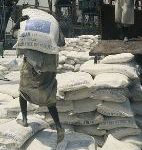
In the meantime, a lot can be done to extend the use of existing technology. In many African countries, particularly the poorer ones, it is not that fertiliser, or better hybrid seeds, do not exist. It is that a combination of poverty, a stunted private sector and weak marketing services prevents them getting to farmers.
Much of the agricultural support apparatus that African governments used back in the 1970s – state marketing boards to which farmers sold their produce, across-the-board fertiliser and seed subsidies, strategic reserves of grain in case of food crisis, target prices maintained by official intervention – were dismantled, often at the urging of the World Bank and other aid donors, which regarded them as wasteful, prone to corruption or positively damaging. (Similar institutions persist in European and American farming, however.) But the vacuum left by the wholesale withdrawal of the state often was not filled by private businesses, leaving farmers disconnected from domestic and international markets.
AGRA, for example, is spending US$40.5 million establishing a network of 10,000 dealers to sell fertiliser and other inputs in rural areas. Some countries, such as the southern African nation of Malawi, are experimenting with “market-smart” subsidies designed to complement and stimulate rather than to replace the private sector.
There is, though, more to the impact of a green revolution on poverty and the availability of food than lifting output. The form that growth takes, and the best way to spread its benefits, are matters of some debate.
Jon Maguire, a British investment fund manager, started an “Africa Invest” fund after visiting Malawi and finding villagers unable to generate a harvest through lack of rain, even though they lived on the shores of Lake Malawi. “I asked them why they didn’t invest in irrigation and they told me that money had not been circulating in the villages for three years,” he says. With no knowledge of agriculture himself, he raised US$16 million in funding, hired local farm managers and bought US$3.5 million worth of sprinklers and other irrigation systems.
His operation now runs 2,500 acres of farms, with another 9,000 “outgrower” families contracted to supply it. They sell paprika peppers and birdseye chillies to the world market, including Spain. “The Spanish were amazed at the quality of the paprika,” he says. Next year, his operation intends to buy what he says is Malawi’s first-ever combine harvester.
Maguire’s solution is large, export-oriented farms with heavy investment in irrigation. “The whole basis of agricultural development has been: how do we help the small farmer?” he says. “You will never solve Africa’s problems like that. You need small and medium enterprises rotating around massive farms that will plug them into the global economy. Our outgrowers now get a piece of the world price and actually benefit from the food price crisis.” Many agronomists disagree. Glenn Denning, director of the Millennium Development Goals Centre in Kenya, says that in very poor countries such as Malawi, the first step is to improve the output and condition of the smallholder farmers, who need to secure their own food needs before they diversify. “Smallholders have proved they can compete if they get the right inputs,” he says. “That is what happened in the Asian green revolution.” Surpluses will build up and farmers then can move into cash-crop farming. Higher smallholder output of basic grains also will benefit the landless and the urban poor, by increasing supply and moderating food prices.
Indeed, the way in which new and existing technologies interact with the economies and societies of Africa is critical, not just to whether the green revolution will work technically but also whether it will bring widespread benefits to Africa’s poor. Andrew Dorward, an academic at London’s School of Oriental and African Studies (SOAS), says that adoption of GM crops resistant to herbicide would, for example, be disastrous for many poor households: the crops would allow the replacement of hand-weeding, which is a big source of income for many.
Left-wing critics of the idea of a green revolution do not doubt that Africa can increase productivity with new seeds and inputs, but say the benefits will go to large corporations and rich farmers. Raj Patel, a fellow at the left-leaning Institute for Food and Development Policy in the United States, recently told a congressional committee that projects such as AGRA, “while perhaps well intentioned, are models of unaccountable and unsustainable technological investment”. He called instead for “programmes that further the adoption and research into locally appropriate and democratically controlled agro-ecological methods”.
Ask five different people in the green revolution debate and you get seven different answers. Africa needs private agricultural suppliers. Africa needs water. Africa needs roads. Africa needs GM crops. Africa needs big farms. Africa needs small farms. The reality seems to be that in such a diverse continent, Africa is likely to need all of them – and more.
© Copyright The Financial Times Ltd 2008
Homepage photo by World Resources Institute Staff