For a long time, Simon Chau was considered a “mad man” by his fellow citizens of Hong Kong. He doesn’t eat meat, he grows his own food and cycles to work, he brings his own bag to the shop and doesn’t have an air-conditioner even though he can afford one. Today, few would consider Chau’s proposal of bringing reusable bags to the shop a peculiar habit. This is partly due to an increasing environmental awareness, as well as a government levy on plastic bags in 2009.
Chau, now a retired academic, has spent the past 30 years bringing green living into the mainstream. He is the founder of a number of influential green groups, including the first organic farm in Hong Kong, the Vegetarian Society and the Green Living Education Foundation.
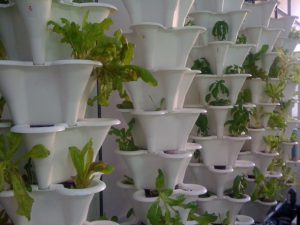
Today, vegetarianism and organic farming have become increasingly popular among urbanites in Hong Kong. It’s not only retirees who are keen to rent a plot of land and grow their own food—young people now contemplate becoming full-time farmers, a vocation their grandparents’ generation tried hard to break away from.
The movement to revitalise local agriculture is also driven by China’s ongoing food scandals. Ninety percent of Hong Kong’s food supply is imported, most of it from mainland China.
Vegetarian restaurants now thrive in the heart of Hong Kong’s trendiest districts. “It’s easier to be a vegetarian today than it was 20 years ago,” said Mr Wang, a 50-year old green living proponent and pious Buddhist. “Nowadays more people understand the benefits of vegetarianism.”
When Wang first told his family he wanted to become a vegetarian, they took it as a sign of his wish to become a monk. It was not until a few years ago that he could finally practise vegetarianism at home. The importance of eating together and people’s pride in their culinary tradition make vegetarianism challenging for many Chinese. There are many anecdotes of families fighting over the dining table because a member of the family wants to become a vegetarian.
With recent changes in attitudes, is Simon Chau still considered mad in Hong Kong? In recent years, he has shifted his focus to the spiritual dimension of green living, that is “to reconnect people with nature” through practices like veganism, meditation and alternative healing. Chau is now a zealous advocate of raw veganism. In September 2013, Chau launched Green Woods, Hong Kong’s first raw vegan restaurant. He and his comrades call their new base a “frontline green living headquarters”.
From the mad man with an exotic lifestyle to a pioneer of green living, Chau is once again being frowned upon as an extremist living in his own bubble. Most locals are unconvinced that it is healthy to consume so much ‘cold’ food, which goes against the principles of hot-and-cold balance in traditional Chinese medicine. But Chau’s admirers believe others will one day be converted.
Environmentalists who are more concerned about the city’s environmental policies criticise Chau for retreating from the most pressing issues in Hong Kong, such as the biased process of environmental impact assessments, unbridled urbanisation and controversial landfill expansion proposals. Critics also question his silence on class and inequality in his pursuit of green living.
Chau insists that the success of the green living movement lies not in making deals with the government or finding technical fixes to environmental problems, but in “changing peoples’ hearts and values.”
The journey of Simon Chau reflects how Hong Kongers’ values have evolved over the last three decades. While people are more open to sustainable living than before, environmental consciousness does not always lead to changes in behaviour.