Food

China should ditch some of its food self-sufficiency targets, says World Bank

An increase in animal feed imports may preserve land and water in China, but could have major implications for climate emissions and land use overseas
English

China has been urged to ditch some of its long-standing food self-sufficiency objectives in an effort to preserve its food security and resources.

Rapid changes in diet in the country – particularly the shift to eating more animal products – has seen a rise in imports of feed crops, including soy and maize.

Controversially, a new report from the World Bank now suggests China should allow these imports to continue to rise. “Such realignment would help China preserve land and save water,” says the report.

The World Bank has predicted China’s self-sufficiency rate in soy will drop to 14% by 2030, while its imports of maize will rise from 2% in 2012 to 15% by 2030.

The organisation goes on to say China should also put a greater emphasis on “improving the environmental sustainability” of its livestock sector, which has been criticised for its contribution to pollution.

However, the report makes no mention of the impact any shift to a greater reliance on food imports will have on land-use in major commodity exporting countries like Brazil.

China is already the largest purchaser of both soy and other agricultural commodities from Brazil – having recently jumped ahead of the EU.  

Its demand is helping to drive intensive farming into previously undeveloped areas of the richly biodiverse Brailzian Cerrado, say observers.

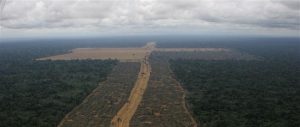
“The Cerrado in Brazil is fast becoming a soybean monoculture largely to feed the Chinese market,” says Janet Larson, from the Earth Policy Institute. “Soybean farmers have been pushing cattle farmers further into the Brazilian Amazon rainforest, leading to the burning of forest with impacts on local biodiversity, regional climate regulation and global carbon emissions.”

Around 40% of the growth in agricultural production in Latin America over the next 35 years is expected to come from opening up new areas of pastureland and forest to farming.

What’s more, China’s new demand for maize imports is likely to place even more pressure on Brazil’s remaining forest ecosystems.

“It’s going to be a real struggle between expanding production area in Brazil and people who are trying to limit deforestation,” says Emelie Peine, a global agribusiness specialist at the University of Puget Sound, Washington. 
Cookies Settings

Dialogue Earth uses cookies to provide you with the best user experience possible. Cookie information is stored in your browser. It allows us to recognise you when you return to Dialogue Earth and helps us to understand which sections of the website you find useful.

Required Cookies

Required Cookies should be enabled at all times so that we can save your preferences for cookie settings.

Dialogue Earth - Dialogue Earth is an independent organisation dedicated to promoting a common understanding of the world's urgent environmental challenges. Read our privacy policy.

Cloudflare - Cloudflare is a service used for the purposes of increasing the security and performance of web sites and services. Read Cloudflare's privacy policy and terms of service.

Functional Cookies

Dialogue Earth uses several functional cookies to collect anonymous information such as the number of site visitors and the most popular pages. Keeping these cookies enabled helps us to improve our website.

Google Analytics - The Google Analytics cookies are used to gather anonymous information about how you use our websites. We use this information to improve our sites and report on the reach of our content. Read Google's privacy policy and terms of service.

Advertising Cookies

This website uses the following additional cookies:

Google Inc. - Google operates Google Ads, Display & Video 360, and Google Ad Manager. These services allow advertisers to plan, execute and analyze marketing programs with greater ease and efficiency, while enabling publishers to maximize their returns from online advertising. Note that you may see cookies placed by Google for advertising, including the opt out cookie, under the Google.com or DoubleClick.net domains.

Twitter - Twitter is a real-time information network that connects you to the latest stories, ideas, opinions and news about what you find interesting. Simply find the accounts you find compelling and follow the conversations.

Facebook Inc. - Facebook is an online social networking service. China Dialogue aims to help guide our readers to content that they are interested in, so they can continue to read more of what they enjoy. If you are a social media user, then we are able to do this through a pixel provided by Facebook, which allows Facebook to place cookies on your web browser. For example, when a Facebook user returns to Facebook from our site, Facebook can identify them as part of a group of China Dialogue readers, and deliver them marketing messages from us, i.e. more of our content on biodiversity. Data that can be obtained through this is limited to the URL of the pages that have been visited and the limited information a browser might pass on, such as its IP address. In addition to the cookie controls that we mentioned above, if you are a Facebook user you can opt out by following this link.

Linkedin - LinkedIn is a business- and employment-oriented social networking service that operates via websites and mobile apps.