As China’s policymakers mull the contents of the country’s next Five-Year Plan, chinadialogue asks a range of contributors what they would like to see in the development blueprint.
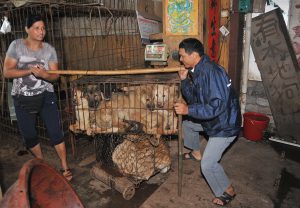
One of China’s most politically destabilising conflicts is the confrontation between its expanding animal protection community and the animal cruelty industries. There are an estimated 130 million dogs in China today. Yet the massive dog slaughter for consumption, say in Yulin of Guangxi, is encouraged by dog-meat traders who use “folk cuisine” to defend their business interests.
China has no dog farms to supply the dog-meat markets of Guangdong, Guangxi and Jilin, and the majority of the dogs that end up there are believed to be stolen household pets or rural watch-dogs. In a suburban village in Jinan of Shandong, 87% of the households interviewed reported dog thefts, while in Guilin two dog thieves were lynched by angry dog owners. The fact that the villagers took extreme measures to defend their own rights shows the intensity of ill feeling. At a time when the Chinese authorities are preoccupied with social stability, this conflict poses a threat.
The food-safety crisis engulfing China is also connected to animal welfare. China does not have safety procedures for regulating the dog-meat trade, for instance. Yet the meat of stolen, sick and dying dogs is sold in markets. Tolerance of this illegal trade has encouraged not only dog thefts but also poisoning. In a police crackdown in Hunan last year, 12 tonnes of poisoned dogs were uncovered. Taiwan and Hong Kong have outlawed dog eating; shouldn’t mainland China follow suit?
China has the world’s biggest animal farming industry. The pigs that washed down the Huangpu River in 2013 were only the tip of the iceberg. The majority of farm mortalities are not carried away downstream, nor even disposed of according to state regulations. They could still be turned into meat products for human consumption or other questionable purposes. Those that survive the concentrated feeding operations and transport to the slaughterhouses are perhaps just as dangerous. Poor animal care and farming conditions have made drug abuse a common practice on Chinese factory farms, while industrialised animal farming has been linked to public health crises, pollution and climate change. Isn’t it time that China searched for alternative farming models?
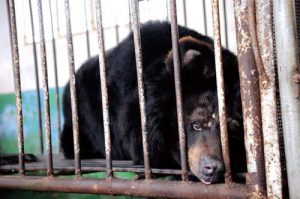
The 13th Five-Year Plan will not only affect China, but the rest of the world too, and in the global fight for wildlife conservation China has a lot to prove. Elephant poaching has reached an unprecedented scale, and China’s legal domestic ivory sale is partly responsible for sustaining or encouraging demand for tusks. Outlawing domestic ivory sales in China would be a major contribution. Cracking down on transnational poaching activities by Chinese nationals would also boost China’s international reputation. Chinese wildlife traders who have gone into the forests and waters of Asia and Africa for tiger parts, pangolins, turtles, rhino horns and bear paws are straining China’s foreign relations. China’s Wildlife Protection Law, which gives priority to “development and rational use” of wildlife, should be revised to remove this policy support.
A debate has been going on in China in the last three years, triggered by an incident in which 18 pedestrians ignored a dying toddler who had been knocked down by a car on a busy street. People ask what has made our people cold and indifferent. “I am not surprised,” commented one animal protectionist. “There are too many practices in our society that are desensitising our people, particularly the young people to the feelings of others.”
Despite government policies discouraging abuse of zoo animals, animal performance, live feeding and photo opportunities with tethered tigers continue in many parts of the country. In most places where dogs are eaten, they get slaughtered in public places, on the side of the roads or in front of restaurants. “My daughter has to witness dog slaughter every morning when she goes to school,” reported one journalist. Such practices impose barbarity on the Chinese public.