Food

A futuristic vertical farm now blooms in Karachi’s old yarn factory

Pakistan’s first vertical farm grows eco-friendly, fresh greens for sale to city’s finest restaurants and markets
<p>Growing under LED</p>

Growing under LED

In 2006, Sohail Ahmed’s once-booming polyester filament yarn plant closed down due to a worldwide recession, alongside lawlessness and a power crisis at home, in Pakistan’s seaside metropolis of Karachi. Twelve years later, Ahmed has converted the top floor of the old yarn factory into a futuristic farm, with kale, rosemary and dozens of other vegetables growing vertically under the purple glow of LED lights.
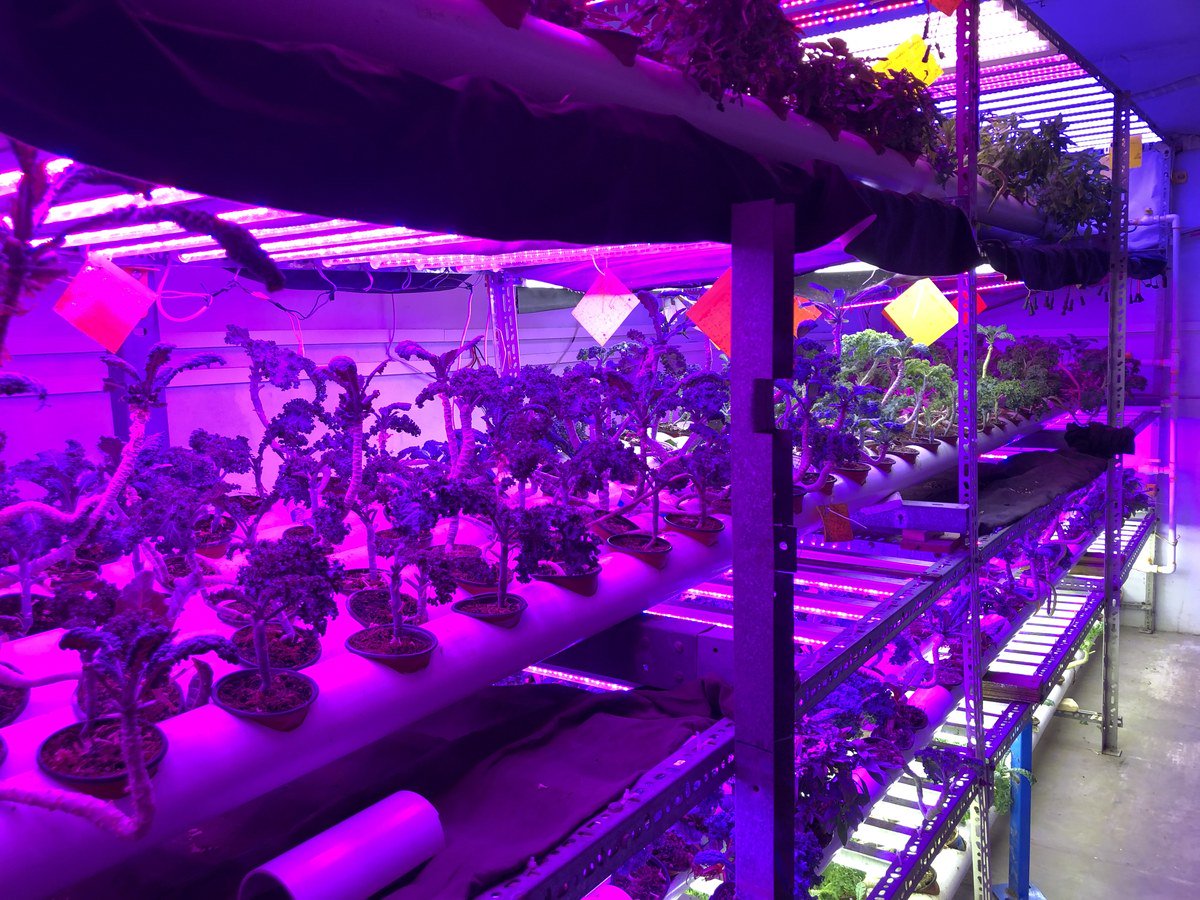
Different types of vegetables, mostly non-seasonal, are grown at this vertical farm at the Site Industrial Area of Karachi, where light, humidity and temperature is optimally controlled
Different types of vegetables, mostly non-seasonal, are grown at this vertical farm at the Site Industrial Area of Karachi, where light, humidity and temperature is optimally controlled. September 26, 2019. (AN Photo)

Pakistan’s first urban vertical farm is a commercial venture, with the produce being supplied to some of the city’s finest restaurants and supermarkets. But the use of hydroponics, where plants grow in nutrient solution instead of traditional soil, and where water is continuously recycled, contributes toward eco-friendly practices by using 90 percent less water than field farming, using no pesticides and omitting gas emissions involved in the long transportation routes from rural to urban centers- all leading to the freshest greens in the city.
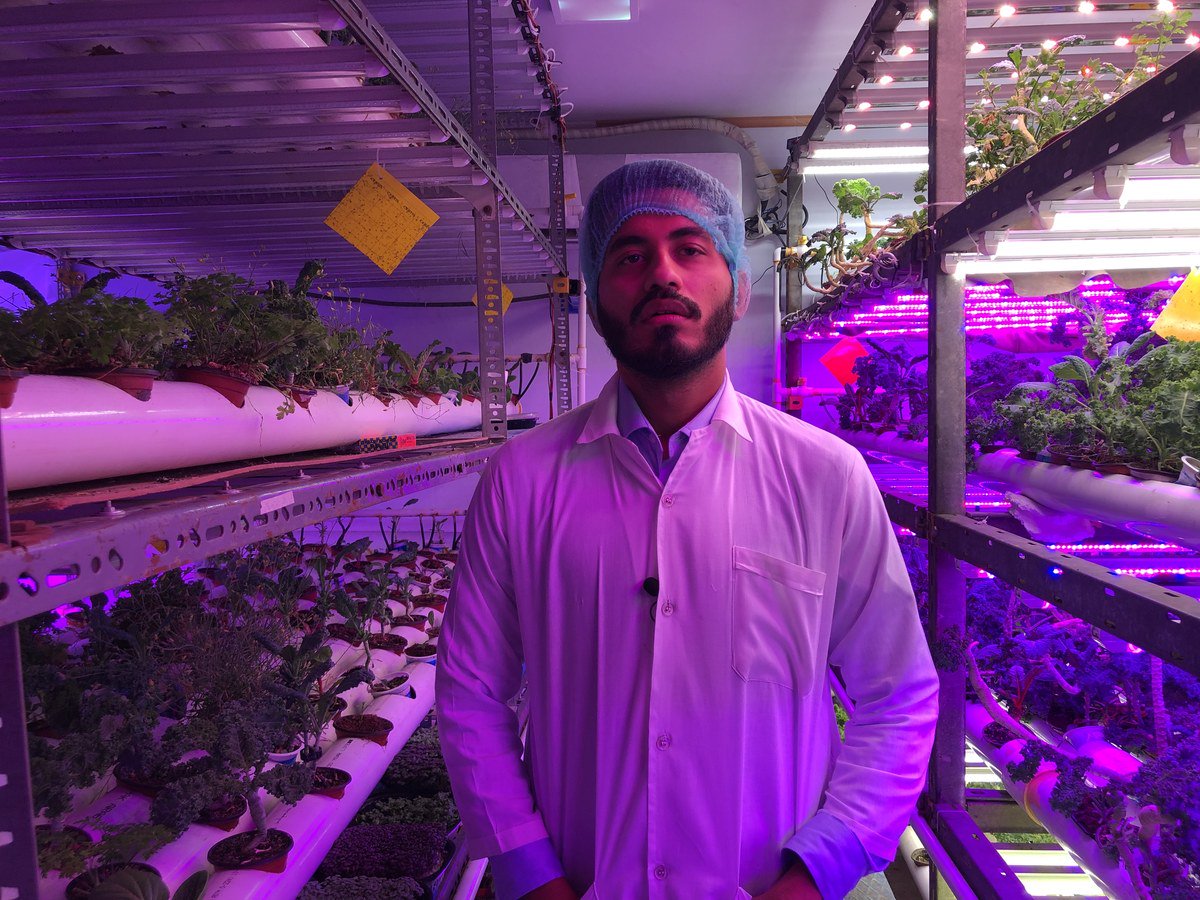
Farhan Sohail, a process and product development engineer in Pakistan’s first vertical farm, speaks to Arab News in Karachi on September 26, 2019 (AN Photo)

“When our family business shut down in 2006, I started to think about different business models with the help of technology. In 2009, I did a course on environmentally friendly and futuristic plant growing technologies. In the next two years, we set up our flower greenhouses in Karachi and Murree,” Ahmed told Arab News, and added that the success of his greenhouses led him to think of urban agriculture as a serious business model.
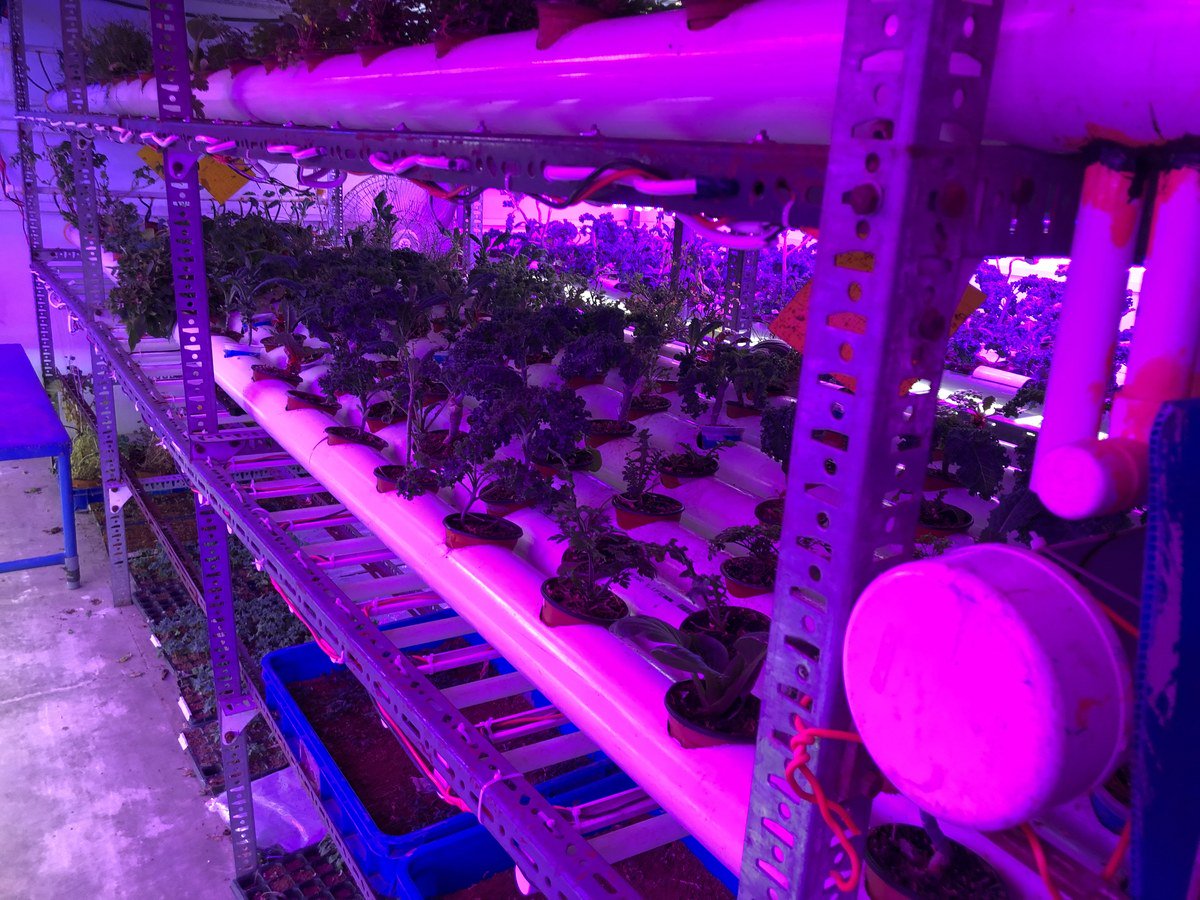
Karachi vertical farm
Different types of vegetables, mostly non-seasonal, are grown at this vertical farm at the Site Industrial Area of Karachi, where light, humidity and temperature is optimally controlled. September 26, 2019. (AN Photo)

Ahmed and his son, Farhan Sohail, an engineering graduate from the American University, started working on the urban agriculture project in 2016 and by April 2018, their vertical farm had been set up in the 60 ft. room, and already blooming.

Farhan, who largely oversees the project, said around 2,500 plants of kale, cherry tomatoes, pak choi, iceberg lettuce, red swiss chard, rocket, basil, capsicum, jalapenos, microgreens, parsley, celery, oregano, rosemary, thyme, and sage are grown within a cycle of 45 to 60 days from the time of seeding to harvesting.
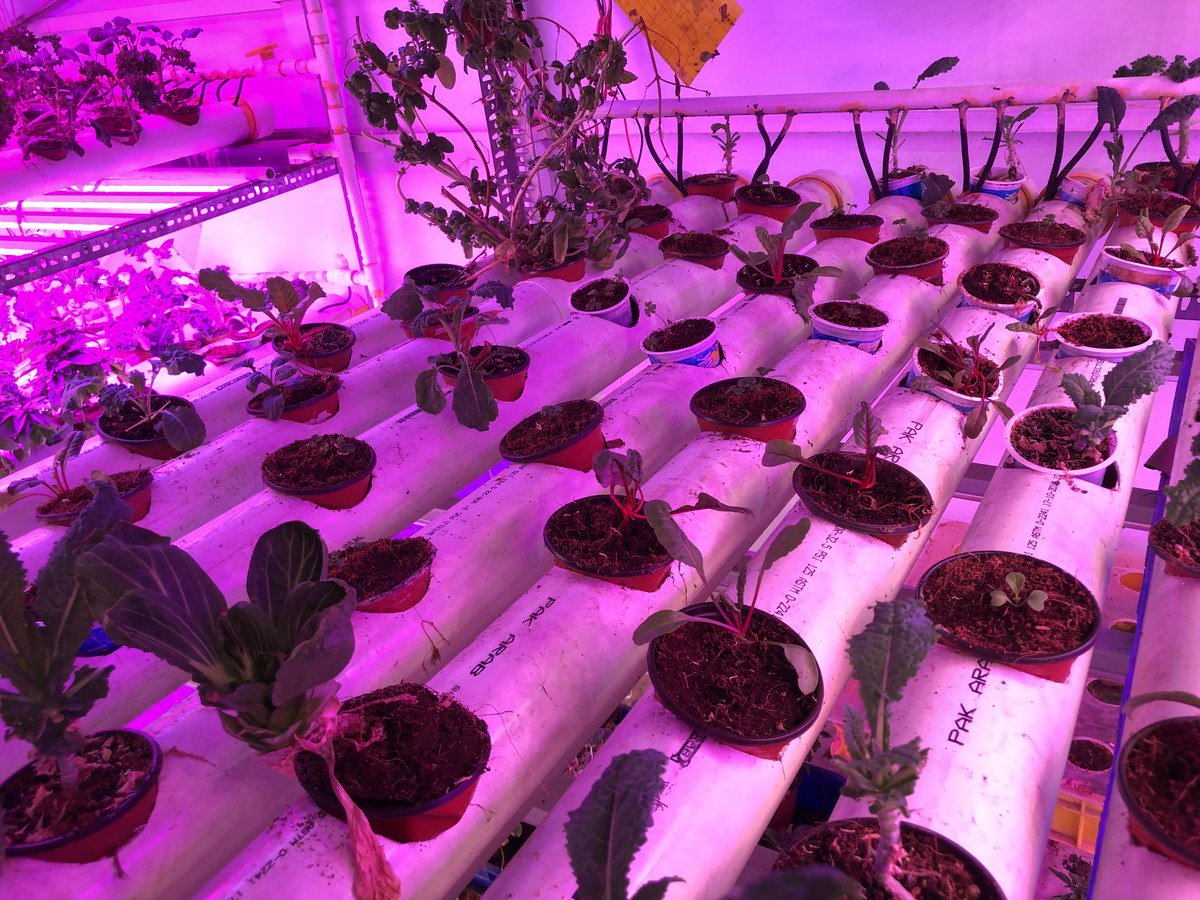
Different types of vegetables, mostly non-seasonal, are grown at this vertical farm at the Site Industrial Area of Karachi, where light, humidity and temperature is optimally controlled. September 26, 2019. (AN Photo)

Farhan explained the nutrient solution traveled from a tank into PVC pipes which became inundated, and because the plants rested inside these pipes, when they were flooded, the roots took water up and the plant watered itself.
Dim LED lights are optimized for every plant, adjusted according to its own declared spectrum.
“In addition to that, we also artificially provide exactly what the plant needs in terms of carbon dioxide, humidity as well as temperature levels,” Farhan said.
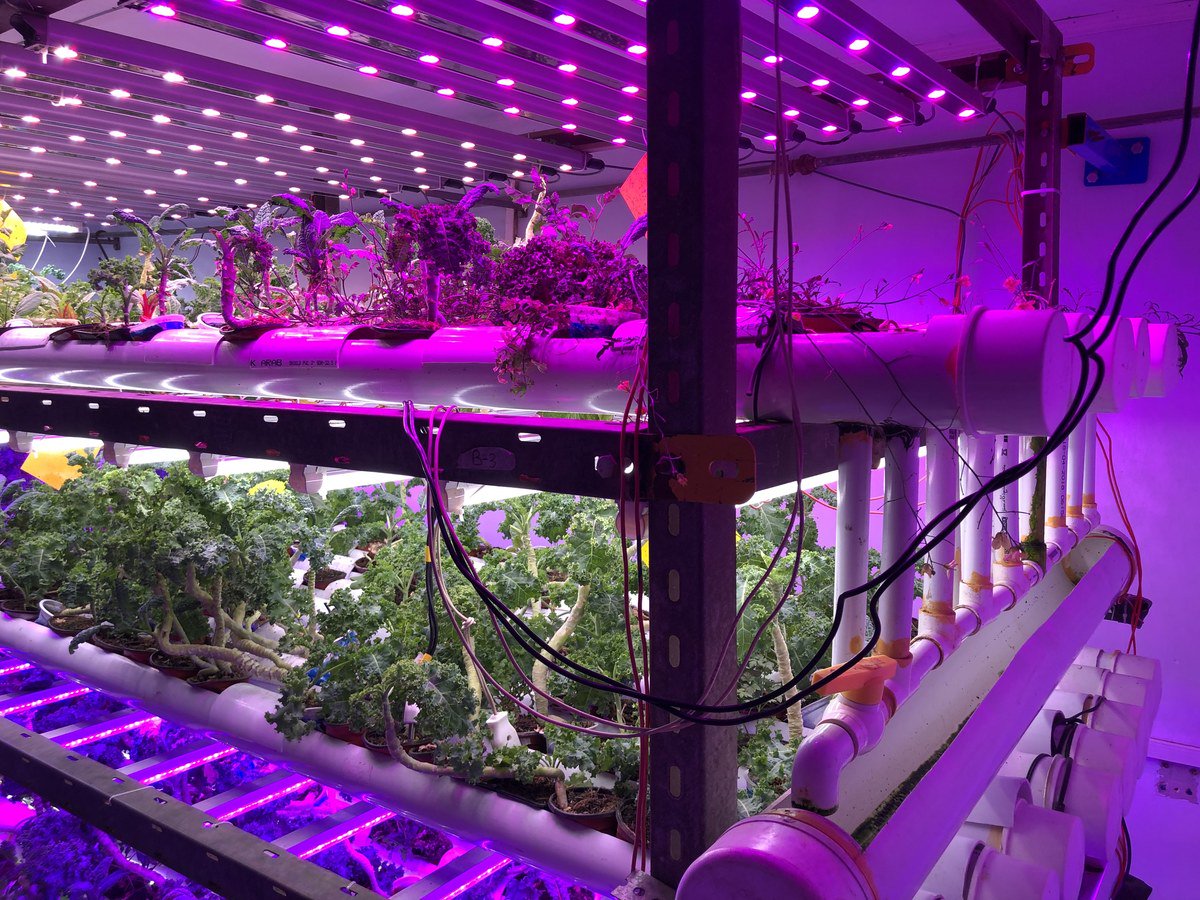
Different types of vegetables, mostly non-seasonal, are grown at this vertical farm at the Site Industrial Area of Karachi, where light, humidity and temperature is optimally controlled. September 26, 2019. (AN Photo)

“We have 70 times more production per square meter as compared to field farming,” he said, and added that the elimination of pesticides and preservatives, meant the produce that came out of his vertical farm was “extremely healthy.”

Urban agriculture is largely immune to the restraints of climate conditions, which force most farmers in Pakistan to stay away from growing certain crops throughout the year and adding to the country’s import bill, Farhan said.
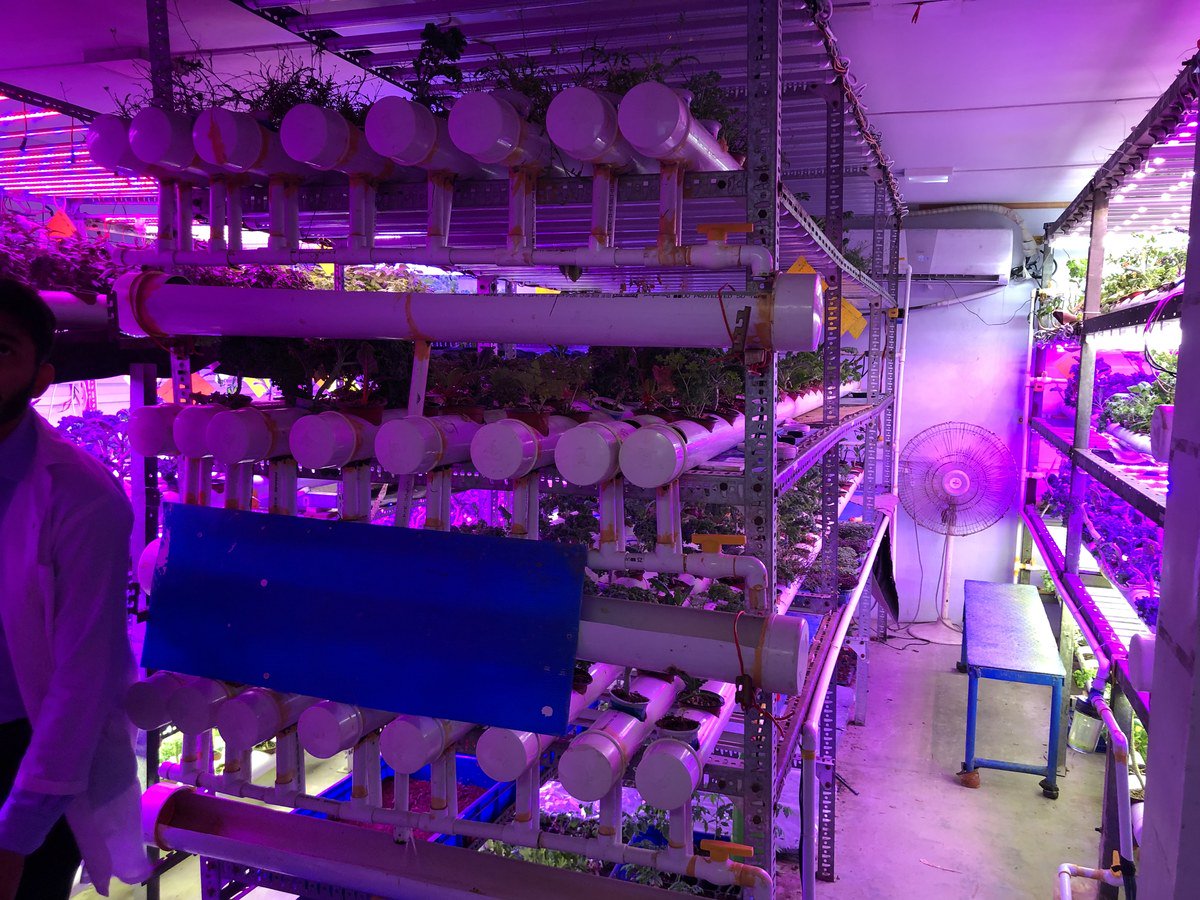
Different types of vegetables, mostly non-seasonal, are grown at this vertical farm at the Site Industrial Area of Karachi, where light, humidity and temperature is optimally controlled. September 26, 2019. (AN Photo)

“Having setups like the vertical farm allow us to grow these vegetables within our own country throughout the year and then send it to the market,” he said, and added that if the model was successful on a large scale, Pakistan could start producing vegetables for export to international markets as well, especially to the Middle East.

This piece was originally published on Arab News
Cookies Settings

Dialogue Earth uses cookies to provide you with the best user experience possible. Cookie information is stored in your browser. It allows us to recognise you when you return to Dialogue Earth and helps us to understand which sections of the website you find useful.

Required Cookies

Required Cookies should be enabled at all times so that we can save your preferences for cookie settings.

Dialogue Earth - Dialogue Earth is an independent organisation dedicated to promoting a common understanding of the world's urgent environmental challenges. Read our privacy policy.

Cloudflare - Cloudflare is a service used for the purposes of increasing the security and performance of web sites and services. Read Cloudflare's privacy policy and terms of service.

Functional Cookies

Dialogue Earth uses several functional cookies to collect anonymous information such as the number of site visitors and the most popular pages. Keeping these cookies enabled helps us to improve our website.

Google Analytics - The Google Analytics cookies are used to gather anonymous information about how you use our websites. We use this information to improve our sites and report on the reach of our content. Read Google's privacy policy and terms of service.

Advertising Cookies

This website uses the following additional cookies:

Google Inc. - Google operates Google Ads, Display & Video 360, and Google Ad Manager. These services allow advertisers to plan, execute and analyze marketing programs with greater ease and efficiency, while enabling publishers to maximize their returns from online advertising. Note that you may see cookies placed by Google for advertising, including the opt out cookie, under the Google.com or DoubleClick.net domains.

Twitter - Twitter is a real-time information network that connects you to the latest stories, ideas, opinions and news about what you find interesting. Simply find the accounts you find compelling and follow the conversations.

Facebook Inc. - Facebook is an online social networking service. China Dialogue aims to help guide our readers to content that they are interested in, so they can continue to read more of what they enjoy. If you are a social media user, then we are able to do this through a pixel provided by Facebook, which allows Facebook to place cookies on your web browser. For example, when a Facebook user returns to Facebook from our site, Facebook can identify them as part of a group of China Dialogue readers, and deliver them marketing messages from us, i.e. more of our content on biodiversity. Data that can be obtained through this is limited to the URL of the pages that have been visited and the limited information a browser might pass on, such as its IP address. In addition to the cookie controls that we mentioned above, if you are a Facebook user you can opt out by following this link.

Linkedin - LinkedIn is a business- and employment-oriented social networking service that operates via websites and mobile apps.