![<p>Shrimp earn a large amount of revenue for Bangladesh, and are dubbed “white gold” [image by: Mohammad al Masum Molla]</p>](https://dialogue.earth/content/uploads/2018/02/Snapshot-16-Copy-768x430.png)

Radiya Ahmed was happy to buy a kilogram of giant shrimp for BDT 500 (USD 6) from a local kitchen market. They were so big that nine shrimps made a kilo. Radiya, a housewife who lives in the Mohammadpur area in Bangladesh’s capital city, Dhaka, was going to prepare the famous Bengali dish prawn malai curry (prawn curry with cream). She thought it would be a lovely treat for her children on the weekend.
When she started washing the shrimp, she felt something odd in one of shrimps. Curious, she pinched the shrimp around the base of its head, and a jelly-like substance, which was elastic in texture, fell out.
“It looked exactly like jelly. I’ve heard about it from many people, but saw this for the first time in my life. It’s frightening,” said Radiya.
Injecting jelly, gum, water, rice starch and other substances into shrimp, is nothing new in Bangladesh. Some dishonest traders and middlemen have been doing this for quite a long time in order to boost their weight and make the shrimps appear healthier, said experts and people involved in the business.
The malpractice has come down significantly due to government actions against exporters. Unfortunately local markets are still flooded with adulterated shrimp.
The fisheries authority and other law-enforcement agencies regularly carry out drives against the unscrupulous traders. News of tonnes of shrimps, injected with substances, being destroyed often hit the newspapers.
Shrimp is one of the major export items in Bangladesh, and is locally called “white gold”. The total shrimp and prawn production has increased from 160,000 million tonnes in 2002-03 to 245,000 million tonnes in 2016-17 and its growth rate is 4.67%, according to the latest data from the Department of Fisheries.
Frozen shrimp and fish are the third biggest export earning sector of Bangladesh after garments and jute. The country exports these products to more than 50 countries, including Belgium, UK, the Netherlands, Germany, USA, China, France, the Russian Federation, Japan, and Saudi Arabia.
In 2016-17, the country earned BDT 42,876 billion (USD 515 million) by exporting around 68.31 billion tonnes of fish and fisheries products, said the data.
Greed knows no bound
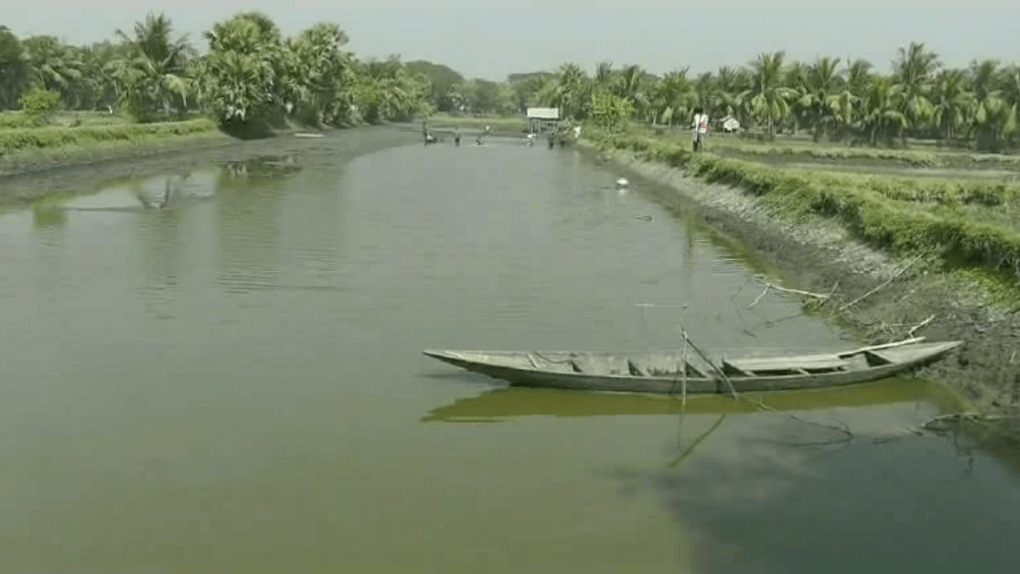
“Some dishonest traders use these substances to increase the weight of the shrimps. They do it for greed. No fish farmer dares to do it as it will put his reputation at stake,” said Kazi Rabiul Islam, an owner of several shrimp enclosures in Kaliganj upazila of Satkhira, one of the main shrimp growing regions in Bangladesh.
Masum Molla]
The traders first buy the shrimps and then inject the substances in order to add weight and thus earn a greater profit, he said, adding that this practice happens during the harvest of giant shrimps like black tiger, locally known as Bagda.
In the coastal districts, he said, these traders use sagu (a starchy supplement used in cooking, extracted from tapioca) between the shrimp’s bodies and head. The traders in places like Dhaka inject expired jelly into the shrimp due to its availability.
“Using such substances boosts the weight five to eight kilograms per maund (hundred kilogrammes),” said Rabiul, who has been harvesting shrimp for over two decades. “It’s very hard to detect the substances upon superficial inspection,” he added.
Sheikh Asfarul Alam, a fish farmer in Khulna area, said traders involved in the malpractice especially in the big cities like Dhaka and Chittagong are organised and maintain a strong network.
“This has to be busted,” he said.
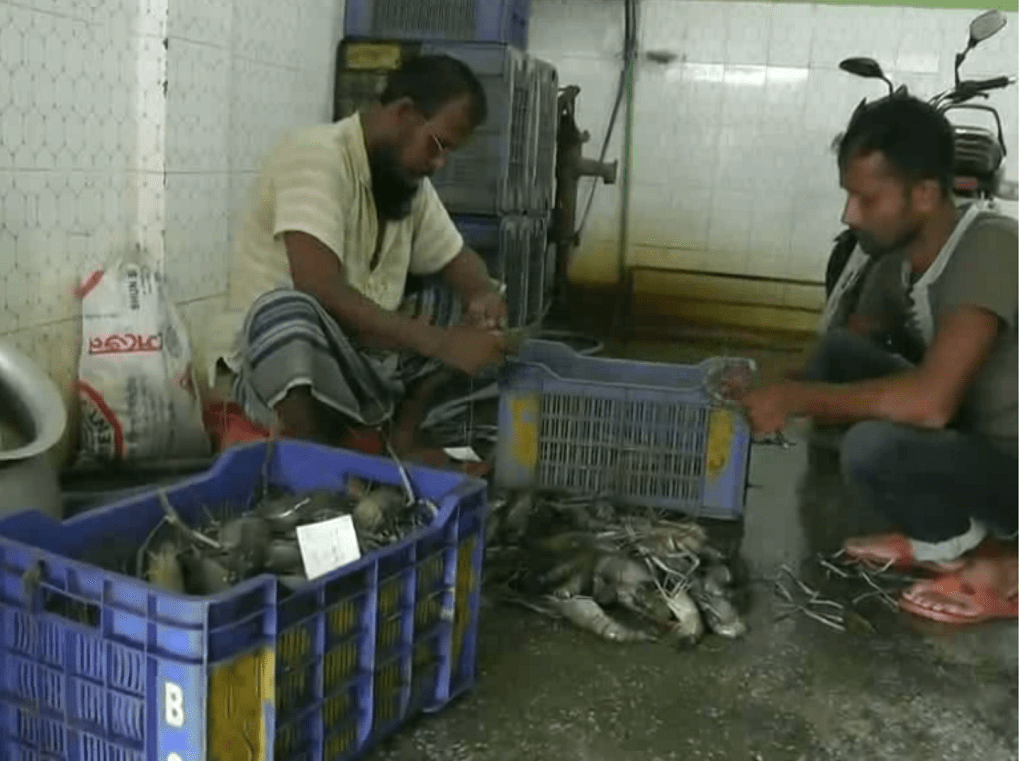
Masum Molla]
Shrimp exporters fear losing their overseas markets if such malpractice goes on and consignments with adulterated shrimps are detected by importers abroad.
S Humayun Kabir is one of those deeply concerned by the practice. He is the chairman and managing director of Amam Sea Food Industries Limited, and also the director of the Bangladesh Frozen Food Association.
He told thethirdpole.net that, “Our export market is gradually shrinking due to such malpractices. It is also tainting our image abroad.”
It also caused a slump in the prices of shrimp in the international market as unscrupulous traders also inject barley, water, and other liquid substances into the shrimp.
“We exported shrimp at 12 USD per kg a year ago, but now it stands at 6 USD,” he said, adding that the UK imported 70% of total shrimp while other European Countries imported 85% of black tiger variety that Bangladesh exports.
He said the exporters remain unaware of this issue in many cases when they buy shrimps from the traders. Eventually they have to destroy the shrimp after finding such substances.
Kabir’s hope, though, rests on the authorities taking care of the quality of exported shrimp. The Bangladesh Frozen Foods Exporters Association and the Department of Fisheries do regular examinations of exported shrimp.
Echoing a similar view, Mohammod Kamruzzaman Hossain, the chief fisheries extension officer at the Department of Fisheries, said there was a time when many consignments were returned due to this malpractice. But the government is now fully aware of the problem.
“Now we regularly carry out mobile court drives in an effort to stop this practice, which had impacted the earning of foreign currency,” he added.
Like others, he too blamed the small traders and the middlemen behind the scandal.
Sources in the Department of Fisheries said the traders see the chance to increase their profits by injecting shrimp, and are willing to cheat even if the health of consumers is endangered.
Impact on health
“The injected substances have no food value and could create digestion problems,” said Rashid-E-Mahbub, a doctor who is the chairman of the National Committee of Health Rights Movement, a platform working on people’s health rights.
He said children might also fall ill if the substances were not washed out properly.
ABM Faroque, a professor at the Department of Pharmaceutical Technology of Dhaka University, said that people can become ill after having adulterated shrimp if they are laced with contaminated water.
The experts stressed the need for ensuring stringent monitoring mechanism to check the menace and called upon the consumers to be careful about the adulterated shrimp.
But people like Radiya sought more proactive role on the part of the government.
“It’s an issue that the government must address,” said Radiya. So far, though, the government seems more focussed on ensuring the health of foreigners to whom the country imports shrimp, than that of its own citizens.