Food

Bhutan’s oranges threatened by disease and climate change

Mandarin oranges, Bhutan’s biggest food export, are being threatened by the presence of a new virus and the effects of climate change
<p>Citrus trees [image by Nadiatalent]</p>

Citrus trees [image by Nadiatalent]

A deadly virus

For more than three decades, mandarin (orange) orchards in Bhutan have provided farmers and orange exporters with more than just a livelihood option. In 2014, exports of the fruit brought more than USD 10 million to Bhutan. Unfortunately, this prosperity is now under threat. Over the last few years, Bhutan has joined a set of countries plagued by a virus called ‘citrus greening’, or Huanglongbing. The virus, travelling on the insects that feed off citrus plants, clogs the nutrition system of the plant, making the trees produce bitter, green fruit. Once infected, it is impossible to save the trees and they must be destroyed.
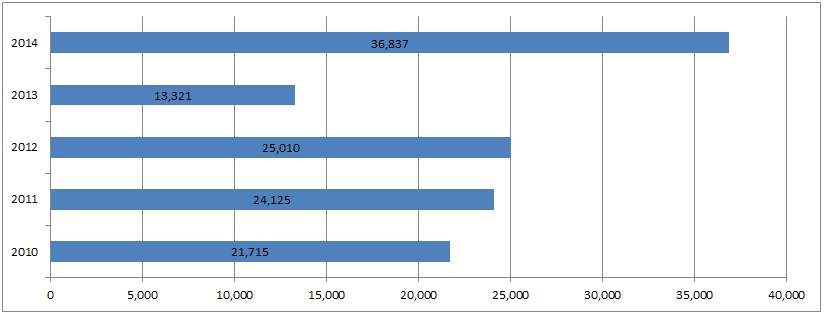
Mandarin export

Metric tonnes of mandarins exported by Bhutan per year [data from: http://www.bhutaniea.org/files/ExportRecords2016.pdf]

Dorji, 56, who lives in a remote village in Bhutan’s southern district of Dagana, recalled how the 500 plants in his orange orchard used to provide enough income to take care of his family of six. In 2012, though, his entire orchard, as well as those of his neighbours, was burnt down due to the infection of citrus greening.

In citrus greening disease the fruit remain green and bitter [image by USDA]
“I was not sad as we were [compensated by being given land for] a new orchard plantation,” Dorji told thethirdpole.net. Unfortunately for Dorji, though, the new plants began to fail a year after they started to bear fruit. Like Dorji, hundreds of orange growers of Dagana, Tsirang, Sarpang, Samtse, Samdrupjongkhar, Zhemgang and PemaGatshel districts are faced with similar problems. Last December, local leaders of Nanglam village in Bhutan’s southwestern district of SamdrupJongkhar said that they might not be able to meet their annual performance agreement to produce 600 metric tonnes of oranges. This was because most trees were either not bearing fruit or the fruits were falling off the trees before ripening.

Climate change also strikes

Thinley Zangpo, an agriculture extension officer in Panbang, where orange growing farmers suffered major losses last year, said, “Other factors, such as erratic rainfall due to climate change, are also affecting flowering and fruition of orange groves.”

Passang Tsheirng, district agriculture officer of Dagana, added, “Since last few year, we have been witnessing drastic changes in rainfall patterns due to which orange trees don’t get the required watering.” These fluctuations affect soil moisture, hampering the growth of the fruits. Earlier, he said, rainfall was timely and people did not need to water orange plants.  However, people do not understand that the change in rainfall pattern could hamper the growth of their orange produce, thus they do not feel the necessity to water their plants.

“We have started encouraging people to water their plants to meet the water requirement of the plants,” he said.

New crops

As a consequence, the farmers are trying to diversify their products. Dorji has started cardamom plantation on two acres of his land, like many other farmers of Dagana and Tsirang. “I believe cardamom is likely to replace oranges in future,” said Dorji. Cardamom requires less land than oranges, and could also fetch a higher price. In Zhemgang district, some farmers have already started growing avocados as a response to low orange production. Similar problems were also reported from other southern districts of Tsirang, Samtse and Sarpang.
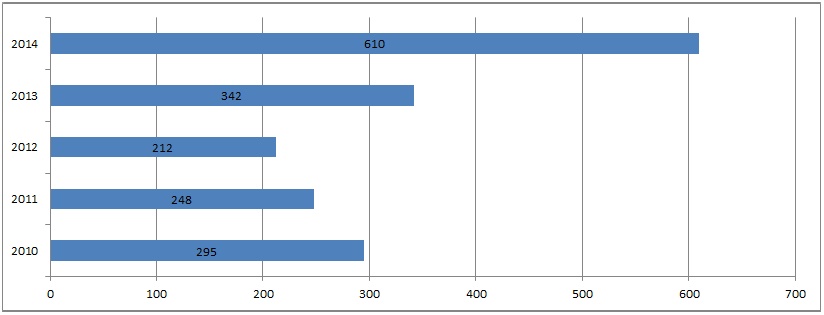
cardamom export

Metric tonnes of cardamom exported by Bhutan to Bangladesh per year [data from: http://www.bhutaniea.org/files/ExportRecords2016.pdf]

District agriculture officials told thethirdpole.net that farmers were increasingly growing alternative crops such as kiwi fruit, mangoes, avocados and cardamom in place. The agricultural ministry is trying to encourage farmers to cut down dried citrus trees and plant new ones to avoid spreading of citrus greening. They fear that, “If farmers choose to abandon citrus (orange) over other plant, they would face difficulties when it comes to marketing. Unlike oranges, other fruits face a high degree of market competition.”


 

Cookies Settings

Dialogue Earth uses cookies to provide you with the best user experience possible. Cookie information is stored in your browser. It allows us to recognise you when you return to Dialogue Earth and helps us to understand which sections of the website you find useful.

Required Cookies

Required Cookies should be enabled at all times so that we can save your preferences for cookie settings.

Dialogue Earth - Dialogue Earth is an independent organisation dedicated to promoting a common understanding of the world's urgent environmental challenges. Read our privacy policy.

Cloudflare - Cloudflare is a service used for the purposes of increasing the security and performance of web sites and services. Read Cloudflare's privacy policy and terms of service.

Functional Cookies

Dialogue Earth uses several functional cookies to collect anonymous information such as the number of site visitors and the most popular pages. Keeping these cookies enabled helps us to improve our website.

Google Analytics - The Google Analytics cookies are used to gather anonymous information about how you use our websites. We use this information to improve our sites and report on the reach of our content. Read Google's privacy policy and terms of service.

Advertising Cookies

This website uses the following additional cookies:

Google Inc. - Google operates Google Ads, Display & Video 360, and Google Ad Manager. These services allow advertisers to plan, execute and analyze marketing programs with greater ease and efficiency, while enabling publishers to maximize their returns from online advertising. Note that you may see cookies placed by Google for advertising, including the opt out cookie, under the Google.com or DoubleClick.net domains.

Twitter - Twitter is a real-time information network that connects you to the latest stories, ideas, opinions and news about what you find interesting. Simply find the accounts you find compelling and follow the conversations.

Facebook Inc. - Facebook is an online social networking service. China Dialogue aims to help guide our readers to content that they are interested in, so they can continue to read more of what they enjoy. If you are a social media user, then we are able to do this through a pixel provided by Facebook, which allows Facebook to place cookies on your web browser. For example, when a Facebook user returns to Facebook from our site, Facebook can identify them as part of a group of China Dialogue readers, and deliver them marketing messages from us, i.e. more of our content on biodiversity. Data that can be obtained through this is limited to the URL of the pages that have been visited and the limited information a browser might pass on, such as its IP address. In addition to the cookie controls that we mentioned above, if you are a Facebook user you can opt out by following this link.

Linkedin - LinkedIn is a business- and employment-oriented social networking service that operates via websites and mobile apps.