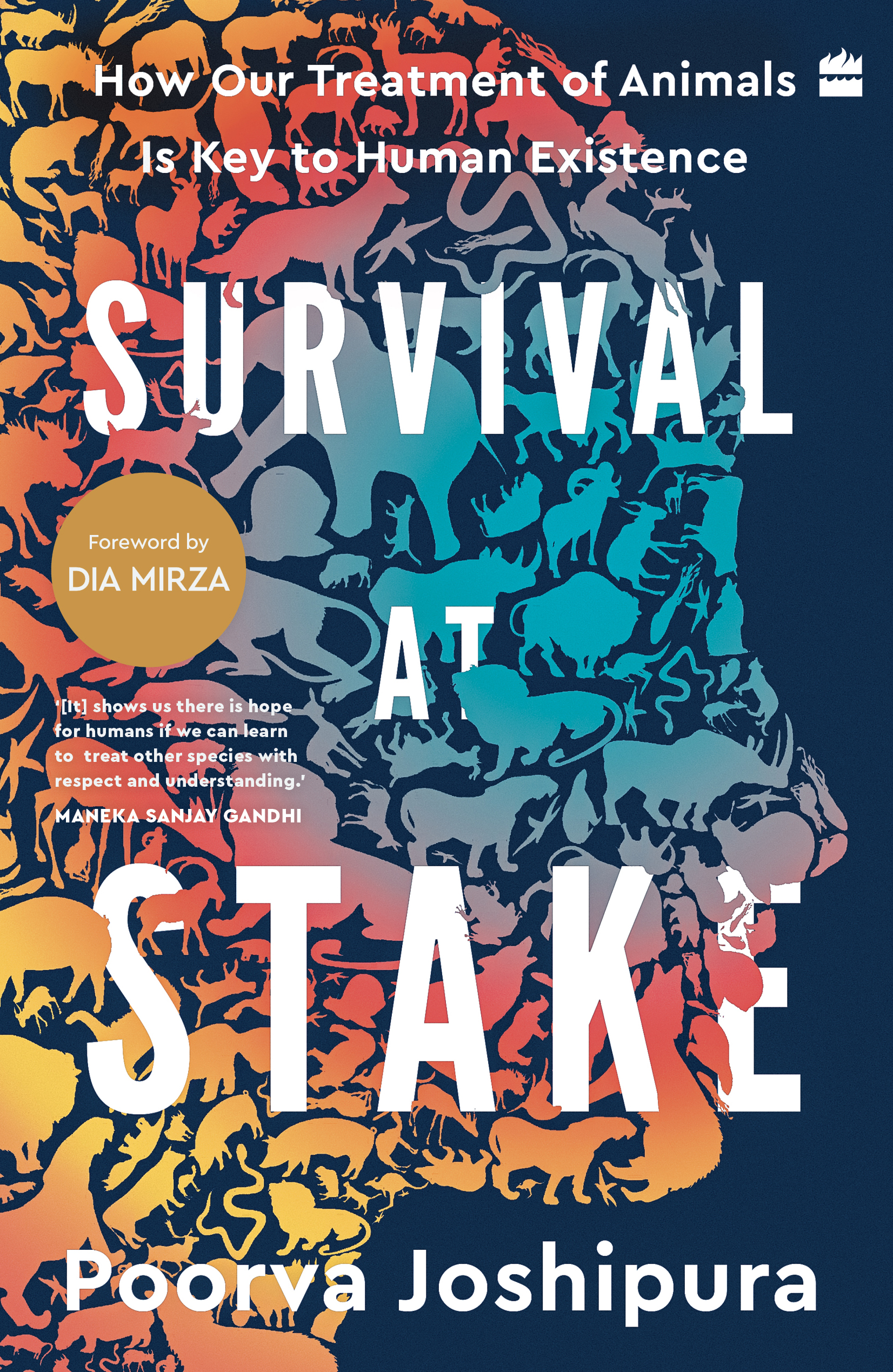
Poorva Joshipura’s heavily-researched book, Survival at Stake, is a devastating catalogue of both human cruelty towards animals, and also how our unrestrained exploitation of the animal kingdom endangers humanity. Joshipura’s work with the People for the Ethical Treatment of Animals (PETA) Foundation UK underpins her arguments, and she offers granular details to back up her claims. Unfortunately, by focussing overwhelmingly on what she defines as the well-being of animals, Joshipura makes some critical errors.
The book begins by focussing on the Covid-19 pandemic. Joshipura explains how the fresh wildlife markets in China – where animals are kept in terrible conditions, with little room to move, often wallowing in each other’s filth – offered a perfect crucible for a zoonotic disease to spread around the world. Joshipura argues that the poor conditions in which animals are kept makes it easy for diseases to spread – between animals, and also from animals to humans (like Sars, Ebola, Covid-19). Joshipura argues that, by neglecting animal wellbeing, we endanger ours, and this applies not just to wildlife farms, but also to animal experimentation and the global meat industry.
The meat industry and climate change
The fourth and fifth chapters of Joshipura’s book, titled Code Red and In Need of a Sea Change, directly link the meat industry to climate change. She writes that “systems linked to animal agriculture… occupy nearly half of the global surface area.” This may be an overstatement, because the 2013 paper she cites states “the livestock sector occupies 30% of the world’s ice-free surface”. Nonetheless, it is the “largest land-use system on Earth”. The impact of the meat industry has been so extreme that 60% of all mammals are livestock. Since humans account for another 36% of all mammals, only 4% of mammals are those that are not either humans, or food for humans. According to the Food and Agriculture Organization, emissions from the livestock sector account for 12% of greenhouse gas emissions, and they are set to increase by 20% by 2050.
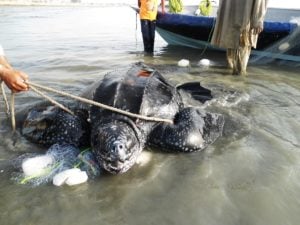
The problem is not confined to land, the writer argues. Whales and large sea animals store carbon in their bodies. When they are killed, through fishing, they release this carbon into the atmosphere rather than taking it down to the seabed when they die. Worse, deep-sea trawlers churn up the sediment from sea floors, releasing stored carbon into the oceans and atmosphere. One recent study estimated this may account for one gigatonne of CO2 emissions annually, equivalent to the whole aviation sector. Overfishing has other knock-on effects, Joshipura writes, including on seagrass that sequesters carbon. “Turtles eat seagrass, but without sharks [to scare them into moving] they can munch away in one area to the point of destruction.”
The other chapters in Survival at Stake are about issues that may be less threatening to human survival, but they are no less damning in how animal abuse impacts human health – both physical and psychological. For example, Joshipura cites an old case in which “tannery pollution had put more than 36,056 farmers in [the Indian state of] Tamil Nadu… out of work by damaging more than 17,170 hectares of farmland.” The effect of the cruelty in industrial slaughterhouses on those who work there, as well as how animal abuse foreshadows criminal abuse, highlight how animal abuse is also self-abuse, she points out.
Animal rights desperately need to be codified
Joshipura argues that the key to all these problems is the idea that we have overwhelming power over animals and we can do to them as we want. Citing the 2020 Oscars acceptance speech by the Hollywood actor, Joaquin Phoenix, Joshipura argues we must acknowledge that we are animals as well. The best way for individuals to do so, she writes, is to “live vegan” or to “live more vegan”.
Unfortunately, it is not so simple. To cite Joshipura’s own example, if we are animals, what kind of animals are we – turtles, or the sharks that eat them, or something else? The central tenet of human law – codified in the Universal Declaration of Human Rights – is that “all human beings are born free and equal in dignity and rights”. This is impossible to extend to the rest of the animal kingdom where there are predators and prey – both of which are necessary for a healthy ecosystem as the example of sharks, turtles and seagrass shows.
There is no simple solution
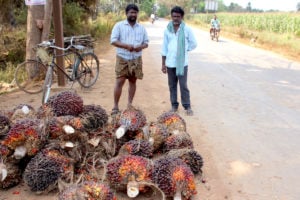
Moreover, living as a vegan oversimplifies the problem of habitat destruction and the danger to the planet’s biodiversity. At the start of her book, Joshipura mentions bees and their important role as pollinators without whom we could not grow much of our food. In the US, the catastrophic fall in bee populations has been linked to the excessive use of pesticides on farms where produce would be vegan. Palm oil cultivation – introduced to Southeast Asia on colonised land using indentured labour – is used in many products, primarily vegetable oil, and is vegan. But palm oil cultivation, as practised, has been terrible for biodiversity, and is responsible for both mass deforestation and air pollution.
There are, though, systems of governance that address the issues Joshipura raises. Indigenous people, who account for 5% of the global population, sustain 80% of the world’s biodiversity. None of their systems could easily be classified as vegan, and some – like those of the Sami and Inuit – explicitly rely on herding and hunting animals. All of them, though, regard humans as part of a wider ecosystem in which animals deserve respect. None of their systems accept the abusive practices that Joshipura documents. But adapting modern institutions of governance to accept these systems is deeply challenging. A focus on veganism alone, however worthy it may be, may actually serve to demonise the very systems that have been the most important bulwark against the abuses Joshipura has so painstakingly described.