Food

Climate change means less food, fewer tourists for India

Agriculture and tourism will be particularly badly hit as a result of climate change, the latest study by the Intergovernmental Panel on Climate Change has revealed
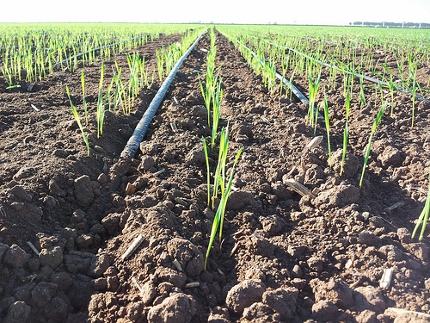
<p>Agriculture and tourism will be particularly badly hit as a result of climate change (Image by H. Gomez/CIMMYT) </p>

Agriculture and tourism will be particularly badly hit as a result of climate change (Image by H. Gomez/CIMMYT)

India may lose out on its tourism revenues if the global temperature keeps rising. “If the warming continues, tourists are going to shift to the higher, colder latitudes. Hotter countries including India are the most vulnerable,” says Surender Kumar, a lead author of the latest report by the Intergovernmental Panel on Climate Change (IPCC).

Tourism, which is the largest single sector in the world economy, accounts for 9% of global expenditure with over 200 million people dependent on it for employment. Now with the world heating up, the industry is under threat. “The IPCC study analyzed and ranked 51 countries based on how the tourist flow will decline due to climate change and poor infrastructure. Based on that India turns out to be the worst hit country,” Kumar – who teaches economics in Delhi University – said within hours of the release of the latest report.

Another major challenge for Asian countries is decline in food production due to climate change. The report says that wheat production in the Indo-Gangetic plains can fall by 50% if heat stress increases. And sorghum yield may fall by 2-14% by 2020. In a country where farmer suicides are on a rise owing to low income and debts, this will push the small scale, marginal farmers even closer to the brink.

The report, called Climate Change 2014: Impacts, Adaptation and Vulnerability is considered to be the most scientifically robust and comprehensive global report that details the current and future impacts of climate change and stresses on the adaptation techniques to counter them.  It has been compiled by 309 members of IPCC and reviewed by over 1,700 experts across 84 countries after taking into account over 12,000 scientific papers and 50,000 comments.

Kumar, who has contributed to the chapter on economic impacts, said that only a few studies have been done in sectors like energy, water, transport, tourism, insurance and economic growth but they do show that climate change would cause significant economic losses.

The studies show:

  • A change in global GDP due to temperature-induced stress; the change can range between minus 3% and plus 1.2%
  • Damages due to floods account for one-third of the total economic losses due to climate change
  • Between 1950 and 1990, annual economic losses due to large extreme events including floods and droughts increased tenfold, with developing countries the worst affected

A developing nation like India, which is home to 33% of the world’s poor, could be among the worst hit. “The frequency and intensity of the natural calamities like the Uttarakhand floods and the Orissa cyclone are going to be more. This will affect a large number of people,” Kumar added.

Aromar Revi, director of the Indian Institute for Human Settlements and also a lead author of the report, says, “Even people living in Indian cities will be affected, particularly the low income group who reside in poor housing facilities. What are needed are correct adaptation measures like improving housing and building resilient infrastructure. India can perhaps learn lessons from Latin America and Bangkok.”

Revi believes that the IPCC report gives a good understanding of the adaptation opportunities that can go a long way in tackling impacts of climate change. “If we fail, it will mean that we didn’t take right actions at the right time and not because there is lack of knowledge.”


Cookies Settings

Dialogue Earth uses cookies to provide you with the best user experience possible. Cookie information is stored in your browser. It allows us to recognise you when you return to Dialogue Earth and helps us to understand which sections of the website you find useful.

Required Cookies

Required Cookies should be enabled at all times so that we can save your preferences for cookie settings.

Dialogue Earth - Dialogue Earth is an independent organisation dedicated to promoting a common understanding of the world's urgent environmental challenges. Read our privacy policy.

Cloudflare - Cloudflare is a service used for the purposes of increasing the security and performance of web sites and services. Read Cloudflare's privacy policy and terms of service.

Functional Cookies

Dialogue Earth uses several functional cookies to collect anonymous information such as the number of site visitors and the most popular pages. Keeping these cookies enabled helps us to improve our website.

Google Analytics - The Google Analytics cookies are used to gather anonymous information about how you use our websites. We use this information to improve our sites and report on the reach of our content. Read Google's privacy policy and terms of service.

Advertising Cookies

This website uses the following additional cookies:

Google Inc. - Google operates Google Ads, Display & Video 360, and Google Ad Manager. These services allow advertisers to plan, execute and analyze marketing programs with greater ease and efficiency, while enabling publishers to maximize their returns from online advertising. Note that you may see cookies placed by Google for advertising, including the opt out cookie, under the Google.com or DoubleClick.net domains.

Twitter - Twitter is a real-time information network that connects you to the latest stories, ideas, opinions and news about what you find interesting. Simply find the accounts you find compelling and follow the conversations.

Facebook Inc. - Facebook is an online social networking service. China Dialogue aims to help guide our readers to content that they are interested in, so they can continue to read more of what they enjoy. If you are a social media user, then we are able to do this through a pixel provided by Facebook, which allows Facebook to place cookies on your web browser. For example, when a Facebook user returns to Facebook from our site, Facebook can identify them as part of a group of China Dialogue readers, and deliver them marketing messages from us, i.e. more of our content on biodiversity. Data that can be obtained through this is limited to the URL of the pages that have been visited and the limited information a browser might pass on, such as its IP address. In addition to the cookie controls that we mentioned above, if you are a Facebook user you can opt out by following this link.

Linkedin - LinkedIn is a business- and employment-oriented social networking service that operates via websites and mobile apps.