Fish has long been a source of food for those living along the coast of The Gambia. It is a key ingredient in local dishes such as domoda, a peanut stew, and the country’s version of jollof rice, known as benachin. Now, though, frozen chicken is replacing fish in these traditional dishes as seafood becomes unaffordable.
Some locals blame the emergence of the fishmeal industry, which scoops up most of the fish that historically fed local communities. Much of this fishmeal is exported to Asia and Europe, where it is fed to farm animals and salmon in fish farms.
“Fish is very expensive now. Before, I could have four or five sardinella and bonga for GMD 10-15 [USD 0.14-0.20], but now, I must spend more than GMD 50 on that,” says Isatou Camara, a resident of Gunjur. In 2016, a fishmeal factory opened in this coastal town and Camara has watched fish prices spike in the years since.
Traditionally prized red snapper used to cost GMD 100 but can now go for 10 times that, adds Camara. Even GMD 50 is a significant sum in The Gambia, where many people survive on the equivalent of a couple of US dollars a day. Half a kilogram of chicken may cost GMD 70 but it feeds more people than spending the same on fish.
“Imagine a single mum who goes to market with GMD 150, with a hike in fish prices. I can’t afford it, so sometimes I buy half a kilo of chicken [instead],” confirms Camara.
Fishmeal brought promise and problems
Over the past decade, West Africa has witnessed a remarkable expansion in the fishmeal and oil industry. The industry promised jobs and economic development in a region struggling with low wages. Gunjur’s fishmeal plants were supposed to use rotten fish or fish waste unfit for human consumption.
But concerns have grown that foreign-owned industrial fishing vessels are over-exploiting West African fisheries, in part to feed the fishmeal industry. Several sources have told Dialogue Earth that plants in The Gambia now have contracts with fishing vessels that target small pelagic fish (such as bonga, sardinella and snapper), historically destined for markets that feed local people.
The Gambia does not have large fishing vessels capable of going far out to sea, as those that supply fishmeal factories in the region can. This has driven the use of contracts between the factories and fishers, sometimes via middlemen, that guarantee fish from smaller, local fishers for the factories.
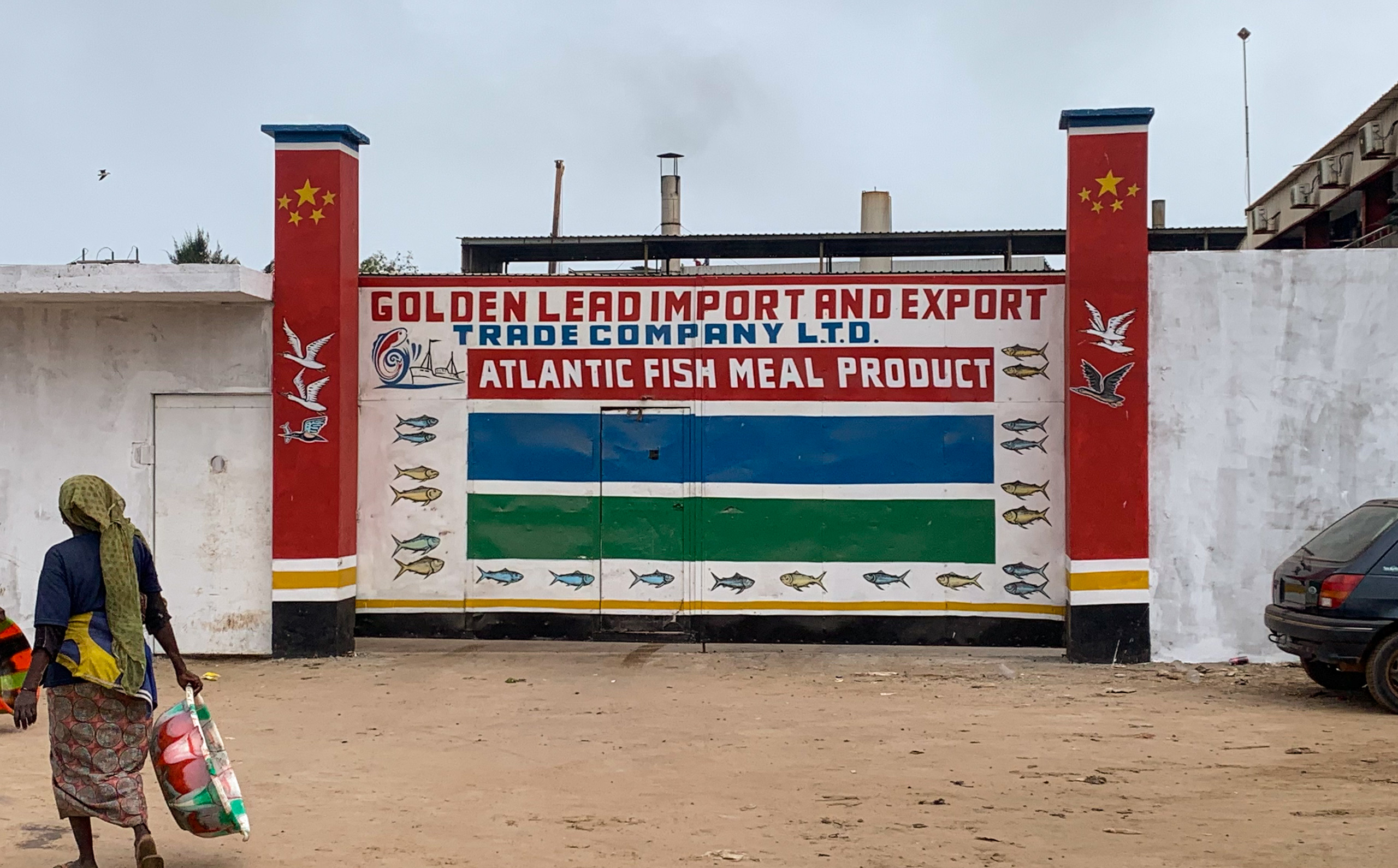
The Gambia is home to three operational plants, all located on its short Atlantic coast: Golden Lead in Gunjur, Nessim in Sanyang and JXJG in Kartong. These plants have proven controversial and faced accusations of fuelling overfishing, polluting local waters and failing to provide promised levels of employment. The Nessim factory was attacked during social unrest in 2021.
Omar* is a former employee of Golden Lead in Gunjur. He has been fishing in Gunjur for decades but is originally from Senegal. (*Dialogue Earth is not using Omar’s real name as he fears retaliation and the loss of future jobs for speaking about fishmeal operations.)
If Gambians can’t afford their own fish and the ocean is exploited for exports, it impacts community wellbeing and national stabilityLamin Jassey, environmental activist
“I used to go to Senegal to negotiate a fishing contract between the Golden Lead fishmeal factory and the fishermen,” says Omar. “The factory will pre-finance their fishing season and they will be paying back [the loan] as they land their catches daily. Their primary work here is to supply the factory, nothing more.”
Golden Lead factory management could not be reached for comment on these issues. The Nessim factory in Sanyang confirmed it makes contracts with boats (fishers), while JXJG is not using them at present.
Experts are sounding alarms over the repercussions of these agreements for fish availability, and particularly for public health. They warn of growing dietary deficiencies among vulnerable populations. They want to see the local fish prioritised for local people, not for the factories.
“This issue goes beyond fish scarcity; it concerns justice, health and sovereignty,” says Lamin Jassey, an environmental activist who works on the impacts of the fishmeal industry in The Gambia.
“If Gambians can’t afford their own fish and the ocean is exploited for exports, it impacts community wellbeing and national stability. Fishmeal factories compete with locals for affordable species like bonga and sardinella, which are vital sources of protein.”
Worries over chicken
A national nutrition policy covering 2021 to 2025 states “the majority of Gambian women, especially those living in rural areas, are in a constant state of energy deficit due to poor dietary habits.” Unicef has also highlighted the problem, which it says heavily impacts children in rural areas.
People living on The Gambia’s coast have traditionally consumed significantly more fish than inland regions: twenty-five kilograms per year compared to nine kilograms, according to a 2022 NGO report. This highlights the crucial role fish plays in the local diet.
Many Gambians raise their own chickens. But some of those who live along the coast and previously relied heavily on fish say they – just like Isatou Camara – have begun adapting their diets using frozen chicken. Its source and quality is often unclear. Local production meets less than 10% of demand, so the market is “flooded” with cheap imports from Brazil, the Netherlands and the Middle East, according to a 2023 study.
“In the past five years, more people have been resorting to cheap, imported chicken from Europe,” agrees Ahmed Manjang, a microbiologist working at the University of The Gambia. Local fish is healthier than imported, frozen chicken, he stresses.
Health and dietary problems are already a major concern in The Gambia.
In 2020, a community group checked the health of 485 people in Gunjur. Manjang says 26% of those tested were found to be hypertensive, diabetic, or both. He puts much of this ill health down to dietary changes driven by the high price of fish. He also fears low quality poultry products may be contaminated with campylobacter and salmonella, both significant food safety hazards.
Lamin Sambou, a public health researcher in the country, says replacing fish with frozen chicken is not disastrous since chicken provides protein and calories. But its role in a healthy diet depends heavily on food safety. This, in turn, relies on a sufficiently cold supply chain and proper handling practices. This is difficult in The Gambia, due to frequent electricity shortages that leave resellers without ice to keep products cold.
Sambou also notes that some already disadvantaged groups, such as women, are potentially more at risk if they miss out on fish.
“Public health guidance recommends pregnant and breastfeeding women aim for about two to three servings per week of lower-mercury seafood,” says Sambou. “When fish disappears from the diet and is not replaced by equivalent DHA sources [omega-3 fatty acids found in fish oil] such as fortified foods or supplements, there is real risk of a reduced intake of the nutrients that support brain, eye and skeletal development.”
A factory manager responds
“We don’t use all kinds of fish; we use only sardinella, bonga and grunt,” says Saidou Sey, general manager of the Nessim fishmeal factory in Sanyang. “We contracted fishing boats from Senegal, but some are from Tanji, in Gambia.”
Sey started working at the factory after the 2021 incident, when the factory was at the centre of violent protests.
Sey says Nessim pre-finances fishing vessels so operators can buy outboard engines, fishing nets, fuel and other materials they need to fish. It also sets prices for fish with those who catch them. He adds that the factory is what attracts fishers to Sanyang, and these boats contracted to supply the factory often give fish to locals for free.
None of the locals Dialogue Earth spoke to had received free fish from these boats.
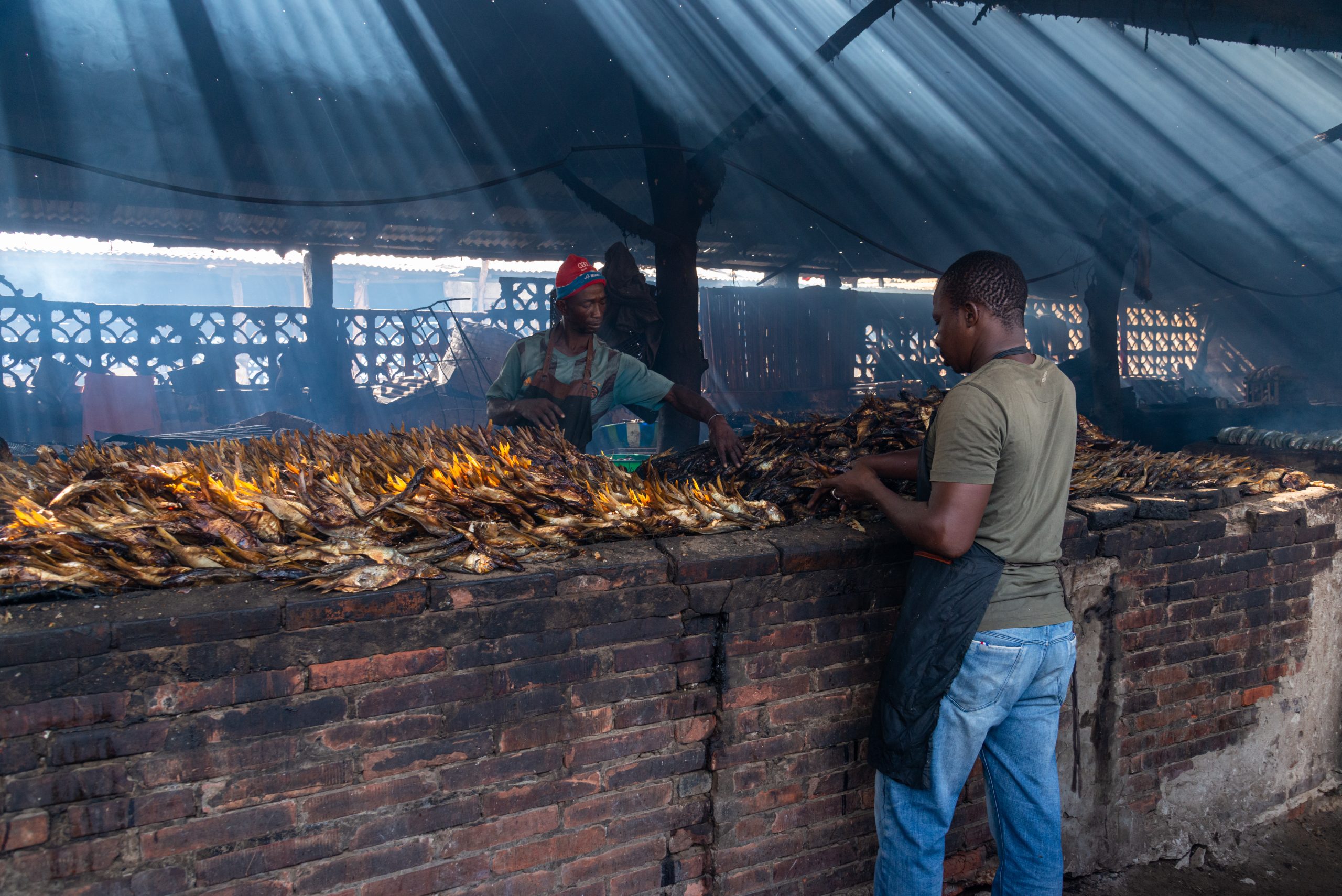
Saidou says such agreements are made via third-party agents who seek fishing boats to work for the factory and the agreements are typically verbal, and non-legally binding. Nothing about these arrangements is illegal and there is no suggestion factories making such arrangements are breaking the law.
‘Justice, health and sovereignty’
Jassey says the limited fish available will reduce dietary variety. Traditional dishes that rely on local fish, like benachin or domoda with smoked fish, will be prepared less often.
“The Gambian government should protect local food security first, strictly regulate fishmeal factories, support small-scale fishers and processors, and ensure that natural resources benefit Gambians, not just foreign markets,” he says.
“The problem is that the factory contracts boats that only give fish to the factory, not the community, and this is what is causing all the problems of accessing the fish.”
If the government cannot regulate the fishmeal factories, they should shut them down, says Jassey. Other activists, as well as medical practitioners such as Ahmed, urge the government to focus on promoting the consumption of local fish. They say it is vital that West Africa’s fish are utilised to nourish communities before they feed the fishmeal industry.