When sisters Ammini and Annamma first started growing white yams, elephant foot yams and tapioca, they were trying to lay down roots for themselves as much as for the tubers they were cultivating.
They had lost their parents young in the Paniyan community, a marginalised Adivasi (Indigenous) group in the Wayanad district of South India’s Kerala state. The sisters, now in their late fifties, had to navigate the layered indignities of landlessness, poverty and social exclusion.
A changing climate did not help. “Earlier the rain came on time, but now we cannot predict it,” Annamma said. “Only the tubers survive whatever comes.”
Today, five other Paniyan families have joined the sisters in establishing community conservation plots, to grow tubers both for the local market and to protect biodiversity. These generate income both through crop yield and by creating an opportunity to earn wages – supported by the M. S. Swaminathan Research Foundation – for over 100 days during lean months.
This model has since been replicated in other Adivasi hamlets in Wayanad, where farmers have begun tuber cultivation using seeds supplied by Ammini and Annamma via the foundation.
Adivasi communities in the district haven’t always been self-reliant. Large numbers remain landless or live in Indigenous settlements with marginal landholdings, insufficient for cultivation. The sisters moved between multiple temporary shelters before settling in a village called Madamkunnu, Wayanad, where they slowly built their enterprise.
With eight children to feed between them, they faced months of food scarcity, rising debts and struggled to secure essentials like mobile phone top ups. Unable to afford input-intensive cultivation, or to diversify their crops, even an expense as small as their betel nut habit had to be sacrificed.
They could, however, grow tubers for food.
Ammini and Annamma grew white yam, elephant foot yam, taro, tapioca and other vegetables primarily for household consumption, with little surplus for sale. That changed when the duo realised how resilient tubers were.
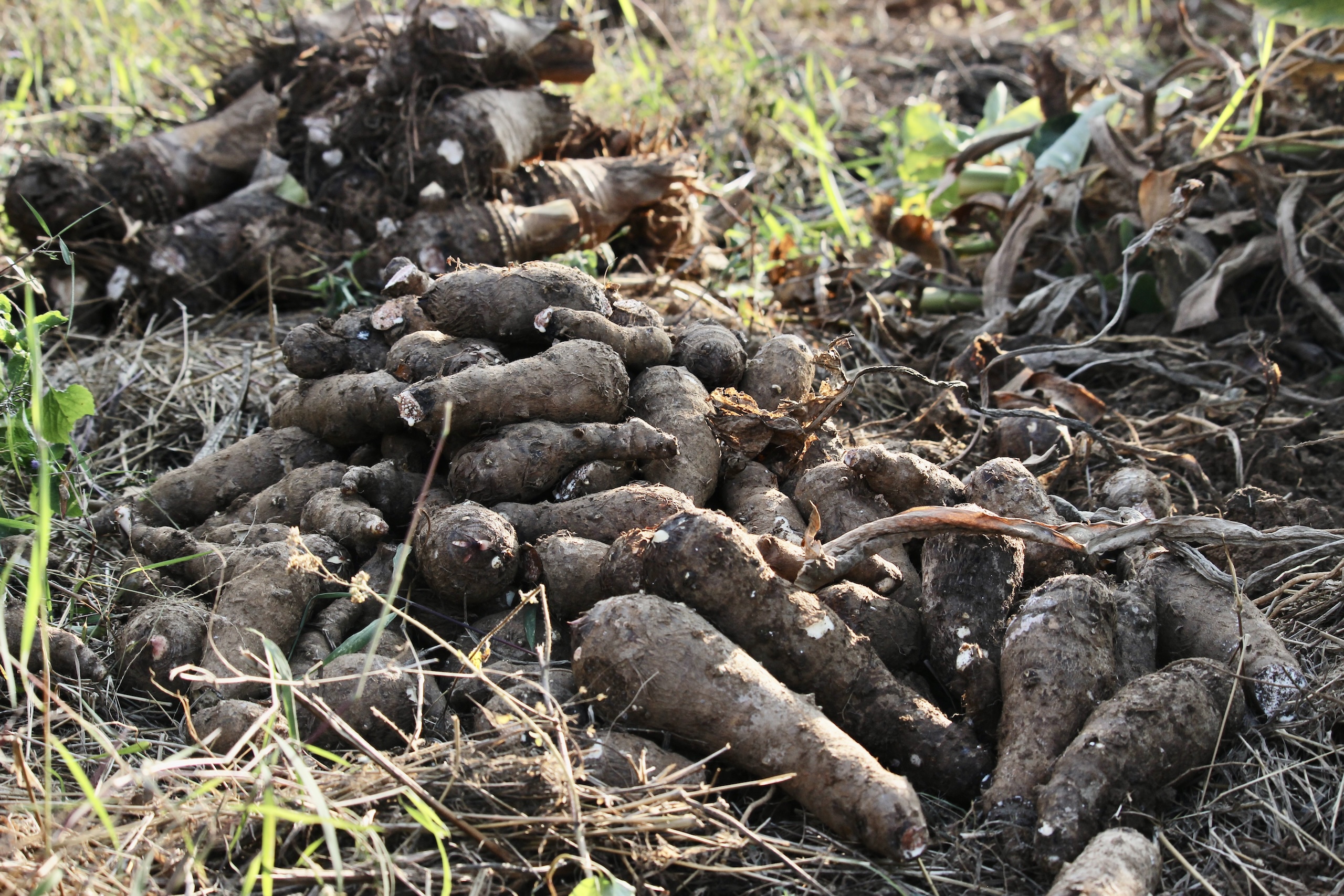
“Tubers are considered an emergency crop as they can survive when other crops fail due to climate change,” said N Anil Kumar, chairman of the Kerala State Biodiversity Board. “Drought and pest and disease outbreaks are natural impacts of changing climate, and tubers are largely resilient to these effects. Another aspect is the large volume of food they provide. These peculiarities make tubers an unavoidable source of food security for vulnerable communities,” he added.
According to Kerala’s climate action plan, published in 2022, biodiversity hotspot Wayanad is highly vulnerable to climate change, with temperatures rising by 1.46C between 1984 and 2009. Extreme weather events have already led to reduced crop yields, increased pests and diseases, water scarcity, accelerated extinction of threatened crop species, and, in 2024, disastrous landslides.
For the Adivasi communities that grow tubers, they have become a lot more than just food. As well as contributing to food security, the conservation of local varieties is a source of resilience and pride, and they make the unpredictable seasons easier to deal with. Climate change has turned tuber conservation into both a livelihood strategy and a safeguard for the future.
For families like Ammini and Annamma’s, who depend on small plots, seasonal labour and climate-sensitive crops, the impact of these shifts is felt immediately in their kitchens and incomes. Tubers have, therefore, gained importance as a solution to the climate-induced agrarian crises.
Sowing seeds
As their initial efforts to scale tuber cultivation succeeded, the sisters gradually expanded from subsistence cultivation to establishing seed and conservation plots, turning this model into an important supplementary livelihood.
This was the first moment when their small, uncertain cultivation efforts began to connect with a wider network of knowledge and encouragement. It helped that tubers were easy to grow and held cultural significance, often used in curries and side dishes. They also mature relatively quickly, have a long shelf life and both the leaves and tubers of some species, such as Colocasia and elephant foot yam, are edible.
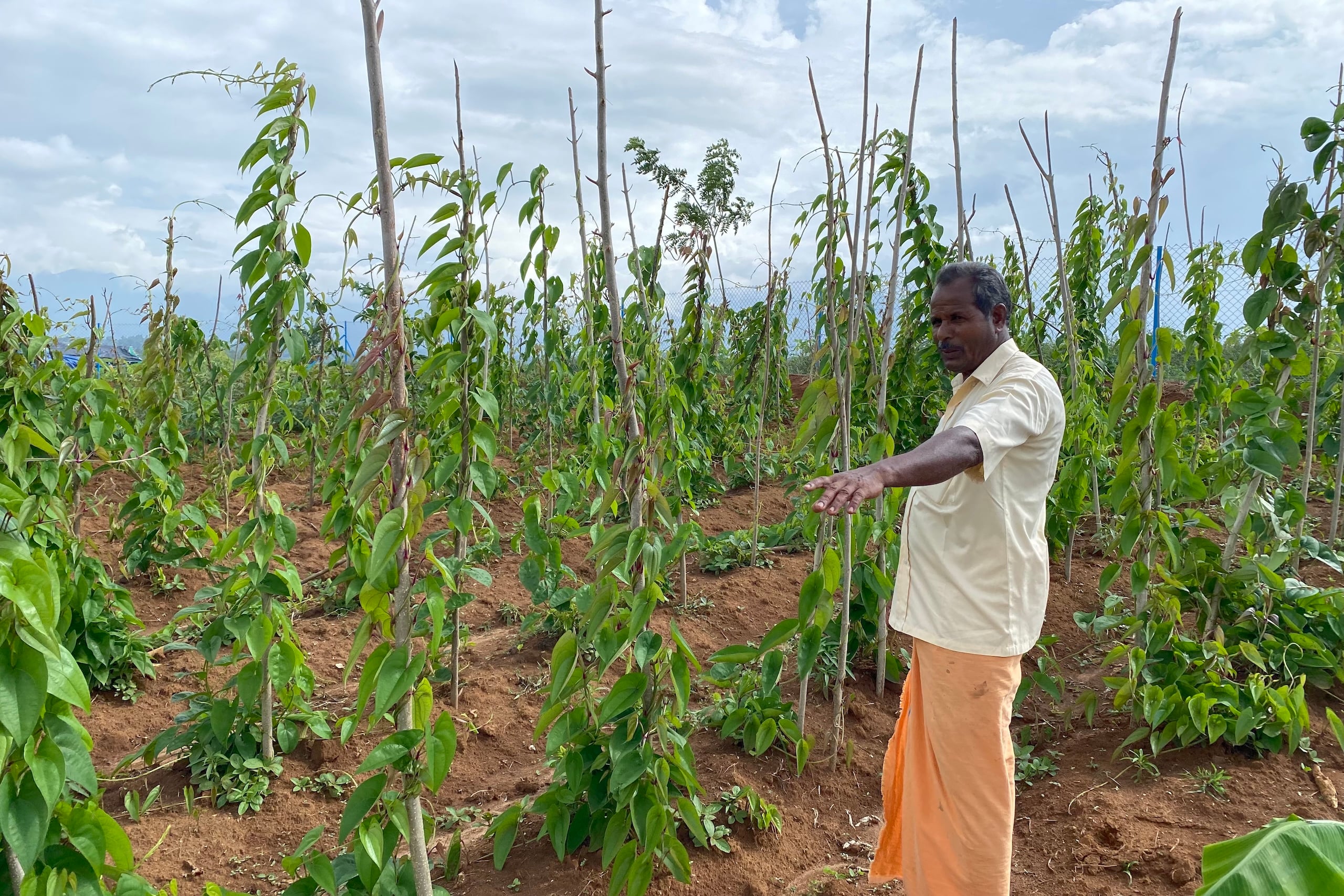
“Conservation plots helped us earn INR 50,000-60,000 [USD 557-670] per year as additional income from an 80-cent (0.3-hectare) plot. The amount was credited to our bank accounts. We withdrew some during emergencies, bought earrings for my daughter, and even purchased a mobile phone,” Annamma said. “Luxuries like these were otherwise inaccessible through routine wage labour. Now, even our children support us, as they too benefit from the produce and income,” she added. Before cultivating tubers, the sisters relied mainly on short-term work in the paddy and coffee fields of non-Adivasi farmers.
Community conservation plots are primarily owned and managed by women, and their income benefits children and families. Elderly members of the Paniyan community, often the least preferred in the labour market, have also been engaged as custodian farmers, making the programme inclusive for the most marginalised. In Madamkunnu, this inclusiveness is visible in the way Ammini, Annamma, and their neighbours work side by side, bridging generations, sharing knowledge.
“When we provided white yam as our contribution to government flood rehabilitation centers, we felt truly happy. Historically, we depended on others for our own food,” community member Anandan told Dialogue Earth.
The conservation plots not only offer financial stability but also open small avenues of dignity and aspiration, purchases and choices that were once unimaginable for wage labourers. The model has since been replicated in neighbouring Adivasi hamlets in Wayanad, using seeds supplied by the sisters.
Babu Nellarachal, an Adivasi tuber farmer in the district is part of a group of 10 Indigenous cultivators who together produce around 15 tonnes of tubers each year. In 2025, they sold their produce for INR 40 (USD 0.45) per kilogram. “Earlier, we mainly grew tubers for household consumption, especially to meet the high food requirements during our annual rituals. When agriculture gradually became market-oriented, about 18 years ago, I slowly began commercial cultivation of tubers such as white yam, elephant foot yam and Colocasia,” Nellarachal told Dialogue Earth.
To ensure economic security, he has planted high-yielding varieties such as Gajendra, a kind of elephant foot yam. He also conserves more than 45 different varieties of tubers on his farm. This demonstrates how Indigenous knowledge systems can simultaneously support climate resilience, food sovereignty and agrobiodiversity conservation.
For dignity
The harvest season for tubers coincides with temple festivals in Kerala, a time when devotees consume rice alternatives. This demand ensures a good prices for tubers. For families like Ammini and Annamma’s, whose income once depended entirely on unpredictable wage labour, this seasonal market window offers some new financial stability.
The sisters have adopted an 80/20 appraoch: 80% of the plot is dedicated to varieties in high demand such as Inchikachil, Urulan Kachil, Gandakasala Kachil (local white yam varieties), elephant foot yam and Palchembu (a native Colocasia variety). The remaining 20% is used for conserving traditional varieties with less market acceptance but high conservation significance.
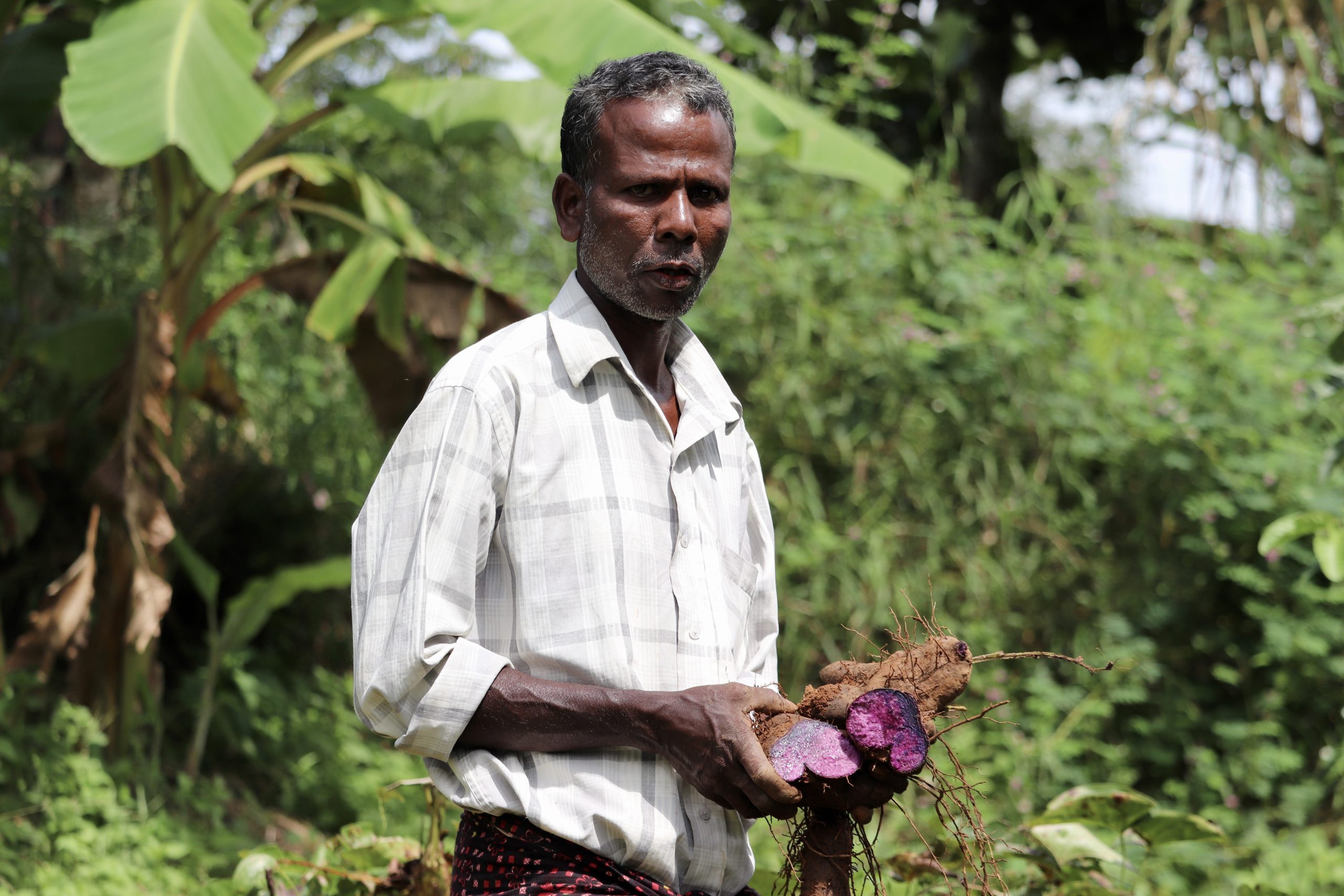
This balance between market- and conservation-oriented cultivation has been pivotal in reshaping the sisters’ lives. Students and researchers who study climate-resilient agriculture and on-farm conservation now visit their farm, facilitated by M. S. Swaminathan Research Foundation. These visits are moments of pride for the sisters, as they comet to be seen as conservers and knowledge-holders in their community.
Local vendors who once overlooked them now extend credit, acknowledging their rising economic credibility. “When we decided to conserve, we didn’t expect these many benefits. Now we are sure these varieties need to be conserved, as they bring prosperity to our homes,” Ammini said. More families are joining tuber cultivation after witnessing these changes.
“We now face a situation where the problem and solution coexist – extreme weather threatens conservation, yet conservation is essential to survive extreme weather. Therefore, conserving this critical resource is more important than ever,” she added.
In addition to contributing to global goals such as on-farm agrobiodiversity conservation, tuber-farming initiatives provide enormous opportunities to build livelihoods and restore dignity for vulnerable communities. The sisters’ journey, from landless wage labourers to recognised conservers, captures the transformative potential of such timely interventions in the face of rapid erosion of biodiversity and climate change.