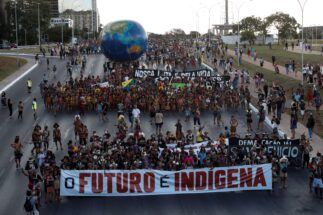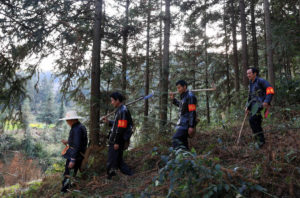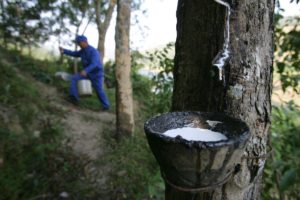
A series of recent high-level international conferences have brought record numbers of forestry experts and delegates together, calling for forests to be put at the centre of conversations on the world’s most pressing environmental and health issues.
The 15th World Forestry Congress took place in Seoul, South Korea from 2–6 May and underlined the importance of forests in confronting climate change, biodiversity loss, land degradation, hunger and poverty. High on the agenda this year were gender inclusion, the role of youth and indigenous communities in preserving forests, and the importance of financing to reduce deforestation. Curbing unsustainable commodity production – the leading cause of deforestation – was also highlighted.
The following week saw the 17th Session of the United Nations Forum on Forests (UNFF 17), held in New York. Both conferences come on the heels of the Covid-19 pandemic, which has served as a stark reminder that if nature and forests are not protected and sustainably used, humanity runs the risk of new infectious and zoonotic diseases emerging. The UN stressed that the Covid-19 crisis has also set back the implementation of sustainable forest management, jeopardising the viability of forests in numerous regions.
Forests and sustainable management of forests can bring solutions to the different challenges we are facing nowMaria Helena Semedo, deputy director-general of the UN Food and Agriculture Organization (FAO)
With over 15,000 participants from 146 countries coming from governments and international organisations, the private sector, academic and research institutions, NGOs and indigenous groups, the 15th World Forestry Congress was the largest ever encounter of its kind. It resulted in: the Seoul Forest Declaration, which spells out shared roles and responsibilities for ensuring a sustainable future for the world’s forests; the Ministerial Call on Sustainable Wood; and a Youth Call for Action. All emphasise the need for increased and immediate efforts to support forestry stakeholders at all levels.
“The most important outcome in my view, is the sense of urgency,” said Maria Helena Semedo, deputy director-general of the UN Food and Agriculture Organization (FAO).
“Forests and sustainable management of forests can bring solutions to the different challenges we are facing now: the climate crisis, deforestation, sustainable use of natural resources and the biodiversity crisis,” she added.
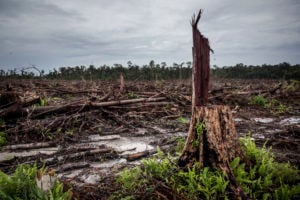
According to the Global Forest Resources Assessment 2020, led by the FAO, 420 million hectares of forest have been lost since 1990. Although the rate of deforestation is declining, it continued at an estimated 10 million hectares a year between 2015 and 2020. South America and Africa top the rankings for most rapid losses, recording annual rates of net forest loss of 2.6 million hectares and 3.9 million hectares, respectively, between 2010–2020. Agricultural commodities, including beef, soy, palm oil and paper, are key drivers of this, being responsible for over 40% of global deforestation.
During the World Forestry Congress, the FAO launched the State of the World’s Forests 2022 report, which emphasised these problems. Qu Dongyu, the FAO’s director-general, outlined three priorities identified in the report: halting deforestation and maintaining forests; restoring degraded lands and expanding reforestation, through increased grass and bush cover to avoid soil erosion; and ensuring sustainable value chains.
Peter Csoka, associate secretary-general of the Seoul congress, expanded on these areas for progress: “What we would like to discuss more in detail is how to stop deforestation, how to restore ecosystems, how to make our life healthier and more in line with nature, and how we can make forestry an economically profitable activity that provides livelihoods for millions of people.”
Financing and agricultural commodities
A common topic at both conferences was financing, and its role in preventing deforestation. In its final report on UNFF 17’s proceedings, the UN made frequent mention of the various socio-economic and environmental challenges the forest sector has faced as a result of the Covid-19 pandemic. These include mobility restrictions, as well as a reduction of investments and low prioritisation of forests in national plans. A shortage of skilled personnel, financial and technological constraints, and disruptions to trade and supply chains for wood and other forest products have also contributed to difficulties.
The New York gathering also saw calls to leverage support from the private sector and the international development community for a post-Covid-19 recovery. The need to identify additional funding alternatives to support sustainable forest management, and production of both timber and non-timber products, was emphasised. The Global Forest Financing Facilitation Network, established by the UN Forum on Forests in 2015, was highlighted as having an important role to play in supporting countries in the design of forest financing strategies.
During a Ministerial Forum on Forest Financing at the Seoul congress, attended by representatives from forestry, environment and finance ministries, discussions centred on the importance of promoting local markets for sustainable products, and the repurposing of subsidies to include sustainable forestry and agroforestry; according to the FAO, of the US$540 billion of agricultural subsidies issued globally each year, 86% are associated with harmful impacts. The securing of land tenure and rights also featured on the ministerial agenda, as well as supporting market-based measures for sustainable food systems and increasing transparency in supply chains.
Sharing experience
The challenge of agricultural commodities that drive deforestation was addressed in several focused events at the World Forestry Congress. For example, sessions on scaling-up finance and agri-food commodity markets discussed how to improve forest-positive finance from both public and private sectors, in order to transform food systems and support sustainable commodity production.
Members from various countries shared the lessons they have learned so far. Benjamin Singer, senior forest and land use specialist at the Green Climate Fund, described approaches to encourage deforestation-free supply chains that include “transformational planning and programming, encouraging climate innovation and scaling up models that use different financial means and aligning domestic finance with sustainable development.”
Maggie Charnley, from the International Forests Unit at the UK’s Department of Business, Energy and Industrial Strategy, stated the importance of engaging stakeholders and traders across supply chains. She said strong laws can provide confidence to consumers that they are not contributing to deforestation when they buy a product.
Wendy Arenas from Alisos, a Colombian sustainability NGO, pointed to challenges in regulation for industries such as cocoa, in which around 70% of production is carried out by millions of smallholder farmers. She expressed concern over who is expected to pay for the extra costs associated with sustainability certifications.
Ravi Muthayah, secretary-general of Malaysia’s Ministry of Plantation Industries and Commodities, explained his country’s policy approach to stopping unsustainable commodity production practices, including a commitment to limit the planted area of oil palm to 6.5 million hectares.
All of these lessons, it is hoped, will contribute to the developing sector of sustainable commodity agriculture production, as demand for food increases and the need to halt deforestation becomes an ever higher priority.
The challenges and obstacles remain significant, but ahead of a series of vital environmental meetings later this year – including the COP27 climate summit in Sharm el-Sheikh, Egypt and the COP15 biodiversity talks in Montreal, Canada – the recent forestry conferences may have established some momentum around the sector’s concerns, its needs and importance in face of converging global crises.