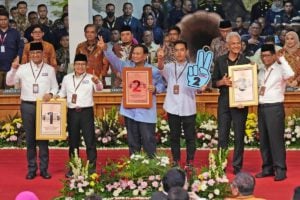
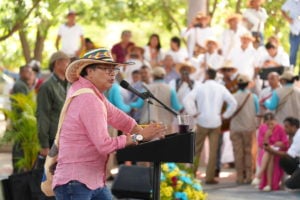
On 14 February, shortly after Prabowo Subianto and his running mate emerged as the presumed winners of Indonesia’s presidential election, Prabowo told a crowd in Jakarta that “this victory should be a victory for all Indonesians.”
That proclamation may ring hollow for the country’s Indigenous peoples. Prabowo’s new government appears set to continue expanding Indonesia’s domestic resource-processing capabilities. This signals the continued, unjust plunder of Indigenous territory.
The government of the incumbent president, Joko Widodo, has been indecisive, and seemingly toying, with taking care of Indigenous communities. That their protection remains a normative and romantic discourse is apparent in government policy that does not protect them.
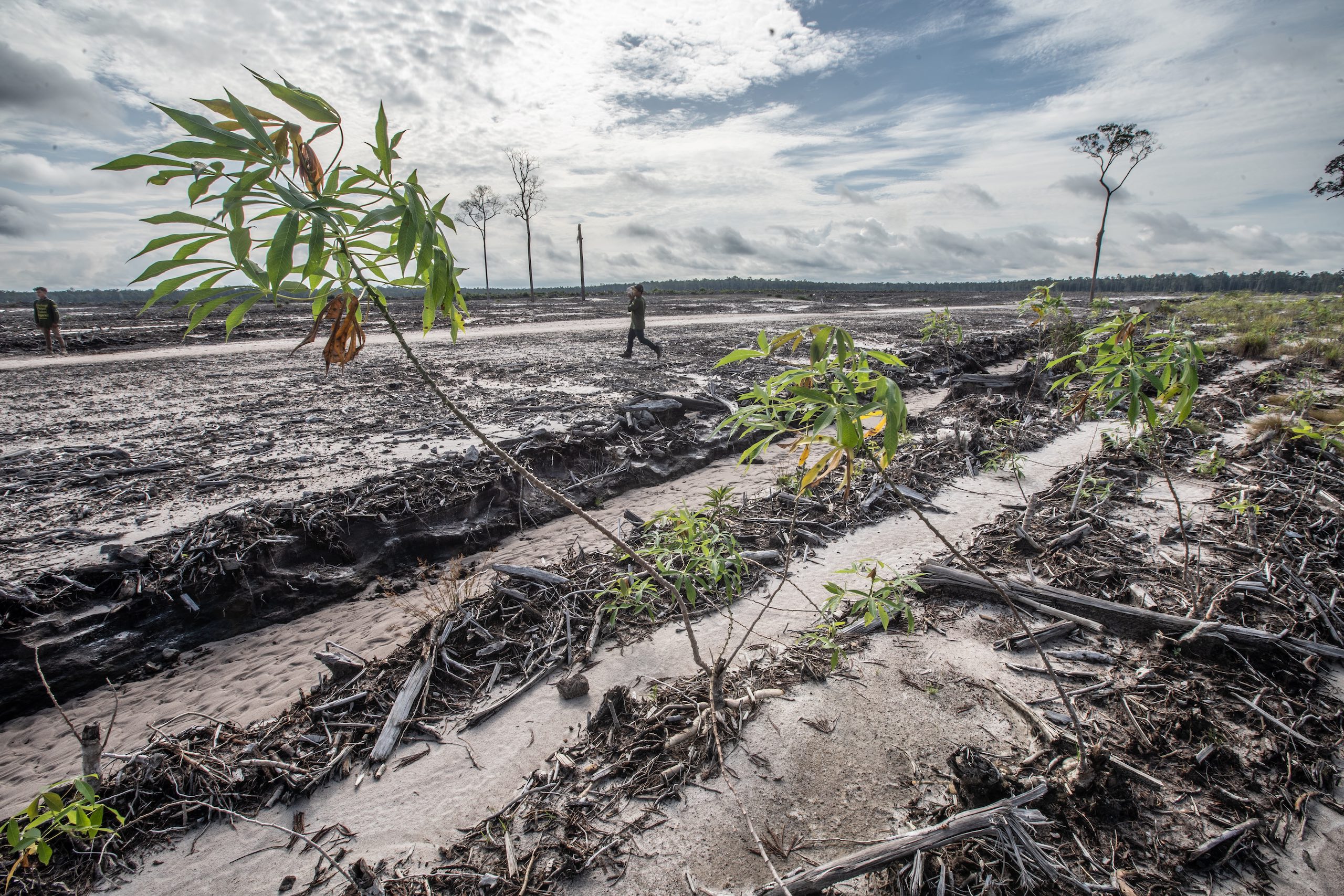
Numerous food security policies have not adequately considered Indigenous territories or sovereignty. Take for example the “food estate programme”, announced in 2020, to develop vast food plantations across Indonesia. Implementation of the programme in Gunung Mas Regency, Central Kalimantan province, failed to consult local knowledge. The disastrous results not only fell far short of achieving Indonesian food sovereignty, but also ignored the historical and philosophical value that Kalimantan people place upon Gunung Mas.
Indigenous voices vs political agendas
According to data from Indonesia’s Indigenous Peoples Alliance of the Archipelago, as of January 2024, the country is home to 2,565 Indigenous communities, representing 22 million people. These communities are spread widely throughout the country, so it can be argued that the basis and characteristics of Indonesian society are its Indigenous peoples. However, the misalignment of political policies with the protection of Indigenous peoples does not reflect this situation.
The major problems encountered by these communities are deforestation, agricultural crises, marginalisation and discrimination, and the usurpation of customary rights. These problems often coincide with massive extraction operations in indigenous forests by giant corporations.
Another issue is electoral participation: identification cards must be presented at polling stations, but Indigenous communities have faced difficulties in obtaining these.
The romanticisation of Indigenous peoples is a typical component of an Indonesian political campaign, with elites acknowledging related issues and making pledges. However, this is usually nothing more than a tactic for garnering electoral support.
For example, Widodo made six pledges regarding Indigenous rights during his 2014 election campaign. These were incorporated into his Nawacita programme, which would ratify Indonesia’s Indigenous Peoples Bill (RUU Masyarakat Adat) and create an independent task force for Indigenous communities, among other commitments. The Nawacita programme’s goals are yet to be realised.
Prabowo, a former defence minister, and his running mate, Gibran Rakabuming Raka, Joko Widodo’s son, did not reveal many concrete plans to bolster Indigenous rights during their election campaign, which calls their commitment to these issues into question.
The Prabowo–Gibran campaign championed ongoing investments in mining to capitalise on the energy transition. Indigenous communities are typically cast aside when these mega projects encroach on their territories.
For example, nickel mining in Halmahera, on the island of North Maluku, has led to the marginalisation and criminalisation of Indonesia’s isolated O’Hongana Manyawa (“the people of the forest”). While the tribe attempts to defend ancestral territories on Halmahera Island from the area’s biggest mining company, Weda Bay Nickel, deforestation and pollution has ensued.
No formal legal recognition
Currently, there is no legal umbrella that protects the existence of Indigenous peoples in Indonesia, and their status and recognition requires one. The Indigenous Peoples Bill was first proposed in 2009, but is yet to be ratified, despite Joko Widodo’s repeated promises to do so.
Once sworn in on 20 October, Prabowo and Gibran must therefore prioritise this bill. Obtaining consensus from Indigenous communities is crucial for the management of their lands, especially considering Gibran’s frequent promotion of downstream projects during the election campaign.
Indonesia’s Indigenous agenda is still far from attaining substantial progress. It should never again be used merely as a campaign tool to grab votes.
What’s next?
Despite the challenges, the current government has issued some policies pertaining to Indigenous inclusion. For example, the Ministry of Education and Culture has made efforts to incorporate Indigenous schools into its databases. And in 2023, the movement Indigenous Youth Front of the Archipelago (BPAN) received significant acknowledgement from the state when it won a Ministry of Youth and Sports award for its access-to-education advocacy.
Civil support for Indigenous communities continues to be taken seriously, evidenced by initiatives such as the Nusantara Fund, which claims to be “Indonesia’s first direct funding mechanism for Indigenous peoples and local communities”.
Indigenous peoples do not only demand recognition and protection of their individual rights, but also the enablement of land restoration and collective rights. These demands are reaffirmed by the UN Declaration on the Rights of Indigenous Peoples. Indeed, the grand idea of protecting Indigenous peoples is a tenet of sustainable development, but a transactional economic system that prioritises capital accumulation undermines it.
As the excitement of Indonesia’s general election subsides, we need to witness a practical realisation of policies that intersect with Indigenous rights. After years of fighting and struggling, the government must ratify the Indigenous Peoples Bill.