Indigenous women in Africa are protecting the environmental rights of their communities in the face of steep legal barriers and patriarchal norms. At the same time, they are reviving ecological grazing techniques, encouraging the planting of drought-resistant crops, and leading efforts to diversify livelihoods.
These women face myriad challenges, from losing ancestral land rights to surviving disasters exacerbated by climate change, finds a new report by the International Indigenous Women’s Forum (FIMI).
Their situations echo those of Indigenous women across many other parts of the world, such as the Aymara and Quecha of Peru and Bolivia, and the Bunong, Stieng, Thmorn and Kroal in Cambodia.
Indigenous women play a central role in the community management of territories. But the FIMI report found their limited rights to inheritance and land ownership restricts their economic autonomy and their ability to influence the management of natural resources. They are nonetheless perservering with applying solutions.
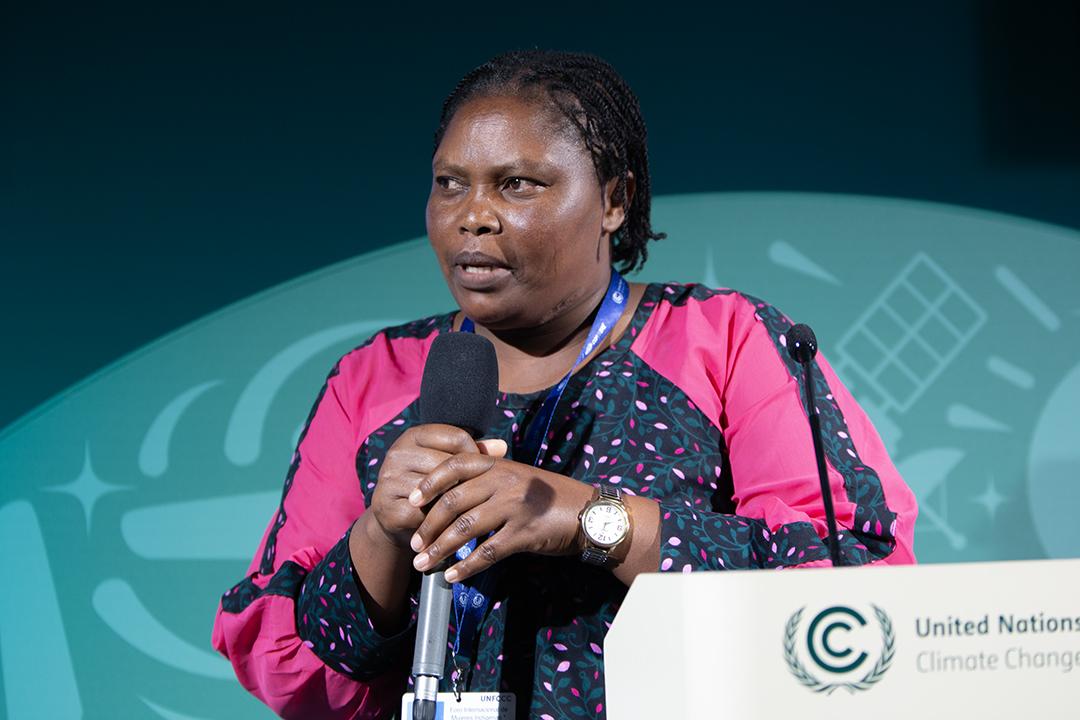
Ahead of the UN’s COP30 climate negotiations in November, Dialogue Earth spoke with Naiyan Kiplagat, co-founder of the FIMI member organisation Paran Women Group, and a member of the Samburu People of southwestern Kenya. We spoke about the issues facing Indigenous women in Africa and FIMI’s role in protecting Indigenous communities’ environmental rights, at home and at the UN.
Dialogue Earth: The FIMI report highlights the loss of Indigenous territories driven by governments, companies and other forces. What is the extent of this problem in Africa?
Naiyan Kiplagat: The problem of Indigenous land dispossession in Africa is widespread, persistent and often driven by state and corporate interests under the guise of development or environmental protection. In Kenya, both the Maasai and Ogiek Indigenous communities have faced significant loss of ancestral lands due to tourism infrastructure, agribusiness and exclusionary conservation policies.
A striking example is the ongoing eviction of the Ogiek people from the Mau Forest by the Kenya Forest Service (KFS) and Kenya Wildlife Service (KWS). This is happening despite a landmark ruling by the African Court on Human and Peoples’ Rights in May 2017. The ruling recognised the Ogiek’s claim to the Mau Forest and ordered the Kenyan government to grant them collective title to their ancestral territory. The court affirmed the Ogiek are Indigenous and the forest is central to their survival, culture and spirituality.
Yet, government agencies have continued to forcibly remove Ogiek families from the forest, claiming the evictions are necessary to prevent encroachment and deforestation. There are growing concerns that these removals are linked to emerging carbon credit schemes, where forests are monetised for climate mitigation without the free, prior and informed consent of Indigenous custodians. This commodification of nature not only violates the rights of Indigenous Peoples, but also ignores their critical role in biodiversity conservation.
The Ogiek, as traditional forest stewards, maintain that their presence ensures sustainable forest management. Evicting them not only erases their identity but also undermines authentic climate solutions. Unfortunately, this is not an isolated case as across Africa, Indigenous territories are increasingly under threat from mega-projects and market-based climate actions that exclude community voices, especially those of women. These trends reflect deep environmental and climate injustice, whereby Indigenous women and their communities are marginalised from land governance and stripped of their rights in the name of conservation or development.
What is FIMI doing to protect land and environmental rights of Indigenous women and their communities in Africa?
FIMI has been at the forefront of this effort across Africa. Recognising that land is central to the survival, identity and cultural continuity of Indigenous Peoples, FIMI provides both financial and technical support to strengthen women’s leadership in land governance and environmental justice.
One of the key tools for this support is the AYNI Indigenous Women’s Fund. This has provided targeted funding to Indigenous women’s organisations to implement projects focused on securing land and territorial rights, raising awareness of environmental rights, and documenting traditional land use and ecological knowledge. The last of these is important to help strengthen legal claims to ancestral territories.
Despite this work, there are still many more challenges. Governments and corporate actors often pursue land-based projects like conservation areas, infrastructure or carbon-offset schemes without consulting Indigenous women. Legal frameworks in many African countries still fail to recognise communal land rights or exclude women from land ownership. Meanwhile, security risks and political marginalisation continue to silence many Indigenous women land defenders.
How are the Indigenous women of Africa and their communities affected by climate change?
For Indigenous Peoples, life, identity, spirituality, and survival are inextricably tied to their ancestral territories. These lands are not just physical spaces; they are living landscapes that hold generations of wisdom, governance systems, medicinal plants, sacred sites, and ritual grounds for cultural practices. These lands serve as places of spiritual reflection, initiation, and healing. Cultural and spiritual rituals such as traditional circumcision ceremonies, prayer gatherings, and rites of passage are carried out in specific forested areas that are considered sacred. The loss or degradation of these territories due to climate change disrupts not only the environment, but also the cultural continuity and spiritual well-being of the people.
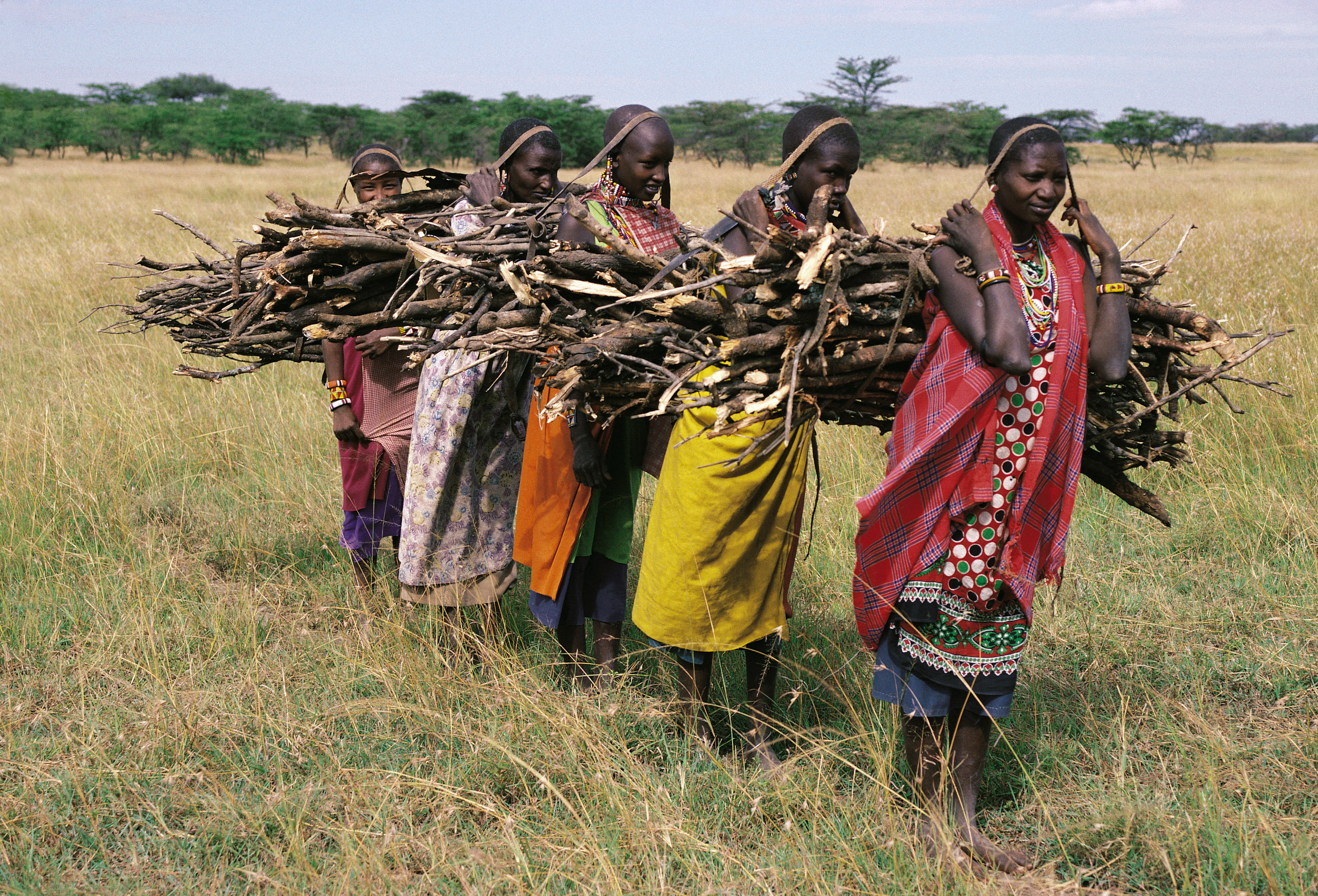
As primary providers of water, food and firewood, women are now forced to travel longer distances due to drying rivers, deforested lands and unpredictable weather patterns
Climate change has particularly intensified the daily struggles of Indigenous women across Africa, especially those in pastoralist and forest-dependent communities. As primary providers of water, food and firewood, women are now forced to travel longer distances due to drying rivers, deforested lands and unpredictable weather patterns. This increases their physical burden and exposes them to greater risks, including gender-based violence. Crop failures and livestock losses have deepened food insecurity, placing the responsibility of feeding families squarely on women’s shoulders.
Traditional knowledge systems such as medicinal plant use and seed preservation are also being disrupted as ecosystems degrade, limiting women’s ability to care for their families and communities. With climate-induced migration on the rise, many Indigenous women are displaced from their ancestral lands, leading to the loss of cultural practices, spiritual connections, and social safety nets. These combined pressures are eroding women’s well-being, status and resilience, making them among the most vulnerable to the climate crisis.
Since the Indigenous peoples are mostly pastoralists or hunter-gatherers, climate change has constantly contributed to their migrations across borders in search of pastures for livestock and food. Seasonal or permanent movement of people in search of water, pasture or safety often leads to the disruption of traditional life, community cohesion and intergenerational knowledge transfer.
Among the pastoralist Maasai, families are migrating across county and national borders to find resources, leading to rising inter-community conflict and cultural disintegration. This is a growing crisis across Africa since in the Sahel, nomadic Indigenous groups are being pushed further from their grazing routes. In many places, young people are losing connection to sacred rituals and land-based identity, eroding centuries of knowledge and culture.
How are African Indigenous women and their communities mitigating or adapting to the climate crisis?
Indigenous women across Africa are applying traditional knowledge passed through generations and combining it with innovative approaches to adapt to and mitigate the impacts of climate change. Their strategies are rooted in lived experience, a deep understanding of the natural environment, and a commitment to sustaining their communities and ecosystems.
One of the key innovations which Indigenous women – especially from Para Women Group – have mastered and continue to influence others to practice is the use of energy-saving cooking stoves and the production of briquettes from organic waste, both of which are made by Indigenous women. These technologies reduce the reliance on firewood, helping to slow deforestation, cut down harmful emissions, and improve indoor air quality while also creating alternative sources of income for women through small-scale production and sales.
In the face of unpredictable rainfall and prolonged droughts, Indigenous women are also encouraging the planting of drought-resistant crops in household kitchen gardens. These crops – such as sorghum, millet, cassava and traditional leafy greens – ensure food security even under harsh climate conditions, while reducing dependency on expensive and unsustainable commercial seeds.
Among pastoralist communities, Indigenous women are actively involved in reviving rotational grazing systems. The traditional practice of moving livestock between grazing areas allows grasslands to regenerate, prevents land degradation and supports sustainable pasture management in the face of drought.
Recognising the risks of over-dependence on livestock, especially in climate-vulnerable drylands, women are also leading efforts to diversify livelihoods. Through initiatives such as beadwork, beekeeping cooperatives, herbal medicine trade, eco-tourism and tree nurseries, they are finding alternative income sources that are resilient to climate shocks while preserving culture and biodiversity.
These Indigenous-led innovations are not only helping communities cope with the changing climate but also offering sustainable, low-cost and culturally appropriate solutions that national climate policies can learn from. By valuing and investing in these practices, Africa can strengthen both climate resilience and community well-being.