Within the span of three November days in Belém, Brazil, the first potential references to critical minerals in a text produced under the UN Framework Convention on Climate Change (UNFCCC) were abandoned.
The omission became a flashpoint at the COP30 climate summit. Developing countries and civil society groups had successfully pushed for inclusion of the term in a draft. They’d also got in text ensuring the extraction of these minerals – so important to addressing climate change – involves community engagement, environmental standards and local value addition. China, along with Russia, pushed back, and the references were scrapped by the end of the conference.
Less than a day later, however, China joined G20 leaders (minus the US) in a statement including reference to the G20 Critical Minerals Mechanism, a voluntary blueprint to make such minerals “a driver of prosperity and sustainable development”. China and South Africa also launched a joint initiative to support Africa’s modernisation, which includes language extremely similar to what it had rejected at COP30.
The issue of critical minerals is far from over in UN processes. It has been a major agenda item at the ongoing 7th UN Environment Assembly in Nairobi taking place from 8-12 December, and groups suggest it will likely be raised at next year’s COP31 in Türkiye.
How to make sense of China’s position on this complex issue? And where might the discussion on these minerals, and just transitions, go next?
Why is global governance of critical minerals so important?
Minerals such as lithium, cobalt, nickel and copper are key inputs for making batteries, solar panels and wind turbines. This makes them critical to the clean energy transition needed to meet the Paris Agreement’s target to limit global temperature rise to 1.5C.
The climate action mandated by the Paris Agreement is therefore driving a new wave of mining, an activity with a legacy of negative environmental and social impacts.
“The surge in demand for minerals is tied to their use in meeting targets, identified by the COP in the first global stocktake, as necessary to meet Paris Agreement objectives,” says Antonio Hill, adviser with the Natural Resources Governance Institute (NRGI), a think-tank headquartered in the US.
“We cannot allow mistakes of mining’s past and present to be repeated into the future,” Hill says. “It’s not fair or just, and also undermines ecological integrity that’s critical to a safe and healthy climate. A recognition of this link on the part of the UN climate regime… is a necessary first step to addressing and changing the dirty legacy of mining and minerals.”
There are fears that mining for decarbonisation will see a new era of extractivism, meaning the taking of natural resource wealth from poorer countries for the benefit of wealthier ones. A number of critical minerals are highly concentrated in Global South countries. The Democratic Republic of Congo holds nearly 50% of the world’s cobalt reserves, while Chile, Argentina and Bolivia account for over 35% of lithium reserves, according to data compiled by the Responsible Mining Initiative. Chile also holds nearly 30% of the world’s copper.
“Critical minerals needed for decarbonisation… are overwhelmingly extracted in the Global South, while the highest value segments of the [supply] chain remain concentrated elsewhere,” said María Fernanda Souza, national climate change director of Uruguay’s environment ministry, during COP30, at the Third Annual High-Level Ministerial Roundtable on Just Transition. “A transition that deepens these imbalances cannot claim to be just or durable,” she said.
Antonio Hill adds that if governments cannot get a hold of the environmental, social and justice issues related to mining of critical minerals, “resistance and opposition to mining… will represent a drag on the speed and scale of the energy transition, undermining the very targets and objectives that COPs are working towards”.
Recognising many of these issues, in June 2024 the UN secretary-general established the Panel on Critical Energy Transition Minerals. It sought to bring together governments, industry and civil society to discuss “equity, transparency, investment, sustainability and human rights” regarding mining. In September 2024, the panel delivered a set of seven principles and five actionable recommendations. These were then presented at COP29 in Baku and raised as a reference point for discussions at this year’s COP in Belém.
“To this date, it remains the most inclusive and comprehensive treatment of the issue by the international community,” says Hill.
What happened at COP30?
Critical minerals had been billed as an issue that would come up in Belém since the panel delivered its findings in Baku. The agenda was promoted particularly strongly by the African Group of Negotiators and came up in the Just Transition Work Programme negotiations, one of COP30’s main outputs. The programme seeks to promote pathways ensuring Paris Agreement goals are achieved equitably and fairly.
The issue appeared in two sections of the programme’s draft text on 18 December. The first addressed the “social and environmental risks associated with scaling up supply chains for clean energy technologies”, making mention of the panel’s principles and recommendations. The second addressed the importance of “environmentally and socially responsible extraction and processing of critical minerals, and of stakeholder engagement and consultation” to clean energy supply chains.
China, joined by Russia, opposed the inclusions. Both countries drew a red line on the issue, despite attempts at a compromise coming in particular from the African Group of Negotiators.
On 21 December, the final draft of the Just Transition Work Programme was released. All mentions of critical minerals were removed.
Understanding China’s position
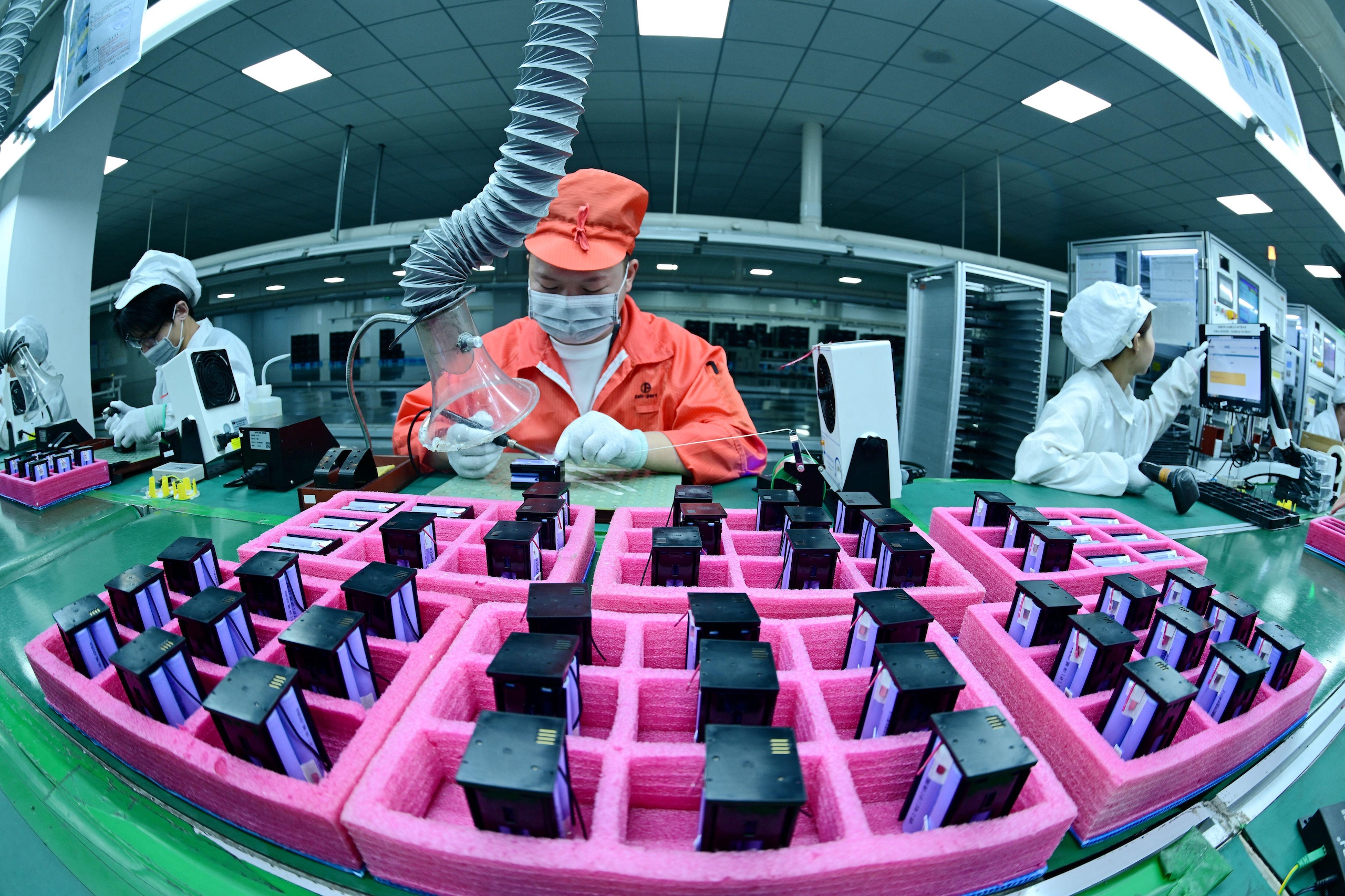
China sits at the heart of global critical mineral supply chains. While a major miner of several critical minerals and rare earths, the country is particularly dominant in midstream processes such as refining and manufacturing products for which the minerals are essential inputs.
According to the International Energy Agency, when it comes to processing and refining, Chinese companies hold an average market share of 70% across key critical minerals. Chinese companies have an over 80% share in the manufacturing of solar panels, as well as producing nearly three-quarters of batteries.
In the Belém negotiation rooms, China argued the text should be removed due to a lack of consensus on how to define “critical minerals” or “transition minerals”.
According to a source close to the Chinese delegation, China did not expect the issue to come up in the context of the Just Transition Work Programme. It may also have seen the text as being potentially advantageous to the EU, with whom China is locked in tensions about critical-mineral supply chains, the source adds.
Global Witness’s Emily Iona Stewart sees the first position as “incongruent”, however. China was fully involved in the UN sectary-general panel on critical minerals, giving it plenty of time to prepare a position in advance of COP, she says. China has also made numerous statements on the importance of the rule of law at the UN General Assembly, she adds.
One off-record source thinks China was surprised by how many countries in the African Group of Negotiators (AGN), normally Chinese allies, were rallying behind the critical minerals issue.
Power Shift Africa’s just transition advisor, Kudakwashe Manjonjo, sees a similar dynamic.
“I think the main reason China called for a ‘no-text’ option was lack of detailed conversations on this issue in the negotiations rooms and in the G77 and China caucus,” he says, referring to the largest UNFCCC negotiating bloc, whose membership comprises 135 Global South countries. “It was clearly an AGN position around value beneficiation [enhancing a raw material’s value through local processing] which came through strongly and I do not think China was well prepared on how to really build a collective position on it.”
On 22 November, however, as an overtime COP30 was coming to a close, China and South Africa launched the bilateral Initiative on Cooperation Supporting Modernization in Africa. That includes a whole paragraph on critical minerals, with language closely echoing that proposed in the 18 December Just Transition Work Programme draft text. The initiative calls for greater international cooperation to “secure responsible, transparent, stable and resilient critical minerals value chains” and increase value addition in African countries. It also states support for “the implementation of robust economic, social and environmental safeguards, for the benefit of local populations where these resources are abundant”.
The Leaders’ Declaration of the G20, which this year was held in South Africa, also launched the G20 Critical Minerals Framework. The declaration states that the framework aims to “unlock investment in mineral exploration, promote local beneficiation at source, and strengthen governance for sustainable mining practices”, though the full text has yet to be published.
NRGI’s Antonio Hill says the fact that the texts at COP30 had so much overlap with language China itself has used and agreed to in the G20 context strongly suggests that China’s opposition at COP30 was more to do with the specific diplomatic context rather than the substance.
Another observer, who requested anonymity, notes that China is acutely aware of the relative strength of its “discursive power” in diplomatic fora, meaning its ability to control narratives, topics and framings in negotiations. They suggest that in the context of COP30 and the Just Transition Work Programme, China was concerned it would be unable to shape the direction of the policy debate, and could risk constraining its own critical-mineral supply chains. With South Africa, on the other hand, it was in a far better position of influence. Underscoring this awareness is the “national-level strategic significance” China places in critical mineral supply chains, the observer notes.
Whatever the diplomatic calculations, Manjonjo sees the announcement at G20 as a positive first step. Despite disappointment at COP30, he says, “the building blocks to establishing binding legal obligations on critical minerals are being set up, finally”.
Looking ahead
While China’s position may be lacking in clarity and consistency for now, governance on critical minerals is unlikely to disappear from the multilateral agenda.
This week, it has been a key focus area at the 7th UN Environment Assembly (UNEA) in Nairobi, Kenya, where discussions are ongoing on a resolution proposed by Colombia and Oman to establish international processes to address the environmental impacts of mining and processing of minerals and metals. This UNEA has also seen the launch of the UN Taskforce on Critical Energy Transition Minerals, which builds on the recommendations made last year by the UN secretary-general panel. The taskforce aims to “turn these ideas into action”, said Selwin Hart, special adviser to the secretary-general on climate action and just transition, at the launch.
For its part, China did not object to negotiations or block wording on critical minerals at the UNEA, observers said.
Charlotte Boyer, a consultant at NRGI, notes that while negotiations at the UNEA have been complex, the governance of critical minerals and their social, environmental and economic implications is now an issue firmly on the multilateral agenda.
Observers expect the issue to be raised again at next year’s COP, being held in Türkiye under an Australian presidency.
Outside of these multilateral fora, resource-rich countries are likely to continue to press China on issues including technology transfer, while downstream consumers will keep pushing for increased transparency as well as environmental and social standards. Meanwhile, the Chinese government and corporate stakeholders are on their own learning curves on these issues.