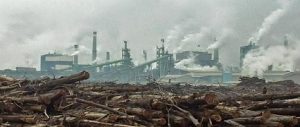
In the late 1970s, China was swept by a wave of economic growth, and with it a wholesale attack on nature. Grain was planted on grasslands and profits extracted from rivers. Land was reclaimed from lakes and seas and forests were felled for arable land.
Seeing those drastic and potentially disastrous steps, an ecologist named Hou Xueyu spoke out. Humanity needed to respect nature’s rules, he said, and safeguard its ecological balance.
Today, Hou Xueyu, who was a member of the Academic Divisions of the Chinese Academy of Sciences and researcher at the academy’s Institute of Botany, is all but forgotten. But his theory of ecological balance remains as relevant as ever. It still has a role to play in guiding social and economic development.
Put simply, ecological balance is a state of adaptation, harmony and unity between organisms and their environment. When an ecosystem is in balance, different parts of the system maintain certain ratios to each other and can maintain that balance even in the face of external interference. But if balance is lost, the system will head towards collapse.
To allay worries that maintaining “balance” meant halting development, Hou used a vivid metaphor: ecological balance is like riding a bike, he said. A bike must be in motion to be stable; if it’s not moving, you fall off. If one component fails – if the handlebars fall off, the brakes fail or the tire springs a leak – the balance is lost and the rider won’t move forward.
Three decades on, nobody talks of ecological balance. Instead, the buzzwords are “ecological construction” or “ecological development”. “Pollute and destroy first, clean up and develop later.” “Better to die of pollution than poverty.” These are the mottos by which China’s officials live. Development trumps all, nothing is more important than GDP, and Hou’s warnings – indeed Hou himself – have vanished into history.
Virtually all of China’s ecosystems – both natural and artificial – are in various states of crisis. Grasslands are degraded by overgrazing and mining. Efforts to exterminate locusts on the grasslands have killed off birds, beneficial insects and other predators of locusts. The natural wetlands of the rural north have been drained and vast swaths of surface water turned filthy. Polluted coastal wetlands have been struck by red tides and natural woodlands swallowed up by development, while village trees are uprooted, trussed up and carted off to the cities for “urban greening” projects. Invasive species create constant crisis, and are found even in nature reserves.
And look at our agricultural ecosystems. An overreliance on human interference has led to excessive use of chemical feeds, fertiliser, pesticides, plastic membranes, herbicides, additives and GM technology, gravely upsetting the ecological balance of our farms. Fertiliser use has increased 100-fold since the early 1950s, and has long focused on providing nitrogen, phosphorus and potassium – not on returning organic material to the soil. The carbon-nitrogen ratio is badly out of balance, resulting in hardpan soil, acidification, and less fertile land than ever before.
Overreliance on pesticides has killed off the natural predators of pests, while the pests themselves continue to develop new resistance, driving use of ever more toxic chemicals. Herbicides temporarily controls weeds, but the weeds return the next year, and so does the herbicide – in greater quantities. Plastic agricultural membranes are everywhere; fields are full of this “white terror”.
The old days of Chinese villages blessed with clean air, water and fresh food are gone. Pests and weeds are growing in number, while extended exposure to chemicals is causing illness – particularly cancer – among villagers. The levels of pesticides, herbicides and growth hormones in food are rising and affecting the health of urban consumers. These are the harsh lessons seen when human arrogance disrupts the ecological balance.
More worryingly, humans are failing to look for the root of the problem. When we see more pests and weeds, we just step up the fight. The pest-killing Bt gene is transferred into crops, turning plant cells into “pesticide factories”, while complementary pesticides are used in a pincer attack. The more highly toxic glyphosate weed killers are used in tandem with crops genetically engineered to resist the chemical, while everything else green dies off. But the dangers of glyphosate when it enters the environment, our food and our bodies, have not been explained.
GM technology adds insult to the injury of an already unbalanced ecosystem. After a decade of genetically modified crop cultivation, US fields are now plagued by “superweeds” and “superpests”. America is the largest planter of such crops, and the water and air of its agricultural areas are already widely polluted with genetically modified material. And American farmers are afflicted by higher planting and pesticide costs. Early this year, 300,000 organic farmers took GM giant Monsanto to federal court, claiming the company was infringing their rights to plant traditional crops and damaging the agricultural foundations of their industry.
The problems are not going unrecognised. Last year, the UN’s Food and Agriculture Organisation issued a call for agriculture to return to nature. With Save and Grow, a publication of the FAO’s plant production and protection division, the organisation launched an initiative “to produce food for a growing world population in an environmentally sustainable way.”
“The present paradigm of intensive crop production cannot meet the challenges of the new millennium. In order to grow, agriculture must learn to save,” the FAO said. “The Save and Grow model incorporates an ecosystem approach that draws on nature's contribution to crop growth – soil organic matter, water flow regulation, pollination and natural predation of pests.”
UN expert Oliver de Schutter has gone so far as to say that small-scale farmers could double food production in 10 years in critical regions by adopting eco-farming methods – plenty to meet the additional needs created through population growth.
Meanwhile, Europe has remained wary of the GM project: in January, German chemical company BASF announced plans to stop producing genetically modified crops for the European market and move its plant-science headquarters to the United States due to “lack of acceptance for this technology in many parts of Europe from the majority of consumers, farmers and politicians.”
And, in both Europe and America, public and private efforts are bolstering eco-agriculture and trade, a trend neatly symbolised by Michelle Obama, America’s first lady, when she planted organic vegetables in the White House garden.
Unfortunately, however, what the developed nations increasingly see as trash technology is now moving to the developing world, and in particular to China.
If humanity wants to survive, it must better manage its relationship with nature. We must recognise that the productive forces of science and technology can also destroy. If we do not protect ecosystems, human society is doomed. We must learn from the fall of Mayan civilisation and from the failings of the old development model. And we must listen to Hou Xueyu; it’s time to get back on our bikes and restore ecological balance.
Jiang Gaoming is chief researcher at the Chinese Academy of Science’s Institute of Botany and deputy secretary of the Ecological Society of China.