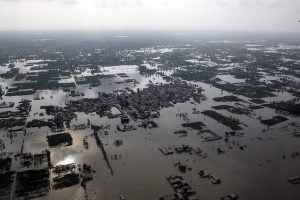
“One woe doth tread upon another’s heel, So fast they follow". That radical green pressure group PriceWaterhouseCoopers warns that even if the present rate of global decarbonisation were to double, we would still be on course for six degrees Celsius of warming by the end of the century. Confining the rise to two degrees requires a six-fold reduction in carbon intensity: far beyond the scope of current policies.
A new report shows that the UK has lost 20% of its breeding birds since 1966: once common species such as willow tits, lesser spotted woodpeckers and turtle doves have all but collapsed; even house sparrows have fallen by two thirds. Ash dieback is just one of many terrifying plant diseases, mostly spread by trade. They now threaten our oaks, pines and chestnuts.
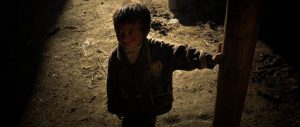
So where are the marches, the occupations, the urgent demands for change? While the surveys show that the great majority would like to see the living planet protected, few are prepared to take action. This, I think, reflects a second environmental crisis: the removal of children from the natural world. The young people we might have expected to lead the defence of nature have less and less to do with it.
Also see: Get China’s kids back to nature
We don’t have to disparage the indoor world, which has its own rich ecosystem, to lament children’s disconnection from the outdoor world. But the experiences the two spheres offer are entirely different. There is no substitute for what takes place outdoors; not least because the greatest joys of nature are unscripted. The thought that most of our children will never swim among phosphorescent plankton at night, will never be startled by a salmon leaping, a dolphin breaching, the stoop of a peregrine, or the rustle of a grass snake is almost as sad as the thought that their children might not have the opportunity.
The remarkable collapse of children’s engagement with nature – which is even faster than the collapse of the natural world – is recorded in Richard Louv’s book Last Child in the Woods, and in a report published recently by the UK’s National Trust. Since the 1970s the area in which children may roam without supervision has decreased by almost 90%. In one generation, the proportion of children regularly playing in wild places in the UK has fallen from more than half to fewer than one in 10. In the US, in just six years (1997-2003) children with particular outdoor hobbies fell by half. Eleven to 15-year-olds in Britain now spend, on average, half their waking day in front of a screen.
There are several reasons for this collapse: parents’ irrational fear of strangers and rational fear of traffic, the destruction of the fortifying commons where previous generations played, the quality of indoor entertainment, the structuring of children’s time, the criminalisation of natural play. The great indoors, as a result, has become a far more dangerous place than the diminished world beyond.
The rise of obesity, rickets and asthma and the decline in cardio-respiratory fitness are well documented. Louv also links the indoor life to an increase in attention deficit hyperactivity disorder and other mental ill health. Research conducted at the University of Illinois suggests that playing among trees and grass is associated with a marked reduction in indications of ADHD, while playing indoors or on tarmac appears to increase them. The disorder, Louv suggests, "may be a set of symptoms aggravated by lack of exposure to nature". Perhaps it’s the environment, not the child, that has gone wrong.
In her famous essay the Ecology of Imagination in Childhood, Edith Cobb proposed that contact with nature stimulates creativity. Reviewing the biographies of 300 "geniuses", she exposed a common theme: intense experiences of the natural world in the middle age of childhood (between five and 12). Animals and plants, she contended, are among "the figures of speech in the rhetoric of play … which the genius in particular of later life seems to recall".
Studies in several nations show that children’s games are more creative in green places than in concrete playgrounds. Natural spaces encourage fantasy and role-play, reasoning and observation. The social standing of children there depends less on physical dominance, more on inventiveness and language skills. Perhaps forcing children to study so much, rather than running wild in the woods and fields, is counter-productive.
And here we meet the other great loss. Most of those I know who fight for nature are people who spent their childhoods immersed in it. Without a feel for the texture and function of the natural world, without an intensity of engagement almost impossible in the absence of early experience, people will not devote their lives to its protection.
Forest Schools, Outward Bound, Woodcraft Folk, the John Muir Award, the Campaign for Adventure, Natural Connections, family nature clubs and many others are trying to bring children and the natural world back together. But all of them are fighting forces which, if they cannot be turned, will strip the living planet of the wonder and delight, of the ecstasy – in the true sense of that word – that for millennia have drawn children into the wilds.
https://www.guardian.co.uk/
Copyright © Guardian News and Media Limited 2012