The announcement came on the eve of this month’s meeting in Bangkok of the Convention on International Trade in Endangered Species: the west African country of Guinea would be suspended from trading in CITES-listed species, due to its repeated use of fraudulent permits to trade in great apes.
It was a promising start to the convention, one that many observers hoped might spur China to greater action on species conservation. Though more than 12,000 kilometres separate Beijing from Guinea’s capital of Conakry, the two are closely intertwined. The trade in Guinea’s imperilled apes is directly fuelled by China’s growing stake in the country’s lucrative mining industry.
Also see: My angst over China’s role in endangered wildlife trade
There are an estimated 200,000 wild chimps in Africa, with the largest population in west Africa believed to be in Guinea. The trade in great apes is not itself illegal, as long as the apes are captive bred and the correct CITES certification is procured. However, extensive new undercover research by conservationist Karl Ammann and his team released to coincide with the CITES convention reveals how easily and how often these certificates are being faked.
For example, eight “C”-categorised chimpanzees were imported to the Shanghai Wildlife park from Guinea in 2011, according to Chinese CITES import permit No 002645. Category C means they were “captive-bred”. The exporter’s name was “Birds Breeding Farm”, a Kinshasa, Congo-registered entity who describes itself online as “regularly selling: birds, turtles, eggs, honey, finches, robbits [sic], cats, gorila [sic], monkey.” But as Amman unequivocally states: “no captive-breeding of chimpanzees was taking place in Guinea and that no official authorisation of trade in chimpanzees for commercial purposes had been granted by the government.”
In March 2012, the international crime agency Interpol revealed that at least 130 chimps were taken in this way from Guinea in the last three years. Almost all the chimps trafficked were young. Juvenile apes are easier to poach, simpler to transport and, in theory, will be a longer-lived, more desirable purchase – people want to see a baby chimp at the zoo.
According to studies, however, for every infant ape taken, at least 10 members of its family group died trying to protect it. If 130 apes were smuggled from Guinea in the last three years and 1,300 died as a result, that is a very significant number to lose. As CITES reports: “The capture of such large numbers of chimpanzees must have been a considerable undertaking in itself, which past experience indicates would have involved the killing of mothers, and perhaps other family group members, since it is invariably juvenile chimpanzees that are wanted for trade. Such crime has the potential to have considerable negative impact upon chimpanzee populations.”
Guinea’s natural resource lure
This suspension could hit Guinea hard. Unlike countries such as Rwanda and Uganda, it has not managed to convert its natural heritage into a sustainable tourist resource. In 2012 its GDP was just US$1,100 per capita, with almost half the population living below the poverty line. Add to this the fact that Transparency International rated it 154 out of 172 countries in last year’s Corruption Perception Index, and you have a situation where US$7,500 for a chimpanzee – the price dealers in Conakry were charging – becomes very tempting for certain people.
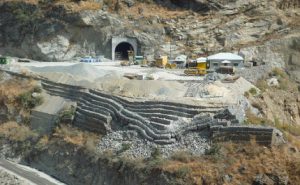
But this is only half the story. For while Guinea may be poor, it is sitting, quite literally, on a goldmine, as well as one for diamonds, iron ore, and – in particular – bauxite (the ore used to make aluminium) of which Guinea holds almost half the world’s reserves. All this makes it very attractive to China, which is perpetually in need of resources to secure its continued growth.
One deal, reported by the BBC, saw China pledge to invest US$6.8 billion in building infrastructure. Daily flights between Conakry and China began as soon as Chinese companies began mining in Guinea.
The Chinese, however, were not just taking minerals. According to Doug Cress, co-ordinator of the UN’s Great Apes Survival Partnership, “Chimpanzees are being caught, stuffed into crates and packed onto a flight with no questions asked. Each one costs around US$25,000 [in China], with gorillas brought into Guinea and shipped off selling for around US$40,000 each. Current export controls at the airport are unsatisfactory and we believe corruption and gross incompetence by officials are allowing this trade to thrive.”
Indeed, the same Interpol report that exposed the trade from Guinea revealed that almost all the apes were being exported from Guinea to China. What is so bitterly ironic is that the Chinese government has been making a great show of its upholding of CITES’ new rules, with CITES head Scanlon awarding a certificate of commendation to the country’s compliance group last year in recognition of efforts within China’s borders. Yet while CITES sanctioned Guinea, China has seen no reprisals.
“There are a range of players within China, from zoo bosses to Chinese Zoo Association officials to CITES executives who are happy to play the system to the extent possible and if they can use a corrupt official somewhere in Africa as a fig leaf to hide their transactions they will do so,” said Karl Ammann, lead author of the Conakry Connection report, before the convention in Bangkok.
“China has to become serious about conservation and start investing resources to cut down on demand but also to help on the supply side with financing enforcement and anti-poaching activities.”
In Bangkok, China could have shown its commitment to progress by pledging to return the illegally trafficked apes to their countries of origin. It could have followed Thailand’s lead and banned its domestic ivory trade. Instead, it spent its time trying – and failing – to block new legislation that would ban the trade in certain highly endangered species of sharks. China’s efforts over the two weeks of the convention did nothing to sustain the initial optimism that the case of Guinea’s apes would help drive greater Chinese action on conservation.