The Chinese have a saying about drinking poison to quench a thirst, “yin zhen zhi ke”, used to warn against hasty remedies with consequences worse than the problem itself. A recently proposed method of tackling illegal logging is just such a case – it will in fact exacerbate the issue.
China is one of the world’s largest importers of timber products. So whether or not China takes measures to ensure those products are obtained legally, and what those measures will be, affects the survival of the world’s forests and ecologies and China’s international reputation.
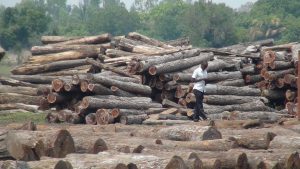
Field studies over the last 10 years by the Environmental Investigation Agency (EIA) in Indonesia, Myanmar, Russia, Laos, Vietnam, Mozambique, Madagascar and China itself have found China’s demand for timber is driving illegal logging, with dire global consequences: the vital forest ecosystems have been irreparably damaged; incomes in communities relying on those forests have plummeted; and corruption and conflict are on the increase.
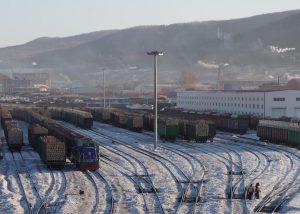
The Chinese government is taking the problem seriously. But the key challenge is that the country has no relevant law, which means illegally sourced timber often enters China legally. As EIA reports reveal, billions of dollars’ worth of illegal timber flows into China every year.
Although Chinese law enforcement agencies have committed huge material and human resources to fighting timber smuggling, its customs authorities rely mainly on CITES, the UN Convention on International Trade in Endangered Species. But that convention bans trade in a limited number of tree species, therefore only a tiny fraction of illegal timber is stopped at the border.
The bulk of timber felled worldwide ends up in China, the US or the EU. But in the US and the EU, importers are required to exclude illegal timber. Firms that do not comply may find themselves in court.
This means that illegal timber is more likely to be sent to China, which lacks such a "firewall". And over the years, EIA has found that illegal logging and smuggling by Chinese timber firms overseas often involves assistance or direct participation by local companies and officials.
A voluntary code
Now the Chinese Government is promoting a voluntary code of conduct, the Guidelines for Overseas Sustainable Forest Products Trade and Investment by Chinese Enterprises. Despite its good intention to tackle the illegal timber trade, the code fails to deal with the root of the problem and will in fact, like drinking poison when thirsty, exacerbate the problem.
Why will the guidelines fail? First, they do not deal with the core problem. They attempt to control the behaviour of Chinese firms operating overseas, but the most pressing issue is deciding how to prevent illegal timber from entering China. This is outside the scope of the new code.
Secondly, the guidelines are voluntary, in effect little more than a set of slogans. Unlike laws or regulations, these will not constrain the behaviour of profit-motivated businesspeople and are of no use in law enforcement or punishment.
In the past, two similar sets of guidelines have been promulgated and done virtually nothing to stem the flow of illegal timber into China. Only a month after a training session on an earlier set of guidelines was held for Chinese firms in Pemba, Mozambique, one of those firms was found to be illegally exporting logs. This was a breach of the country’s ban on export of certain tree species in log form. Most of those logs would have been able to enter China legally.
Chinese forestry officials have privately admitted that the country will eventually need an enforceable law to halt illegal timber imports, but said China’s current circumstances do not allow it and that the cost of legislation would be too high. EIA has heard all this before – policymakers in the EU and the US once had the same concerns.
But times have changed. Global timber markets are becoming more regulated, with illegal timber being excluded from supply chains. Some Chinese firms are participating in this process but unless China bans the illegal timber trade those responsible firms will struggle to compete with their less honest counterparts and will in effect be punished.
EIA calls for the Chinese authorities not to allow another set of unenforceable voluntary guidelines to further delay the inevitable. Rather, they should put forward a timetable for creating an enforceable method of regulating China’s timber trade.