Jack Ma, founder of e-commerce platform Alibaba and chairman of The Nature Conservancy’s China Program, has drawn hostile fire from environmentalists after a British newspaper recently reported he hunted stags in Scotland in 2012. What’s more, Ma has confirmed the story, and TNC issued a statement backing the shooting trip as a way to learn about European wildlife conservation strategies.
Chinese environmental group Green Beagle has published an open letter criticising Ma’s trip, saying it would encourage China’s rich to go hunting and hamper efforts to protect wild animals.
Setting a bad example
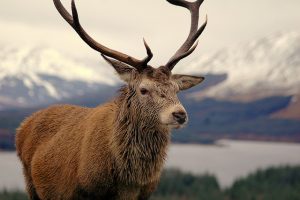
Increasing numbers of rich Chinese tourists are arriving for hunting holidays – renting castles, wearing tweed and hiring butlers in order to experience an aristocratic lifestyle, according to a report from the Sunday Times newspaper. Ma spent nearly HK$500,000 (£36,000) on renting a castle in a Scottish village, where he and 11 friends shot 17 stags during their week-long hunting trip, the newspaper said.
Overseas hunting trips are becoming popular among China’s rich, according to Green Beagle, and people in China’s own hunting grounds, after secretly operating for foreign hunters for 20 years, are now keen to stimulate the domestic market. If China’s rich are allowed to hunt at home, no thought will be given to wildlife protection, argues Green Beagle.
Eight years ago, in 2006, the State Forestry Administration announced an auction of permits for international hunters to shoot certain animals. The decision came in for widespread criticism.
Song Huigang, chief scientist at China Wildlife Conservation Association told chinadialogue that “all of society rose up in opposition. Eventually the authorities had to back down and the auctions never happened."
In a response posted online, Ma said: “I have no interest in learning how to be an aristocrat. I was born poor and have no longing for an ‘aristocratic life’.” Ma, a former English teacher, finds himself in the international spotlight as never before in the run up to Alibaba’s September debut on the New York Stock Exchange. Its valuation is expected to top US$150 billion. Although Ma remains the firm’s chairman, he stood down as CEO in May to concentrate on environmental work with TNC.
Study trip
Ma described the trip’s goals as educational — to learn more about animal protection and the environment through hunting. He said hunting is a necessary measure for protecting the environment, as many wild animals lack natural predators and so run rampant. Without hunting to balance animal numbers there could be huge environmental damage. In his defence, Ma pointed out that hunting is a specialised skill, a way for humanity to experience nature, and to pass on martial spirit. In many places hunting and fishing bring in funds to spend on conservation, though he also admitted hunting is a cruel affair.
Ma chairs the China Program board of The Nature Conservancy (TNC), which has stated it supported the trip, made two years ago, to study the development of nature reserves and control of wild animal populations in Europe.
Ma is keen to show the public his love of the environment – his Weibo account describes him solely as chairman of TNC.
Song added that “Jack Ma didn’t do anything wrong. He set a good example by promoting scientific methods of protecting wild animals." Song thinks Chinese environmentalists get worked up at the first mention of hunting. In China, discussion is too narrowly focused on protecting wild animals, rather than propagating proven scientific methods for doing so.
Animal protection debate
He believes an appropriate amount of hunting is a scientific and effective method of controlling animal numbers, raising funds for conservation, and promoting protection of wild animals: “People in China can’t face up to that.” Ma was not poaching, and should not be criticised on moral grounds, Song added. As long as the law isn’t broken then overseas hunting trips taken by China’s rich may be helping fund international conservation efforts, he said.
Green Beagle disputes that. Its open letter quoted a 2004 report from an established UK conservation group saying that the increasing popularity of trophy hunting in Africa has made significantly less financial contribution to conservation than eco-tourism and photo safaris. Only a very small part of spending on hunting has trickled down to local communities to be used for conservation, while corruption means hunting quotas are not enforced and some areas have seen wholesale slaughter of wild animals. Unfair distribution of hunting income has led to conflict within communities, worsened enmity between landlords and locals, and ultimately caused an increase in poaching.
Trophy hunting, like any sport, has its rules: shoot males, not females; shoot the old, not the young, Song said. New hunters are accompanied by guides who teach them about the sport, and true hunters will never over-hunt.
He added that hunting trips usually last a week, with hunters learning how to find and observe their prey, learning the joy of communing with nature and how to love it rather than to destroy it. Locals also make an income from hunting and so are motivated to protect the wild animals and the environment.
Song told chinadialogue that foreign hunters are particularly keen on China’s argali, the world’s biggest wild sheep, with long legs, and curling horns that alone can weigh up to 20 kilograms. In 1987, hunters would pay about US$28,000 to shoot one argali in China’s north-west, with total spends reaching US$40,000 — money that played an important role in animal conservation, he said. After hunting stopped in 2006, people in reserves like Tashenku’ergan were too poor even to buy fuel. “How are they meant to fight well-equipped poachers?” he asked.
Learning without guns
Xie Yan, a researcher at the Chinese Academy of Sciences’ Institute of Zoology, told chinadialogue that in developed Western nations hunting is well managed, with annual surveys of animal numbers that allow a hunting quota to be set. And the income from hunting is spent on conservation, with the finances open and transparent.
But Xie explained that this is not the case in China, hence the opposition from Chinese environmental groups. Furthermore, China does not have the animal populations to support hunting – there are few animals in the wild, so any hunting quota would need to be set at zero. Income from hunting is not made public and management of hunting is not transparent. In the past, hunting companies kept the bulk of funds for themselves. Little was spent on conservation.
Xie said that Jack Ma has invested considerable time and money in environmental protection, and has made a major contribution. However, as he has a greater understanding of environmental protection than the average person, he cannot hold himself to the standards of the average person. His every action is in the public eye, and his hunting trip is bound to encourage others, especially the rich, to do the same.
“Ma deserved the criticism,” Xie said. There’s a lot to be learnt from overseas conservation efforts, but no need to fire a gun to do so. “If anyone invited me to go hunting I’d say no."