Tackling nature crime in Africa – and globally – is a major challenge. A big factor is that many of these are cross-border crimes, which need the kind of international cooperation and information sharing that is scarce.
The Nature Crime Alliance, launched in August 2023, is trying to help fill this gap. In February, Ghana and Malawi became the latest African governments to join this global alliance of governments, civil society groups, law enforcement agencies and private organisations. The network is managed through the World Resources Institute in association with the UN Office on Drugs and Crime.
In Malawi and the wider Southern Africa region, nature crime is a pressing issue. Malawi’s director of forestry, Titus Zulu, tells Dialogue Earth: “Our forests, including the valuable miombo woodlands, are under threat due to illegal logging, driven by both domestic and international demand,” he says. “Wildlife crimes, including the poaching of elephants for ivory and pangolins for scales, also pose a serious challenge because they involve international syndicates.”
As for West Africa, Ghana’s Forestry Commission chief executive, John Allotey, tells Dialogue Earth that the region’s rich biodiversity and forests draw global attention, including from illegal miners, fishers and their customers. He gives the example of illegal gold mining leading to deforestation, river pollution and increased poaching.
“As for Ghana, the high forest zone – which covers about 34% of the country – is the hub for nature crimes,” Allotey says. “There is quite some pressure on natural resources where natives and migrants engage in these crimes as a means of earning their livelihood.”
More than an environmental problem
The alliance defines nature crimes as illegal forms of logging, mining, fishing, wildlife trade and land conversion. Africa feels the impacts of such activities particularly severely, explains Robert Wabunoha, environment governance coordinator for Africa at the UN Environment Programme (UNEP). To combat the problem, robust continental, national and local efforts are needed, he adds.
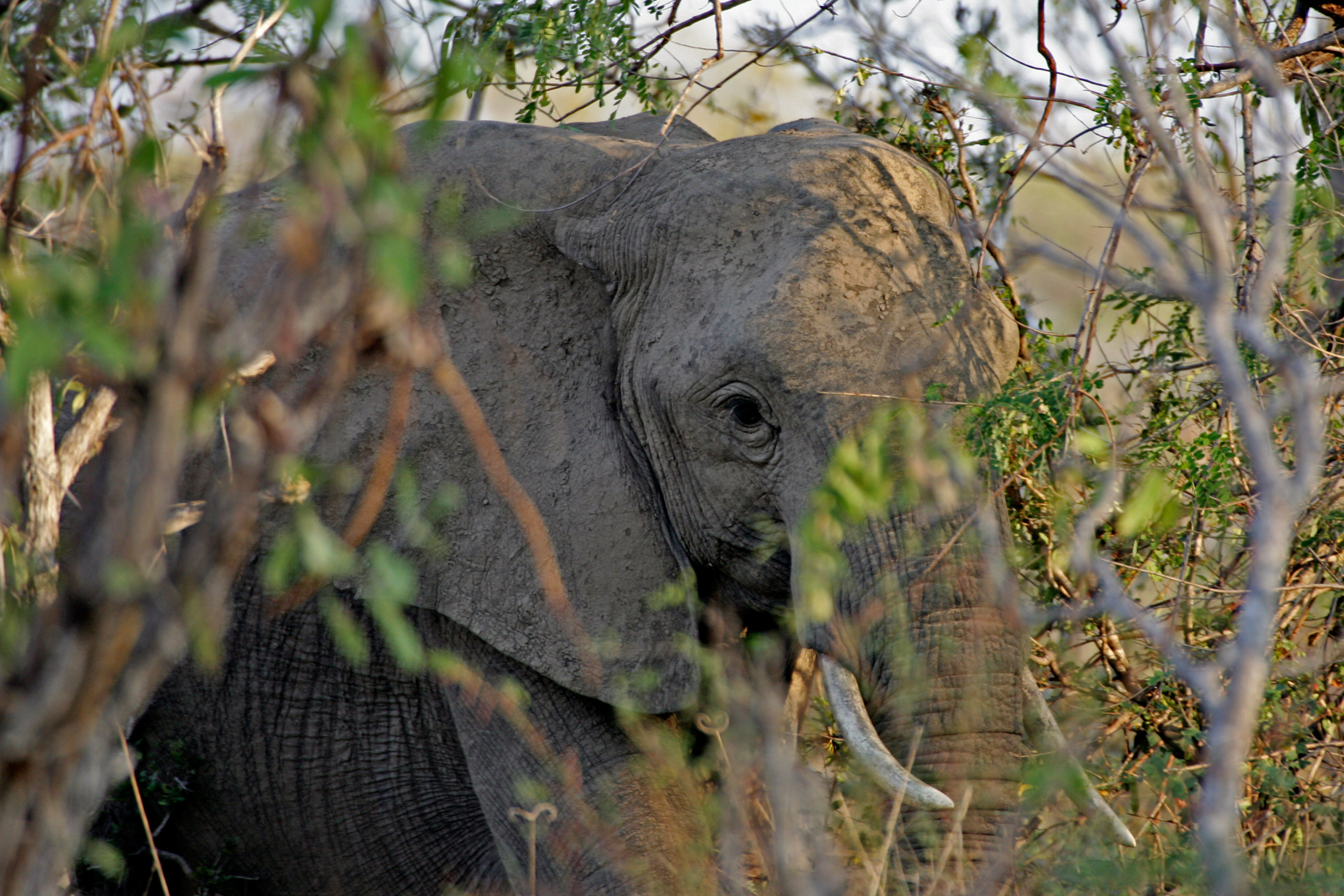
The illegal trade in Africa’s wild elephants, rhinos and pangolins has hit these populations, diminishing biodiversity and disrupting ecosystems, Wabunoha says. “This not only threatens biodiversity, but also impacts tourism, which is a crucial economic sector for many African countries,” he states.
The Nature Crime Alliance’s director, Yulia Stange, says much of this criminal activity directly impacts those parts of the world most critical to the planet’s ecological health and to human well-being. As an example, illegal logging in the Congo Basin – the world’s second largest rainforest – causes habitat loss and the release of planet-warming gases.
Stange says it will not be possible to meet global climate and biodiversity goals without addressing the scourge of nature crime.
She says nature crime overlaps not only with financial crime and corruption, but also with the trafficking of human beings, drugs and small arms. “Nature crime should therefore be seen not only as an environmental challenge, but as an economic and security challenge, too.”
“In parts of Africa, for example, nature crime has been linked to terrorism finance,” Stange says.
Efforts and challenges
Africa loses about USD 17 billion annually to illegal logging, with most of the smuggled wood going to Asia. As an example of wildlife crime, about 157,000 elephants were poached in Africa between 2010 and 2018, according to a report by the UN Office of Drugs and Crime.
Africa does have other initiatives and measures, as well as the Nature Crime Alliance, to fight nature crimes.
In Ghana, Allotey says a new Wildlife Resources Management Act was passed last year, revising all laws relating to wildlife and protected areas. There is Ghana’s REDD+ Strategy 2016-2035 to preserve forests and make agriculture more “climate-smart”. And there is the Ghana Shea Landscape Emission Reductions Project, which also involves stemming forest loss and restoring trees.
In Malawi, Zulu says various policies have been implemented, including the National Forest Policy and the National Parks and Wildlife Act. The country collaborates with regional bodies, like the Southern African Development Community (SADC) and the African Union, on initiatives such as SADC’s Law Enforcement and Anti-Poaching Strategy.
“But challenges remain,” Zulu says. “Greater regional cooperation and stronger legal frameworks are needed to enhance the effectiveness of these efforts.”
UNEP has been trying to combat nature crime in Africa through various interventions, such as by training police in Uganda, and supporting the development of laws and policies.
According to Wabunoha, UNEP also implements specific projects to combat nature crime in Africa via the Global Environment Facility (GEF), which channels money to projects that support five environmental conventions including the UN’s biodiversity and climate conventions. He gives the example of the GEF-6 project to combat illegal wildlife trade in South Sudan.
There is also the Lusaka Agreement Task Force (LATF), which focuses on combating transboundary illegal wildlife trade in Africa, and the Bamako Convention which addresses hazardous waste and chemical management.
Towards fostering collaboration
Zulu is very positive about the Nature Crime Alliance. “For Malawi, it means better access to resources and expertise that can help strengthen our enforcement capabilities and develop more effective strategies to combat nature crime,” he says. “Regionally, the alliance represents a unified commitment to addressing a common threat, fostering collaboration that can lead to more coordinated and impactful actions against nature crime.”
Stange says the alliance is committed to building its network in Africa to support efforts to counter nature crime. For instance, in January it convened the first Southern Africa Regional Private Sector Dialogue on Disruption of Financial Crimes related to Environmental Crimes.
Stange says the alliance is also supporting members, such as the Environmental Investigation Agency and the Wildlife Conservation Society, to undertake work in Africa under the Countering Nature Crime initiative, which is funded by the US Agency for International Development.
“This includes work to develop Gabon’s timber traceability system,” she says, “and a project focused on wildlife trafficking in Nigeria and the Republic of Congo.”