![<p>Buge Mena and his wife, Niriya Mena working at home, weaving and cleaning rice, respectively [image by: Sweta Daga]</p>](https://dialogue.earth/content/uploads/2017/05/NABA-1-of-6-768x510.jpg)
“My Naba (father) always says you can’t challenge nature. If you challenge nature, you are asking for trouble. When you see a river and think, it’s so low, I can easily cross it, the next time you need to cross the river, it will rise and swallow you; nature is always stronger than you. You can have no ego with nature,” explains Tine Mena, a woman from the Idu Mishmi tribe in the state of Arunachal Pradesh in India.
Tine is the first woman from the seven states that comprise what is popularly known as the Northeast to climb Mount Everest. She is also the daughter of Buge Mena – popularly and respectfully addressed as Naba by all – one of the most respected tribesmen in the Mishmi Hills, known for his skills as a renowned hunter.
While growing up Tine was dragged on hunting expeditions, crying throughout the trips. Sitting next to her now 70-year-old father, she teases him and says, “Naba would not care if I was in pain or hungry. I couldn’t make a sound in the jungle. Sometimes he would just disappear and I wouldn’t know what to do.” Buge starts chuckling at this point in the story, and concedes that he had done that.
He moved to the town of Roing 40 years ago, but stories of his hunting exploits stretch back six decades. There is a legend about his single-handed fight with a Himalayan black bear. Tine points to a prominent scar on Naba’s face. “Most people think this is a dimple, but this is where a bear clawed Naba.”
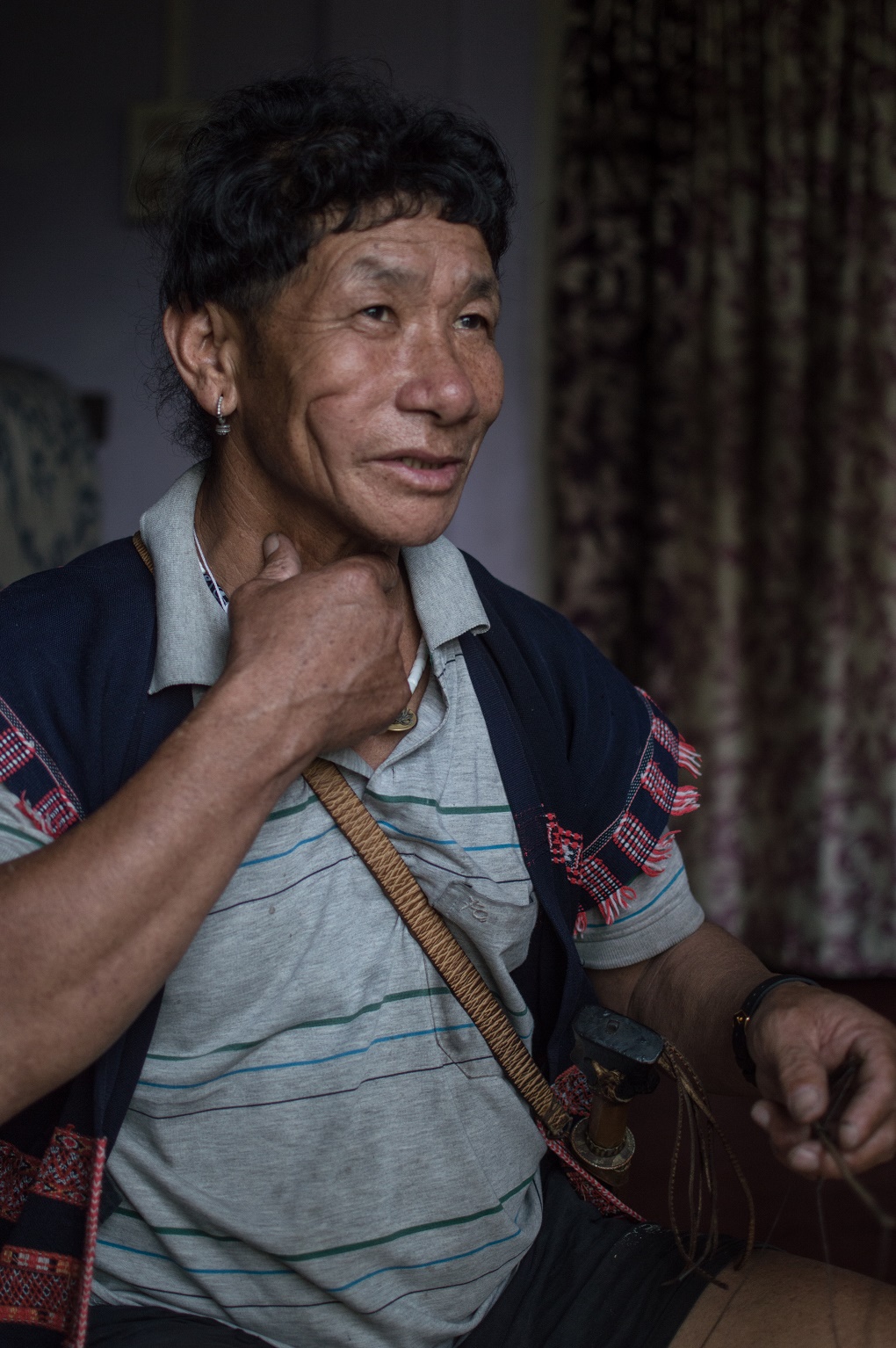
“When I was in my late 20s, I was in Echali, my village. I went hunting right before the monsoon when the jungle is full of berries,” Buge begins. “Sometimes after gorging on berries, the bears just fall asleep on the trees. Once, I saw five bears sleeping on one tree – two were sleeping on the lower branches and three were on top. I shot four of them,” Naba says. “But I was only able to carry back two of the bears. I stopped in a friend’s village to rest and share the meat. When I arrived at his house, an old woman ordered me to take the meat away. She seemed angry.”
He drew a breath before recounting the rest of the story. “A stillborn baby had been born in that house. We are not supposed to bring jungle meat into a house where someone had died, but I had not known. I left immediately, but I knew I had broken a ghena.” A ghena is a taboo, and breaking it has consequences.
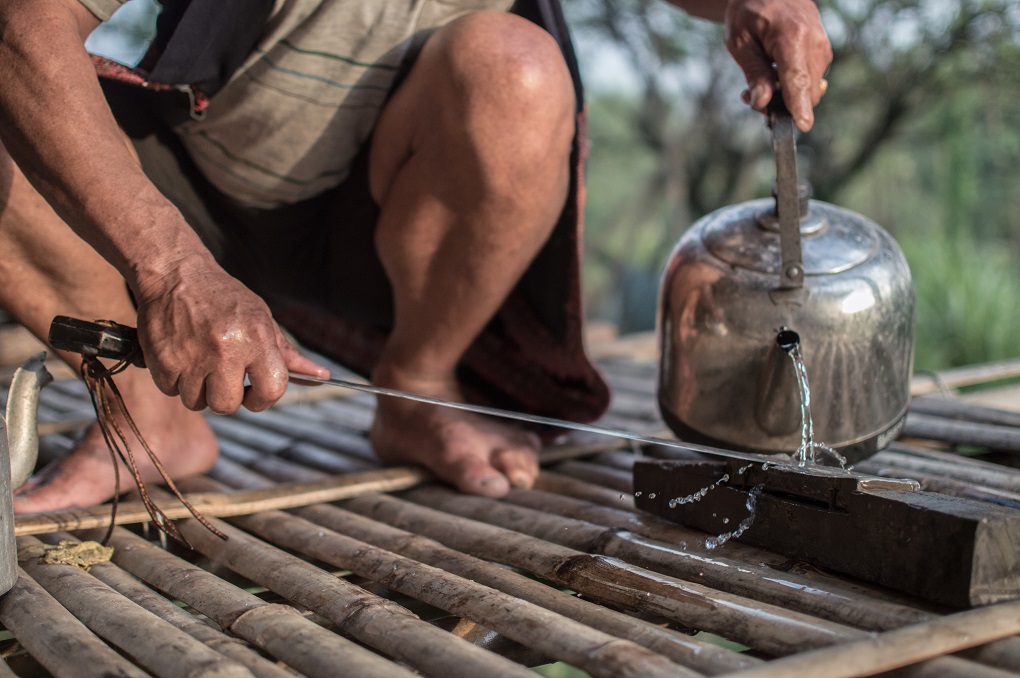
The ghenas
In Arunachal, there are dozens of tribes and sub-tribes. The Idu Mishmis are dwindling; numbering about 12,000 people. Their lives are profoundly shaped by rituals, myths, and taboos. These rituals are intertwined in cultural practices related to food, death, prayer, and even hunting. Referred to as ghena, these restrictions provide ecological balance for the Idu tribe.
Ghenas can function as an intricate conservation device. Large animal killings demand various personal sacrifices, usually for at least five days. The hunter is not allowed to sleep with his wife, bath, eat garlic or salt, or wash clothes. Even if you only eat the meat from the jungle there is a penance. An important ghena applies to tigers, the apex predator in the region. Tigers can only be killed in self-defense, or if one has turned into a maneater. If a tiger is killed otherwise the ghena attaches not just to an individual but the whole village, and all of them suffer, making the protection of tigers a collective responsibility. Ghenas ensure that the Idus continue to respect the ecosystem they inhabit because it remains at the forefront of their mind.
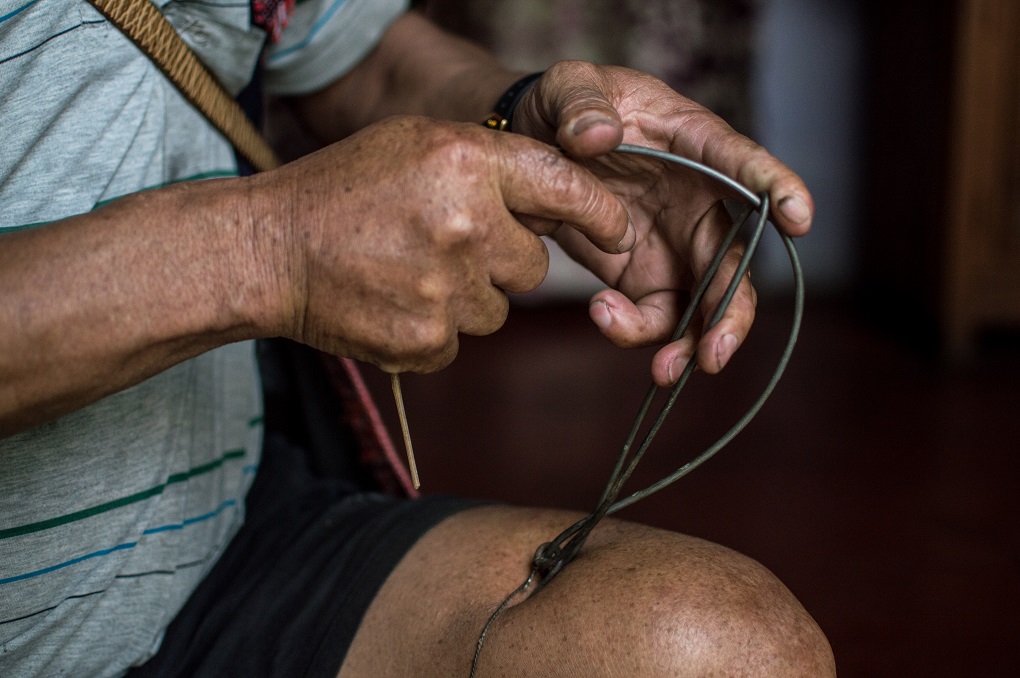
Hunting is a big part of Idu life. Hunters would go out into the jungle for months at a time. The practice supplements kitchens, and during it the Idu also collect medicinal plants. Children go hunting and foraging because it is a matter of survival, custom, and ritual. Hunting enables children to learn about nature and imbibe traditional knowledge that generations before them have cultivated.
Thinking twice about hunting
Ghenas require people to think twice about hunting; they are not to be taken lightly. Buge is an exceptional hunter and in the Idu community he is a legend, but even he has suffered the consequences of breaking ghena and disrespecting nature. Buge reduced his hunting after the bear attack, but in spite of that, all his sons died over the course of his lifetime. He thinks this is because of his ghena of hunting too much.
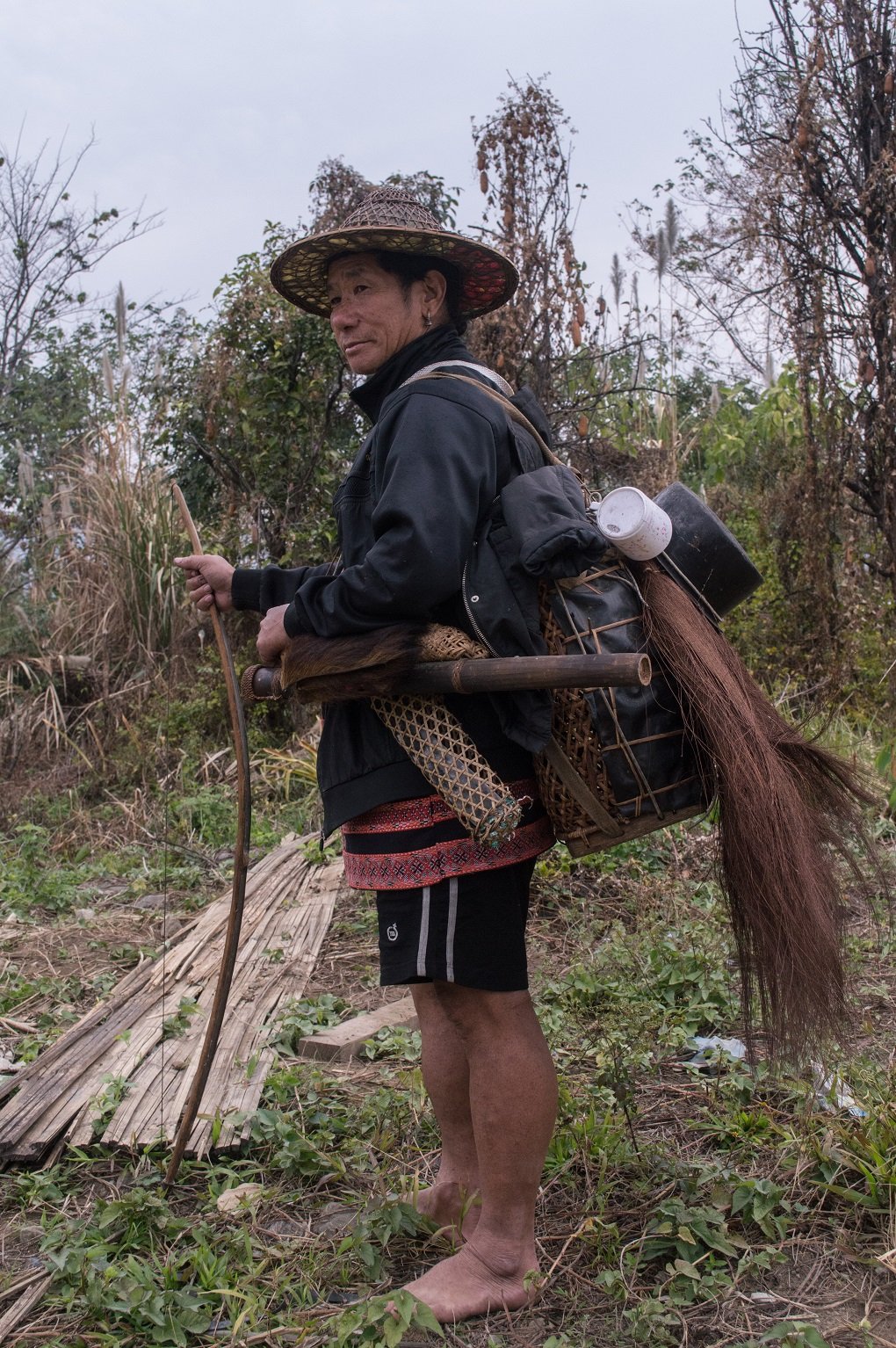
As Arunachal Pradesh opens to the world with increasing development and tourists coming to see its natural beauty, it is at risk of becoming another destination hotspot, with pressure on ecological resources. Naba wonders what will happen to the next generation. Many of them are not interested in the Idu ways. He is seeing things rapidly change before his eyes. “If people stop going into the jungle and lose their connection, how will we keep our balance?”
A worse thought may be that if people go into the jungle, and do not observe the ghenas – a mauling by a bear may be the least of dangers. Like Buge, they may live to see their children die.





![The Indus at the site of the proposed Diamer-Basha dam [image by: Water and Power Development Authority, Pakistan]](https://dialogue.earth/content/uploads/2017/05/Indus_Diamer_Basha_Dam_Site_Image_WAPDA-300x169.jpg)