The small village of Latpanchar, located next to Mahananda Wildlife Sanctuary in the Himalayan foothills of India’s West Bengal state, attracts visitors from across the country and beyond. They travel to see rare and beautiful birds like the rufous-necked hornbill, long-tailed broadbill and red-headed trogon, many of which can be found in the village itself.
Home to around 15,000 people, Latpanchar boasts 17 homestays, 15 bird guides and 20 drivers, according to Parag Gurung, a local home-stay owner. The village is an example of a trend visible across the Himalayas, of locally-led, small-scale tourism that serves visitors interested in lesser known species than the tigers and elephants typical of mainstream safaris.
Wildlife-based tourism is big business in India. In the year 2015-16, tourism revenue generated by the country’s tiger reserves was approximately INR 24.9 million (USD 301,100), while on average, tiger reserves are estimated to generate around 5 million days of employment annually. While there may be a long way to go before other wildlife tourism models produce equivalent figures, experts say there is great potential in the Himalayas to develop models of wildlife tourism that benefit local communities as well as biodiversity conservation.
Tourism potential in the Eastern Himalayas
In Latpanchar, everyone involved in ecotourism operations, from home-stay owners to drivers, cooks and birding guides, comes from the local community, says Gurung, adding that this drives a widespread recognition of the value of conservation.
“Tourism will remain only if these birds and these forests remain,” he says. Gurung notes that the growth of wildlife-focused tourism in the village over the past decade has provided many in the community with their entire livelihood, reducing their reliance on the forest for resources like firewood.
Tourism will remain only if these birds and these forests remainParag Gurung, home-stay owner in Latpanchar, India
The Himalayan region is a biodiversity hotspot, with many species of plant and animal having evolved in the region’s diverse valleys, separated by high ridges and peaks. The Eastern Himalayas, designated an ‘Endemic Bird Area’ by the NGO BirdLife International, is home to 23 bird species that live nowhere else on Earth.
India boasts an active community of birdwatchers, with thousands of volunteers regularly contributing to bird counts. The country’s Himalayan areas are also standard destinations for high-end, international birding tour companies, demonstrating a healthy demand among global enthusiasts for trips to see the region’s special birds. As such, the potential for building specialist tourism around this biological uniqueness – which can then have spillover benefits for conservation – is high.
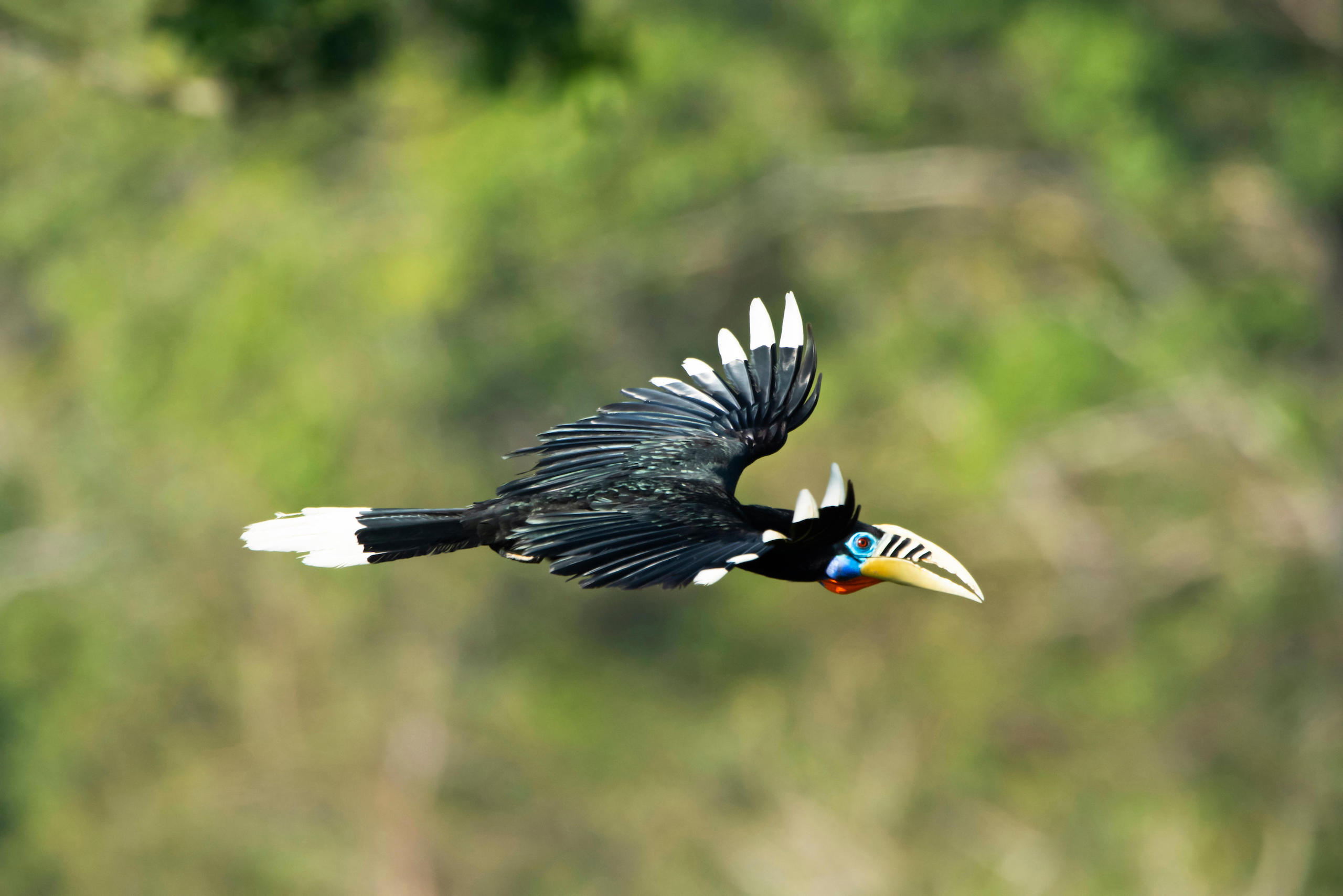
Anirban Datta Roy, a conservation biologist who has worked with tribal communities in India’s north-east, says: “Considering the terrain and habitat in north-east India that influence ease of sightings, birds have proven to be successful for tourism, especially since there are many takers for the rich bird diversity of the region.” Some of the most attractive species for visiting birdwatchers include hornbills (including great, rufous-necked and wreathed), pheasants (such as Blyth’s tragopan, Mrs Hume’s Pheasant and the Himalayan monal) and cranes. “Ideally the focus species should have a cultural connection with the community that may help in taking forward [community-led tourism] initiatives,” Roy adds.
Aside from Latpanchar, other examples from the Eastern Himalayas include community-conserved areas around the high-altitude village of Thembang in Arunachal Pradesh, where tourists come to see red pandas in the surrounding forests; and community-based butterfly-watching in the Garo hills of Meghalaya.
Meanwhile, in the mid-hills of Ilam district in eastern Nepal, local communities benefit from tourists hoping to see red pandas, and earn a living from providing hospitality services like home-stays and working as forest guides, says Janita Gurung, an ecologist at the International Centre for Integrated Mountain Development (ICIMOD).
“The Red Panda Network is building capacity of the local communities for tourism centred around the endangered red pandas. They also know when it’s best to conduct these trips so that the red pandas are least disturbed,” she says, adding that the income panda tourism brings in acts as an incentive for the community to ensure the animals and their habitat and food – bamboo in particular – is conserved.
Chinese villages focus on bird photography
In the Himalayan foothills of China’s Yunnan province, bird photography has grown into a mini-industry that supports the livelihoods of entire villages. In Baihualing, on the outskirts of Gaoligongshan National Nature Reserve, tourism operations are collectively run by the 60 households that make up the community, says Yi Shaoliang, intervention manager for rangeland and wetlands at ICIMOD. Local residents operate lodges and hotels and provide guiding services, targeted at the sizeable community of bird photography enthusiasts hoping to photograph the region’s special bird species, like the Sclater’s monal and Yunnan fulvetta. Yi estimates that annual income from bird photography-related tourism in Baihualing averages USD 3,000-5000 per household.

A 2021 ICIMOD case study looked at bird photography in the nearby village of Hanlong, also adjacent to Gaoligongshan National Nature Reserve. Since 2009, villagers have erected hides and dug ponds on their property to attract bird species which are highly sought after by photographers. 86% of households in the village are now involved in some way with bird photography, the study found.
The study concluded that bird photography tourism had provided local communities with new employment opportunities; reduced their extraction of resources such as wood from forests; and provided villagers with detailed knowledge of their local biodiversity. Villagers have also developed cooperative mechanisms to decide where hides and ponds should be built (allaying concerns they would impact the area’s ecology) and share resulting income. “Bird photography tourism offers new opportunities and hope for sustaining local livelihoods and biodiversity in conservation priority areas,” the study concludes.
“Wildlife tourism can help sustain local livelihoods. Governments play a big role in providing the enabling conditions for such tourism. And scientists can provide the right guidance,” says Yi.
Engaging local voices
Earlier this year, in meetings with India’s Ministry of Fisheries, Animal Husbandry and Dairying, a group of young Indian pastoralists made a case for skills development programmes that would help them participate in ecotourism, including as naturalists and tour guides.
“Pastoralists, living and sharing space and time with the charismatic and endemic antelope and carnivores, have the best knowledge about their presence and habitat use,” says Rashmi Singh, an affiliate researcher at PASTRES: Pastoralism, Uncertainty, Resilience, an international research programme focused on understanding pastoralism.
Singh emphasises the importance of including local institutions like village or tribal councils in the management of ecotourism, to ensure resources are used sustainably and benefits are shared equitably among the community. She also suggests that in order to reduce adverse impacts on wildlife, visits to core habitats should be restricted. In similar vein, Roy says that disturbance to wildlife can be managed and regulated via use of designated trails and trained guides.
More broadly, Roy says that to be successful in the long run, community-led wildlife tourism initiatives have to address three key areas: acceptance and support from the community; assessment of impacts on wildlife and implementation of necessary safeguards; and sustainable financing options and long-term commercial viability.