


With partially webbed feet, semi-retractable claws for hooking slippery prey and two layers of fur to keep dry, the fishing cat is built to hunt in water. Populations of the species are scattered across the wetlands of South and Southeast Asia, but the nocturnal wild cat is scarce and rarely seen. While its total population size is unknown, the fishing cat is considered vulnerable to extinction, as it faces a multitude of threats.
In some parts of its range, the fishing cat is persecuted out of retaliation for stealing fish and destroying fishing nets. In other areas, it is hunted for its meat. A common threat throughout its Asian range is habitat loss.
Researchers studying the fishing cat stress that its survival hinges on the protection and restoration of its wetland home, and achieving peaceful coexistence with the humans who live alongside it. Across the species’ broad and varied range, a host of projects are underway which are working to achieve just this.
Small cat, big threats
Being a wetland specialist, the fishing cat is highly vulnerable as wetlands across its patchwork range – be it mangroves, marshes, floodplains or deltas – are falling under the axes of development, agricultural expansion and urbanisation. Between 1970 and 2015, Asia lost 32% of its natural wetlands. Climate change also poses a danger: according to a World Bank report, India – a fishing cat stronghold – could lose 669 square kilometres of coastal wetlands and 889 square kilometres of brackish wetlands to a one-metre sea level rise this century.
Fishing cats can thrive in many different wetland ecosystems, but mangroves are “really, really important”, says wild cat researcher Vanessa Herranz Muñoz. The animals like mangroves because their dense roots provide a refuge where they can hide and survive, says Muñoz.
Mangroves are also crucial in our fight against climate change, as they store more carbon than other forest types. But Asia’s mangroves are under threat. In Southeast Asia, over 100,000 hectares of mangroves were destroyed between 2000 and 2012, due to conversion for aquaculture, agriculture and palm oil plantations.
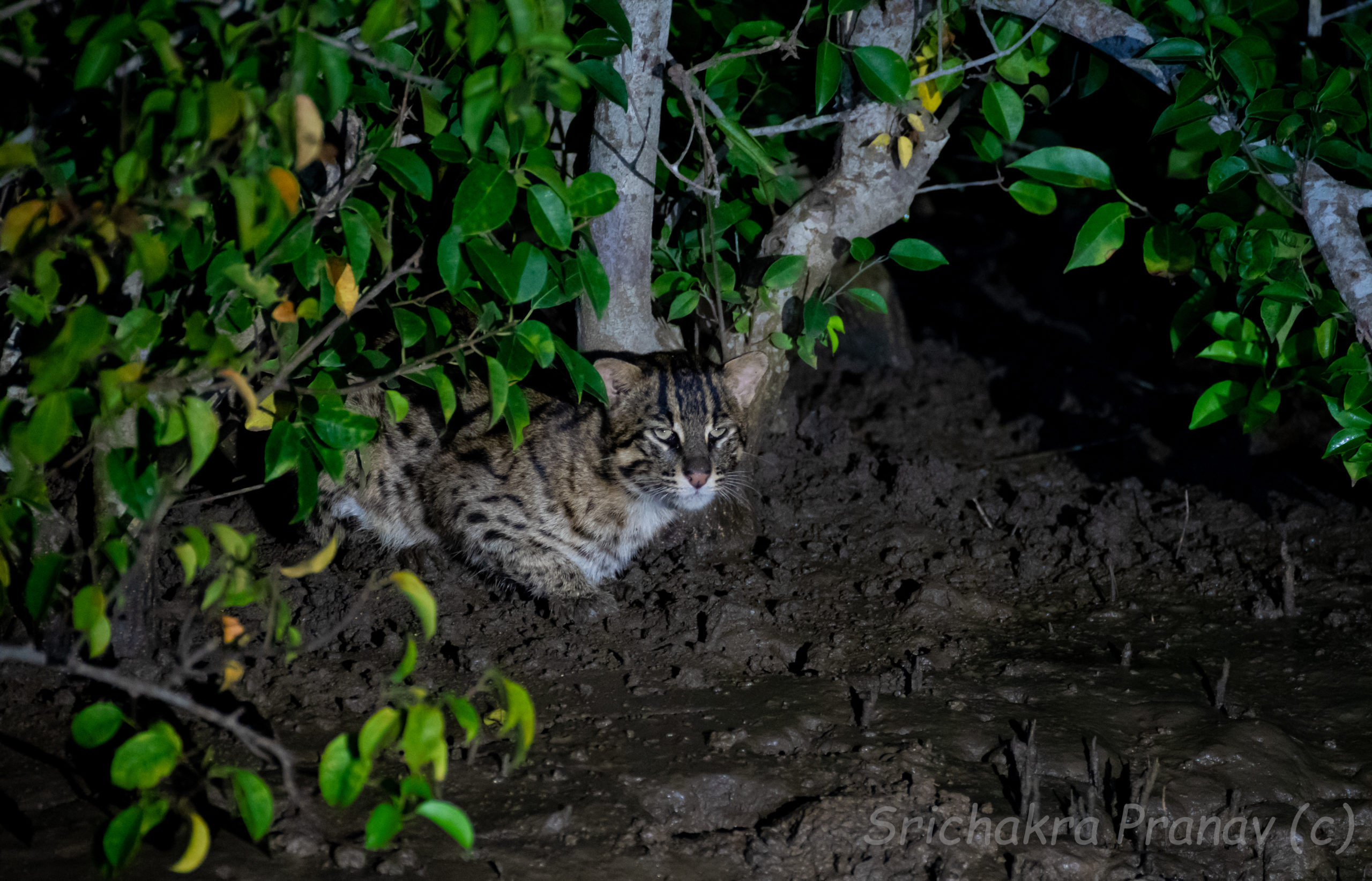
Muñoz says that fishing cats may already be extinct in Vietnam’s Mekong Delta due to mangrove destruction. The species was once found in Java, Indonesia, too, but has not been seen there since 2000, she says. “All in all, the situation in Southeast Asia is quite critical.”
In 2015, with the help of camera traps, Muñoz and her team discovered fishing cats at two sites in the coastal mangroves of southwest Cambodia, the first country record of the species in 12 years. “It was kind of expected that we would find them in the mangroves,” says Muñoz. But the populations of ‘kla trey,’ as they are locally known, are quite small, says Muñoz, hesitating to put a number on them.
A year after the discovery, she founded a conservation initiative, the Kla Trey Cambodian Fishing Cat Project to save the species and its declining habitat.
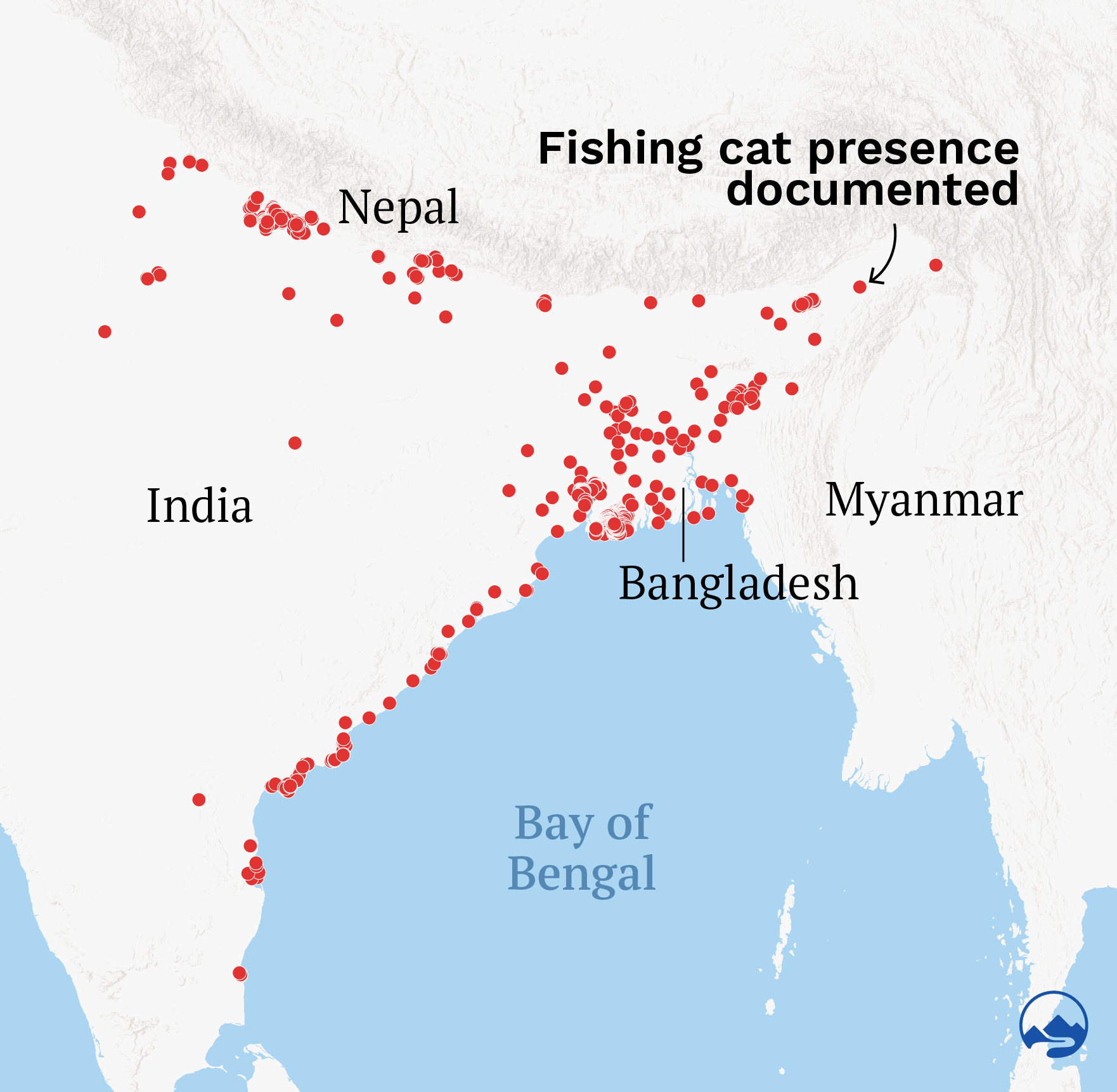
Much of the fishing cat’s range across Asia overlaps with people. A recent study which mapped the species’ recent distribution found an 80% overlap between the current predicted fishing cat range and areas occupied by humans, including agricultural land and settlements. There is particularly high overlap in the coastal plains of east India; the Indo-Gangetic plains of Bangladesh, Bhutan, India, Nepal and Pakistan; and the Mekong River valley and floodplains of Cambodia, Laos, Thailand and Vietnam.
Where can the fishing cat be saved?
Representing approximately 40% of the fishing cat’s known distribution, India is crucial for the future of the species. When Divyashree Rana visited some of these areas as part of her Master’s research on fishing cats, she noticed that each habitat presented its own unique challenges for the species. For example, along the northern east coast, she found that they are killed because people are precious about the fish they cultivate in their backyard ponds. Further south, where fish were abundant in natural waters, fishers did not mind fishing cats stealing their catch. There, habitat loss was a bigger threat. This sparked Rana, now a PhD student at the National Centre for Biological Sciences, to design a ‘conservation blueprint’ for the species.
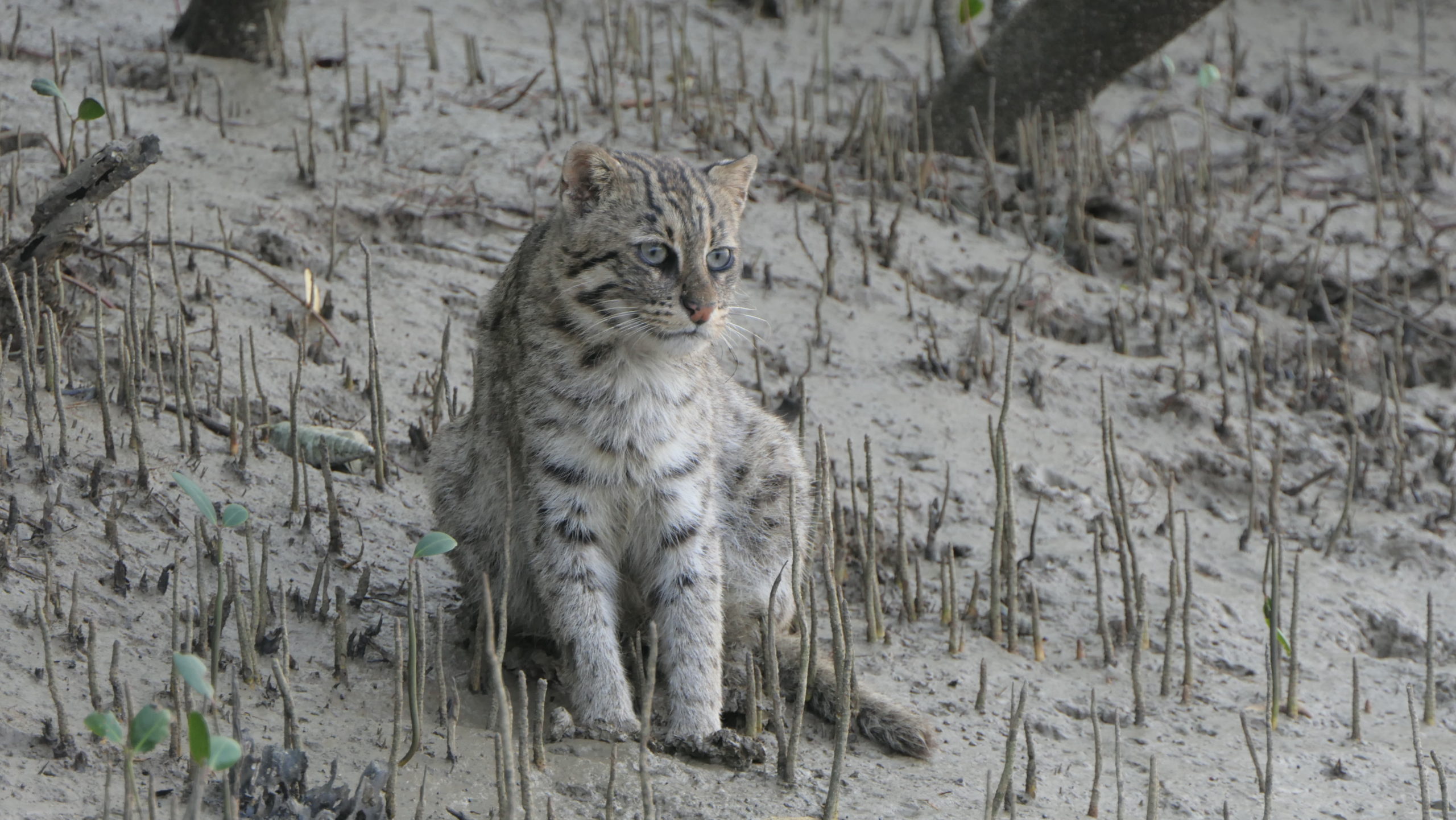
Firstly, knowing that the fishing cat likes wet, low-lying areas with moderate temperatures, Rana and her colleagues mapped areas in India that have good potential fishing cat habitat but no prior records of the species. They identified 156 such areas at the district level. These districts should be surveyed to find any small, isolated populations that might exist there, the researchers say.
They identified several areas of potential fishing cat habitat in the Terai Arc, a region of grassland and swamps that spans northern India and southern Nepal. The Indian Terai is an understudied part of the fishing cat’s range, says Rana. It is also one of three regions in India her study predicts as having high habitat connectivity, the other two being the east coast and the Brahmaputra floodplains in the north-east.
Interconnected habitats allow fishing cats to move around and breed with genetically different individuals, which is essential for sustaining healthy populations. But anthropogenic factors such as roads and railways might be inhibiting this connectivity, warns Rana.
Rana and her team also gave each of the 12 Indian states where fishing cats are known to occur a ‘conservation likelihood’ score, based on its conservation budget and net GDP – both used as positive indicators – and fisher population. They used fisher populations as a negative indicator: a sign of more wetland use and hence likely hostility towards conservation projects. Using these indices, West Bengal, Odisha, Uttar Pradesh, Bihar and Jharkhand emerged as states with “the least potential for conservation success”. On the other hand, Uttarakhand emerged with the highest conservation potential.
Rana’s study also used a second, district-level metric to identify districts of the highest ‘conservation priority’, based on habitat quality and records of the fishing cat’s occurrence. They found that most of these high priority districts were in West Bengal and Odisha. “Additionally, to account for ongoing conservation efforts funded by non-governmental and governmental organisations, we used another district-level metric to jointly formulate the conservation blueprint,” says Rana.
Tiasa Adhya, co-founder of The Fishing Cat Project, a research and conservation project launched in 2010 and currently operating in West Bengal and Odisha, is not convinced by the study’s methodology. Adhya points out that conservation is not funded by the government alone, and the study does not take non-governmental investment into account, such as funds from conservation charities Panthera, WWF-India and the Fishing Cat Conservation Alliance. She also says GDP can be more an indicator of environmental destruction than of conservation potential.
A conservation blueprint for the fishing cat must estimate how much habitat remains and simultaneously map hotspots of anthropogenic threats, says Adhya. “We need a lot of data on roadkills, so that vulnerable road stretches can be identified, and mitigation measures can be put into place.”
Eyes and ears on the ground for the fishing cat
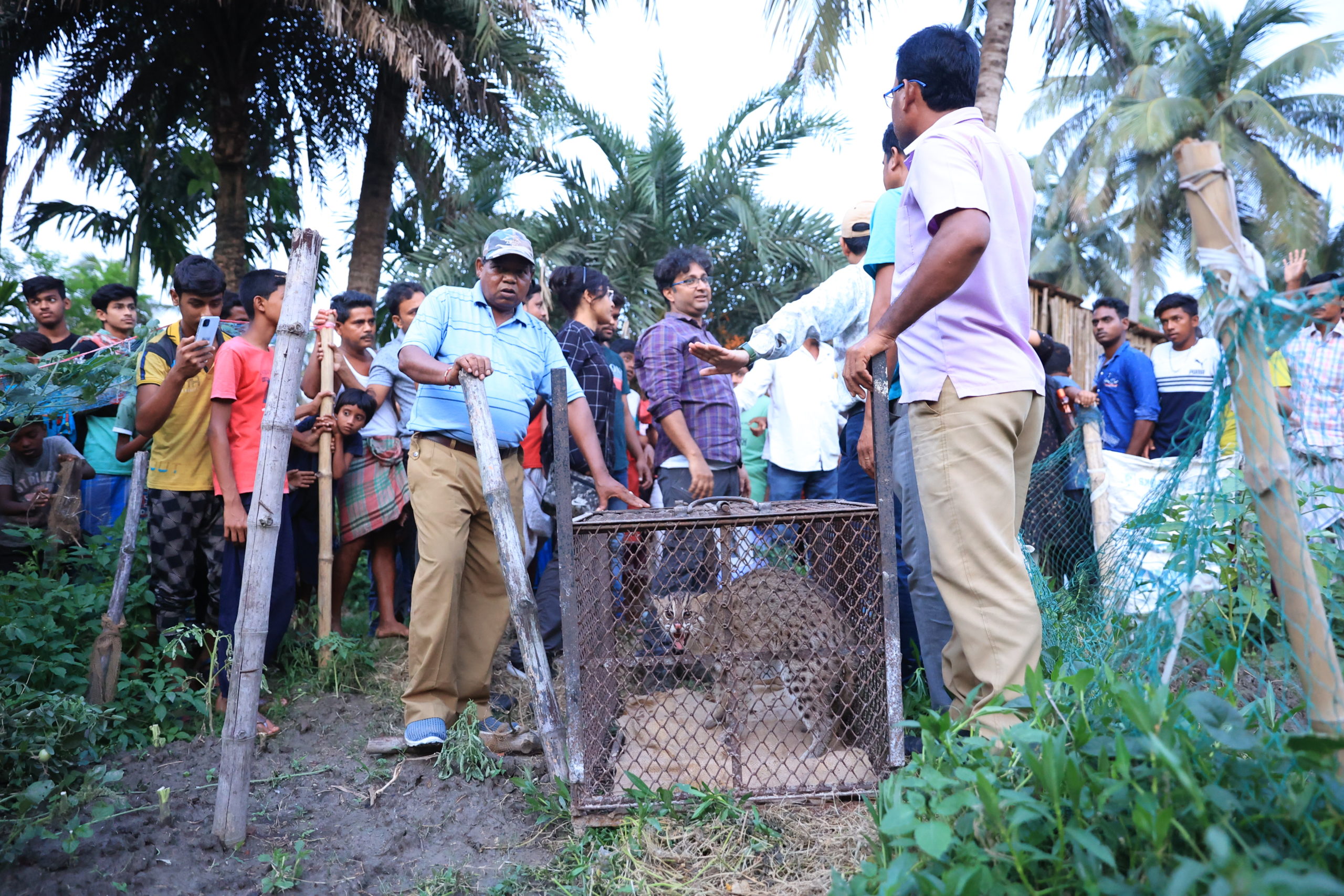
This year, The Fishing Cat Project has started a collaboration with the West Bengal Zoo Authority and other organisations to promote understanding of the species. They invite locals from conflict-ridden areas to observe fishing cats in captivity, and teach them about its diet and behaviour.
Learning that the animals hunt rodents as well as fish – helping farmers rid their fields of pests – changed people’s perception of the species, says Adhya. Two cats that had been captured from West Bengal’s Howrah district, where conflict is high, and placed in captivity were released into the wild after locals signed a petition for their release following visits to the zoo.
Adhya has also been working with Odisha government body the Chilika Development Authority on a five-year action plan for the fishing cat’s conservation in Chilika Lake, a key habitat for the species. One goal under the draft plan is to promote the cultivation of traditional varieties of rice that are grown in wetlands. Wetland rice grows up to six feet tall during the monsoon and provides a seasonal habitat for the fishing cat, says Adhya, whereas intensive aquaculture – a major form of land use in the area – transforms wetlands and releases polluted water into Chilika Lake, which is bad for the native fish population. Adhya hopes the organically grown rice can be marketed beyond the districts where it is consumed locally, encouraging the preservation of the fishing cat’s wetland habitat.
“The Fishing Cat Project believes in linking fishing cat conservation to healthy wetlands and human sustenance,” says Adhya. “We have always been working outside [the] Protected Area Network, mostly because that’s where you majorly find fishing cats.”
Elsewhere in the fishing cat’s range, plans are afoot to protect remnant populations. In Cambodia, Muñoz’s team is working to restore degraded mangrove forests with the involvement of local communities, in the hope of providing more habitat for the species. They work with individuals and Community Protected Area committees, guiding and funding the mangrove restoration work.
In addition to keeping a close eye on the existing populations she helped to discover in the country’s southwest, Muñoz is surveying a site on Tonle Sap Lake in the heart of Cambodia. “There we’re still looking for fishing cats”, she says. She is also gearing up to survey the flooded forests of the Mekong River on the Laos-Cambodia border.
“We’re all striving to protect the very last populations,” says Muñoz.