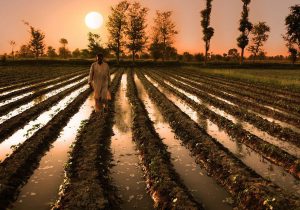
![<p>The cost of pumping water into the shallow fishponds of Kolkata wetlands makes aquaculture unremunerative [image by Soumya Sarkar]</p>](https://dialogue.earth/content/uploads/2016/07/1.-The-cost-of-pumping-water-into-the-shallow-fishponds-of-Kolkata-wetlands-makes-aquaculture-unremunerative.-Photo-by-Soumya-Sarkar-768x576.jpg)

How much difference could a foot of water possibly make? For thousands of fishermen and vegetable farmers in the East Kolkata Wetlands, it could mean the difference between a decent livelihood and chronic want. And now the National Green Tribunal is taking an interest, which might yet save the beleaguered Ramsar site.
“The government must raise the level of wastewater in the channels going past the bheries (fishponds),” Dinabandhu Mandal, a 46-year-old fisherman from Goyalbati village in the wetlands, told thethirdpole.net. “If we have to pump the water into our bheries at additional cost, we will surely go out of business.”
The wetlands in the east of Kolkata are part of a unique ecosystem that thrives on wastewater from India’s third-most populated metro city. It’s the world’s largest organic sewage treatment system that doubles up as a vegetable garden and fishery that supply more than a half of the city’s daily requirement.
The brackish, low-lying marshes beyond east Kolkata is a natural ecosystem shaped wisely by human intervention. It was brought into use more than a century ago by a clever arrangement of sewage, sunlight and gravity channels to rid a city of its organic waste. Despite their usefulness, the wetlands have been rapidly shrinking due to the hunger for real estate in a crowded city. After being declared a Ramsar site of international importance in 2002, steps have been taken to protect the ecosystem, but with limited success.
Wastewater for survival
The two unique services that the wetlands provide — zero-cost treatment of the city’s wastewater and community livelihood-based transformation of the waste to nutritional wealth — are best served if they receive a sufficient supply of wastewater, according to Santanu Chacraverti, president of non-profit Disha (Direct Initiative for Social and Health Action). “Yet, it has not been getting this supply for a long time now,” Chacraverti told indiaclimatedialogue.net.
To tackle the crisis the fisheries are facing, Disha with a few other concerned organisations and individuals petitioned the National Green Tribunal to take action. The eastern bench of the tribunal on July 20 asked for an accounting of the water.
![Wastewater is released into the Kolkata wetlands at the Bantala Lock Gate [image by Soumya Sarkar]](/wp-content/uploads/2016/07/2.-Wastewater-is-released-into-the-Kolkata-wetlands-at-the-Bantala-Lock-Gate.-Photo-by-Soumya-Sarkar.jpg)
“The green tribunal taking notice of the matter is a positive development. This may set the ground for the government to enter into a discussion on diversion of wastewater into the fisheries,” said Dhrubajyoti Ghosh, Special Advisor to the International Union for Conservation of Nature (IUCN) and the foremost authority on the Kolkata wetlands. “The tribunal’s direction to produce a status report of the Bantala lock gate in terms of the sewage water level appears to be a promising turn of events,” echoed Chacraverti.
“This will get us back to the way fisheries used to work in the 1980s, which means sufficient supply of wastewater,” said Ghosh. The increased supply will also ensure that fishponds that are more than 3.5 km from the Bantala lock gate are revived, boosting aquaculture and livelihoods.
Well-intentioned mistake
The problem of wastewater supply has been compounded by a well-intentioned directive by the Central Wetlands Regulatory Authority to stop the release of sewage into any of the country’s notified wetlands. As far as the Kolkata wetlands are concerned, Ghosh said the federal watchdog has made a mistake. “Nowhere in the world is there an example of such a natural ecosystem providing a vital municipal service to a city,” he had said in an earlier interview. “We need to take steps to bolster and encourage the processes that strengthen the wetlands rather than raise roadblocks.”
Chacraverti agrees. “Any water that you release into the Kulti River without funnelling it through the wetlands becomes a pollutant that creates havoc on the downstream aquatic environment,” he said. “The same water passed through the wetlands is not only cleaned but it also creates nutritive wealth. Increasing wastewater flow to the wetlands makes elementary ecological sense.”
The modern thinking on tackling waste is centred on two approaches: to avoid creating any that cannot be managed and to transform the manageable waste into useful items. The second way is often described as a cradle-to-cradle approach where the waste becomes the raw material in some other useful process.
“The farmers and fishers of the Kolkata wetlands have developed a cradle-to-cradle approach on their own, silently and without any fanfare, simply by intelligent use of urban waste as nutrient for their fields and fish,” said Chacraverti. “Thereby, they not only cleaned the waste water at no cost to the city but also created an abundance of cheap nutrition.”
At a time when climate action is receiving priority both in India and the world, it is all the more important to preserve and strengthen the Kolkata wetlands, Ghosh avers. “The East Kolkata Wetlands is a low carbon option, if not carbon negative, for such a big city as Kolkata.”