


Propelled to power by industrialists impatient with the earlier regime’s cautiousness on clearances and a middle class desperate for a surge in growth numbers, India’s new government led by Narendra Modi was never expected to be particularly environment friendly. It was quite clear that the tussle between environment and development would be an unequal one. Even so, the haste with which the Modi government is making its intention known is worrying.
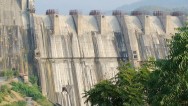
The pointers have come swift and fast in the less than a month since Modi and his ministers were sworn in on May 26. In one of its first moves, the government backed the decision to raise the height of the controversial Narmada dam by 17 metres to 138.6 metres, making it the world’s second largest concrete gravity dam after the Grand Coulee in the US and threatening to submerge the homes and livelihoods of many thousands.
The new environment minister Prakash Javadekar has also been unambiguous in stating his pro-industry priorities with his statements on fast tracking development projects, including clearances for roads near the Line of Actual Control (LAC) between India and China in Arunachal Pradesh and Ladakh and a radar station on the ecologically sensitive Narcondam island in the Andaman and Nicobar, home to the Narcondam hornbill found nowhere else in the world.
Adding to the anti-green governmental discourse are Intelligence Bureau (IB) reports that question funding of NGOs – many of which are at the forefront of campaigns against projects such as coal-fired and nuclear power plants as well as mining – and blame them for hindering India’s development. These ”secret” reports have found their way to the media and the discussion in the corridors of power quite clearly is that activists need to be stopped in their tracks so that India Inc can continue on its path to progress.
Not surprisingly, hackles are up. When the government’s chosen protector of the environment, its minister, says blandly that norms on clearances will be eased so that the defence ministry can bypass him on strategically important projects such as border roads within 100 kilometres of the LAC, it’s time to worry. Interestingly, about 80 roads and infrastructure projects are reportedly on hold awaiting green clearances.
According to another report, projects worth Rs.120,000 crore (about US$20 billion) that have been on hold are likely to be cleared soon.
And what of the Narmada dam, the centre of an intense, anguished debate on the advisability of big dams and the necessity of rehabilitating those whose lives have been irretrievably disrupted? According to celebrated activist Medha Patkar, the “undemocratic” decision to raise the dam’s height was taken without ascertaining ground realities. This would submerge entire villages without the rehabilitation of those displaced earlier.
Environment experts have also pointed out that Gujarat – Prime Minister Modi’s home state – and the neighbouring desert state of Rajasthan are unable to use even 20% of the water available even at the current height of the dam.
This could well be the decisive denouement of a long fought struggle, with the government muscling its way through.
“If we put in the trend map in place, then the decision on increasing the height of the Narmada dam and the Intelligence Bureau report leak happened at the same time. There could be a possible linkage and that also has been the sense from other activists like the Narmada Bachao Andolan activists and Medha Patkar who have been working for this cause for decades,” is how Greenpeace’s Samit Aich put it in an interview.
A watchdog like Greenpeace is bang at the centre of the environment-industry conflict. Like in Mahan, the teak forest in the central Indian state of Madhya Pradesh, which Greenpeace says is “facing the threat of an absolute wipeout” and where industry biggies like Hindalco and Essar are pumping in millions to mine the coal reserves beneath. The indigenous population of the area could stand to lose everything.
These are but the tips of the proverbial icebergs and perhaps representative of the inherent conflict between environment and development that every society faces. But overlooking one for the other is a recipe for disaster.
The Uttarakhand floods of last June when thousands were killed as the waters came rushing down from fragile Himalayan slopes should be a lesson learnt on the perils of unfettered development. As families observe the first death anniversary of their loved ones, some thought from officialdom on curbing not just unrestricted tourism but also rash infrastructure and construction, pushed through without mandatory clearances, would be welcome.
Development is an imperative of the times but the checks and balances have to be built in. People matter as much as the rising profit graphs of big companies. The new custodians of India’s growth story would do well to remember that.
Minu Jain is a journalist and editor based in New Delhi.