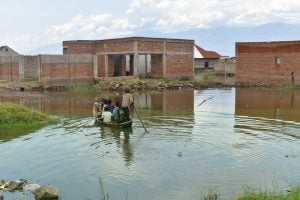
Unregulated sand dredging in the early 2000s pushed Nipah to the brink of submersion, eroding its shores and threatening its existence.
This small Indonesian island near Singapore, measuring just 0.62 hectares at high tide and 60 hectares at low, was among several in the Riau Archipelago threatened by relentless sand extraction. Driven by demand for land reclamation and construction projects, the dredging devastated fragile ecosystems and jeopardised the future of these islands.
The Indonesian government intervened in 2003 by banning sea sand exports. In 2004, then-president Megawati Soekarnoputri visited Nipah Island and declared: “Nipah, the outermost island. Defend it to the last drop of blood.” Her words are now inscribed in stone on the island.
Two decades after Megawati’s declaration, Indonesia appears to be reversing course. In May 2023, then President Joko Widodo’s government lifted the ban on sand exports, citing financial opportunities amid growing global demand.
New regulations on sea sand exports were issued in Jakarta on 29 August 2024 and took effect the following month. As of October 2024, 66 eligible companies had applied for dredging permits, with the government currently assessing these applications.
While no official revenue target has been set for sea sand exports in 2025, due to the regulation’s recent enactment, the government has set a benchmark export price of USD 11.49 per cubic metre. Before the 2003 ban, Indonesia exported tens of millions of cubic metres annually, mostly to Singapore for land-reclamation projects.
Dredging up problems
The decision to resume exports has led to widespread protests. Critics argue it will result in the destruction of coastal ecosystems, fisheries and small island communities.
Indonesia has historically served as a key regional supplier of sand, but past extraction has resulted in severe environmental consequences, notably the rapid erosion and potential submergence of islands such as Nipah.
Sand dredging can also disrupt the delicate equilibrium of ocean ecosystems, polluting water and smothering marine life. This increased stress on systems such as coral reefs further diminishes their resilience to other human-induced pressures, such as climate change and ocean acidification.
Yonvitner, a coastal and marine expert at IPB University in Indonesia, warns of broader ecological impacts: “In addition to direct impacts, such as the destruction of mangroves, seagrass meadows, coral reefs, and fish habitats, sea sand dredging also causes indirect effects, including the release of carbon from aquatic sediments, disruption of the marine food chain, and degradation of beach cleanliness,” he says.
These concerns are echoed by Celios, an Indonesian economic and legal think tank, which estimates that resuming exports will reduce Indonesia’s gross domestic product by IDR 1.22 trillion (USD 74.5 million) and decrease individual incomes by IDR 1.21 trillion (USD 73.9 million).
Pascal Peduzzi, who leads GRID-Geneva, a UN Environment Programme data centre, emphasises that sand resources could be managed more sustainably.
Peduzzi advocates for pricing sand to reflect its true social and environmental costs. While current prices vary between USD 15 and USD 17 per cubic metre, depending on the type and location, he suggests this fails to account for the long-term environmental and social costs associated with extraction. “An internationally accepted standard would create a level playing field,” he says.
The Indonesian government insists it has taken environmental concerns into account. Doni Ismanto, an official at the Ministry of Maritime Affairs and Fisheries, told detik.com that the new policy focuses on the extraction of sediment, which can be sand and mud, rather than strictly sand. “The goal is clearly to preserve the ecology and increase the carrying capacity of the marine ecosystem,” he said. However, critics question whether the distinction will make a meaningful difference.
Building on sand stokes regional tension
Beyond its potential environmental impact, Indonesia’s resumption of sea sand exports risks increasing regional tension.
Singapore has long relied on Indonesian sand for its ambitious land-reclamation projects. Between 1997 and 2002, it imported over 53 million tonnes of sand annually from Indonesia, dramatically reshaping its coastline. Plans are currently underway for its “Long Island” reclamation project, which would add 800 hectares of reclaimed land, vital for coastal protection against rising sea levels.
However, Singapore’s land-reclamation projects have historically stirred tensions with neighbouring countries, with accusations that it is using its wealth to gain land at the expense of other countries. Malaysia banned sand exports to Singapore in 1997, followed by Indonesia in 2003, Vietnam in 2009 and Cambodia in 2017.
Indonesia’s decision to lift its ban may be seen as undermining regional efforts to curb the environmental and geopolitical impacts caused by large-scale land reclamation. While there are no explicit multilateral agreements on sand mining and large-scale land reclamation, there is regional awareness of the issue and several countries have taken actions to curb exports.
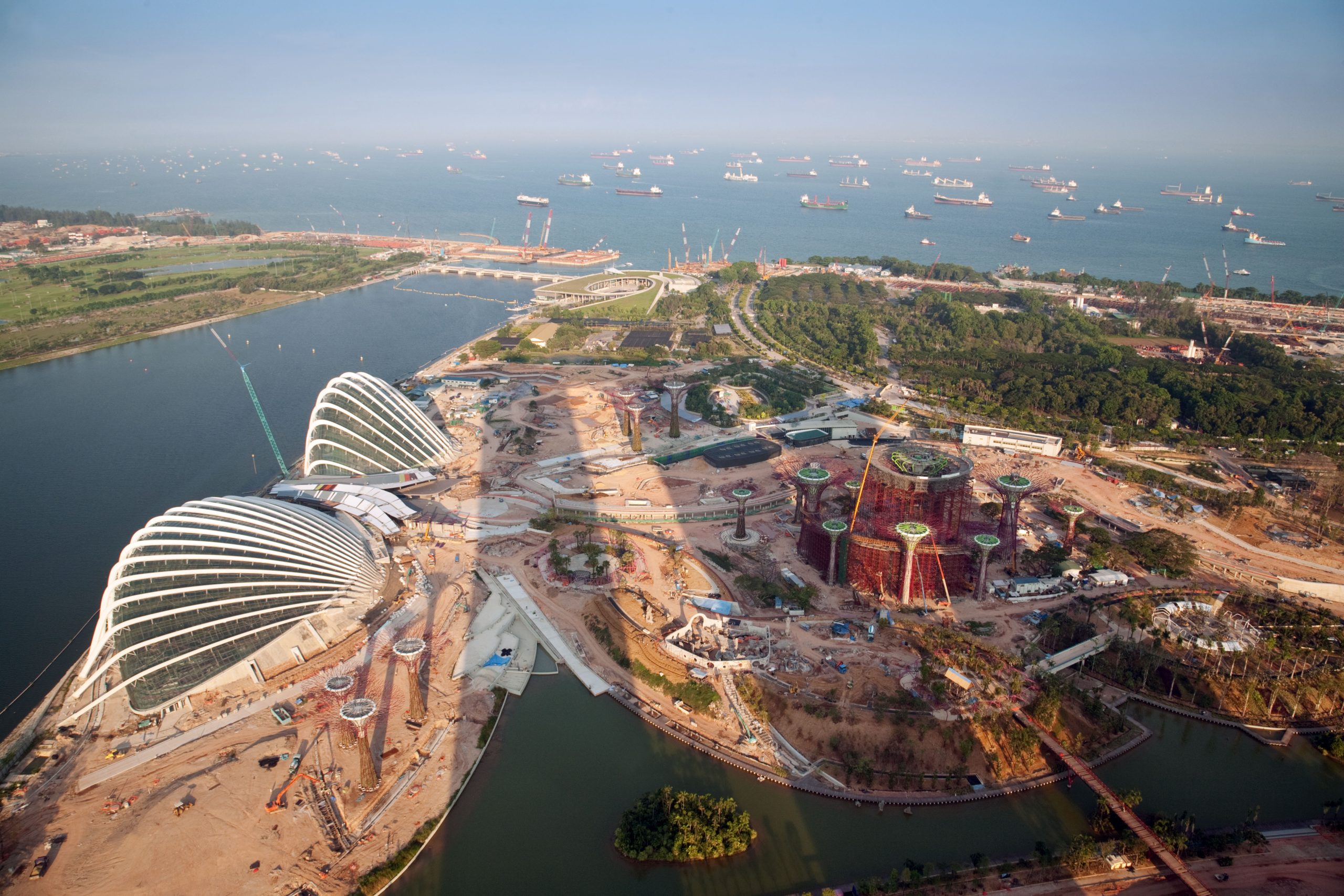
Singaporean officials have attempted to ease concerns. The country’s minister for national development, Desmond Lee, pledged in 2024 that future imports will be from “legally permissible areas” and comply with the environmental regulations of source countries.
“Our key considerations are the need for coastal protection for the low-lying East Coast area due to future sea-level rise, and the need to create land to meet Singapore’s longer-term developmental needs,” Lee said.
A major challenge in regulating the sand trade is fragmented data. “Incomplete and inconsistent data remain a recurring issue in understanding sand production and trade across Southeast Asia,” says Edward Park, an assistant professor of physical geography at Nanyang Technological University (NTU) in Singapore.
“This fragmentation complicates tracking [of] shipments and suggests under-reporting or illegal mining. For instance, the Philippines and Malaysia report exports and imports from unspecified sources,” he notes. “The complexities of re-exported sand further obscure origins, making regulation and environmental protection challenging.”
A comprehensive database on sand reserves, extraction sites, production volumes, trade routes and end-uses could identify sustainable sand mining areas and improve transparency. Technologies such as remote sensing and artificial intelligence could help map extraction sites and prevent over-mining. For instance, NTU’s Sustainable Sand Harvesting (SSH) framework already models how sand extraction affects riverbeds. By analysing water depths and sand flows, the framework produces a dynamic map designed to predict how erosion will alter the riverbed over time, and aims to help decision-makers plan and manage sand extraction sustainably.
While experts widely agree on the benefits of collaboration, a lack of political will among countries remains a major challenge, driven by competing national interests, weak enforcement mechanisms and the absence of a binding regional framework to regulate sand mining. Indonesia reopening mining showcases these tensions.
The future of Indonesia’s coastal resources
While sea sand exports may offer immediate economic benefits, the potential long-term impacts on both ecosystems and coastal communities could be profound. Once severely threatened by erosion caused by uncontrolled dredging, Nipah Island became a symbol of Indonesia’s vulnerability. Following the 2003 export ban, coastal restoration efforts resulted in the island’s ecosystem showing signs of recovery.
Although some options for sustainable sea sand dredging exist, it remains unclear whether Indonesia will embrace a sustainable path or repeat past mistakes. With dredging likely to resume soon, the decision will have significant implications – not just for Indonesia, but for global efforts to manage the world’s second-most exploited commodity more responsibly.