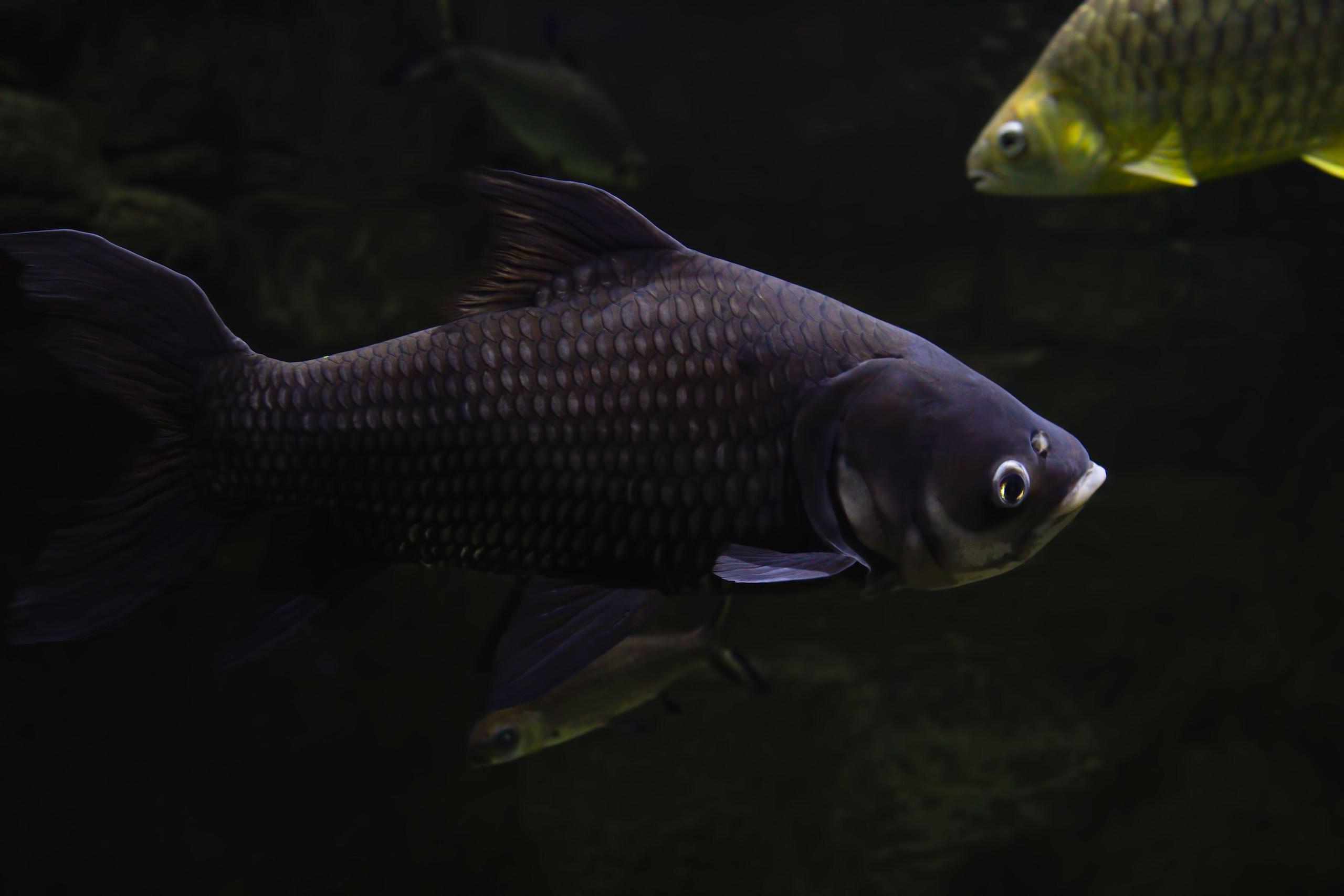
Etched in the ancient temples of Angkor, the giant barb is the largest carp species in the world and Cambodia’s national fish. Despite its revered status, however, it is among an estimated 19% of Mekong River fish species facing extinction.
The giant barb may disappear along with other species unique to the Mekong unless decision-makers stop undervaluing and overlooking the Mekong’s fishes, according to the Mekong’s Forgotten Fishes report, which was produced by a cohort of 25 conservation groups. It warns that the loss of biodiversity will significantly affect the region’s culture, livelihoods and economies.
The magic of the Mekong
The Mekong is home to nearly 1,500 fish species, a quarter of which cannot be found anywhere else in the world. Originating in China, the river flows through six countries before reaching the South China Sea.
“It’s a biodiversity hotspot of the world for freshwater fish [and] only third in the world in terms of diversity of fish,” says Kathy Hughes, the report author and Asia Pacific freshwater biodiversity lead for the World Wide Fund For Nature (WWF), one of the organisations behind the report.
While 19% of Mekong fish at risk is below the global average of 25%, Hughes warns that insufficient data on a further 38% of species suggests many more could also be in danger. Currently, 74 species have already been identified as “at risk of extinction” and 18 species listed as “critically endangered” in the International Union for Conservation of Nature’s (IUCN) Red List of Threatened Species.
“38% is really significant because it’s triple the global average of data deficiency,” says Hughes. Data deficient animal species have been classed by the IUCN as having inadequate information available for a conservation status to be determined. “That’s a real alarm bell to me that, actually, it’s not just the 19% we need to worry about, it’s 38%.”
Threatened giants
Covered in dark scales and with a characteristically prominent pout, the imposing giant barb can grow to three metres in length and weigh up to 300kg. Yet sightings have become increasingly rare, indicating a critical decline in numbers. Chea Seila, project manager and coordinator for the Wonders of the Mekong project, which funded the report, laments this development: “They don’t have enough time to grow up,” she says.
In addition to the giant barb, the Mekong is home to other underwater behemoths like the giant stingray, the Mekong giant catfish and the giant pangasius, all of which are critically endangered. “The river is so rich it evolved these massive giants that you don’t get everywhere else,” Hughes says.
This biological richness is under increasing threat from a variety of factors including the construction of hydropower dams, conversion of wetlands for agriculture and aquaculture, sand mining, the presence of invasive species and climate change.
You cannot put a price on the biodiversity, the ecosystem functioning, the fishery or the heritage aspect that could be lostKathy Hughes, author of Mekong’s Forgotten Fishes report
Dams, in particular, pose a significant threat to the fish, as 160 migrating species depend on the river’s ability to flow freely. “When we put a dam on a river, it literally chops that river in half,” explains Hughes. “It holds sediment back behind the dam, it holds the water back, and it also holds nutrients [back].”
Additionally, the mining of between 35 and 55 million cubic metres of sand on the Mekong each year compounds these challenges, disrupting fish migration patterns vital for reproduction.
When there are changes to the Mekong ecosystem, sediment and water levels, “fish are confused as to when they have to migrate upstream or downstream,” explains Teerapong Pomun, director of the Mekong Community Institute Association.
The implications of inaction
Without immediate action, the integrity and resilience of the entire ecosystem are at stake, warns Hughes: “You cannot put a price on the biodiversity, the ecosystem functioning, the fishery or the heritage aspect that could be lost.”
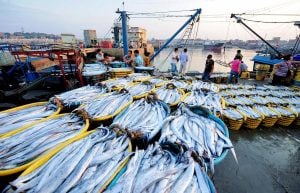
The Mekong is also home to the world’s largest inland fishery, accounting for 15% of the entire global inland catch and which generated over US$11 billion annually in 2015. Over 40 million people in China, Myanmar, Laos, Thailand, Cambodia and Vietnam depend on the river for income and sustenance; inaction would lead to catastrophic consequences for local communities. “This is a fishery that can’t be replaced,” says Hughes.
Many communities along the Mekong rely on wild-caught fish as their main source of protein. Mitigating a 50% fall in the Mekong’s wild capture fishery would require a substantial increase in alternative protein sources, with outsized environmental implications. One potential outcome cited could result in a 130% surge in beef production, leading to a 231% increase in land conversion for agricultural use. Moreover, the report forecasts an 8% increase in regional water demand and an additional 45 million tonnes of greenhouse gas emissions.
“It’s not too late”
“The good news is that it’s not too late to restore the Mekong and bring its fishes back from the brink,” said Zeb Hogan, biologist and director of the Wonders of the Mekong project, at the release of Mekong’s Forgotten Fisheries.
Crucial to this is building on the expertise, knowledge and solutions of local communities. Communities in Laos and Thailand have created several fish conservation zones, areas where fishing is banned and where locals run community patrols to deter illegal fishing. In Cambodia and Vietnam, it is illegal to fish the giant barb, but with the rare species still in demand by Vietnamese restaurants, the temptation remains.
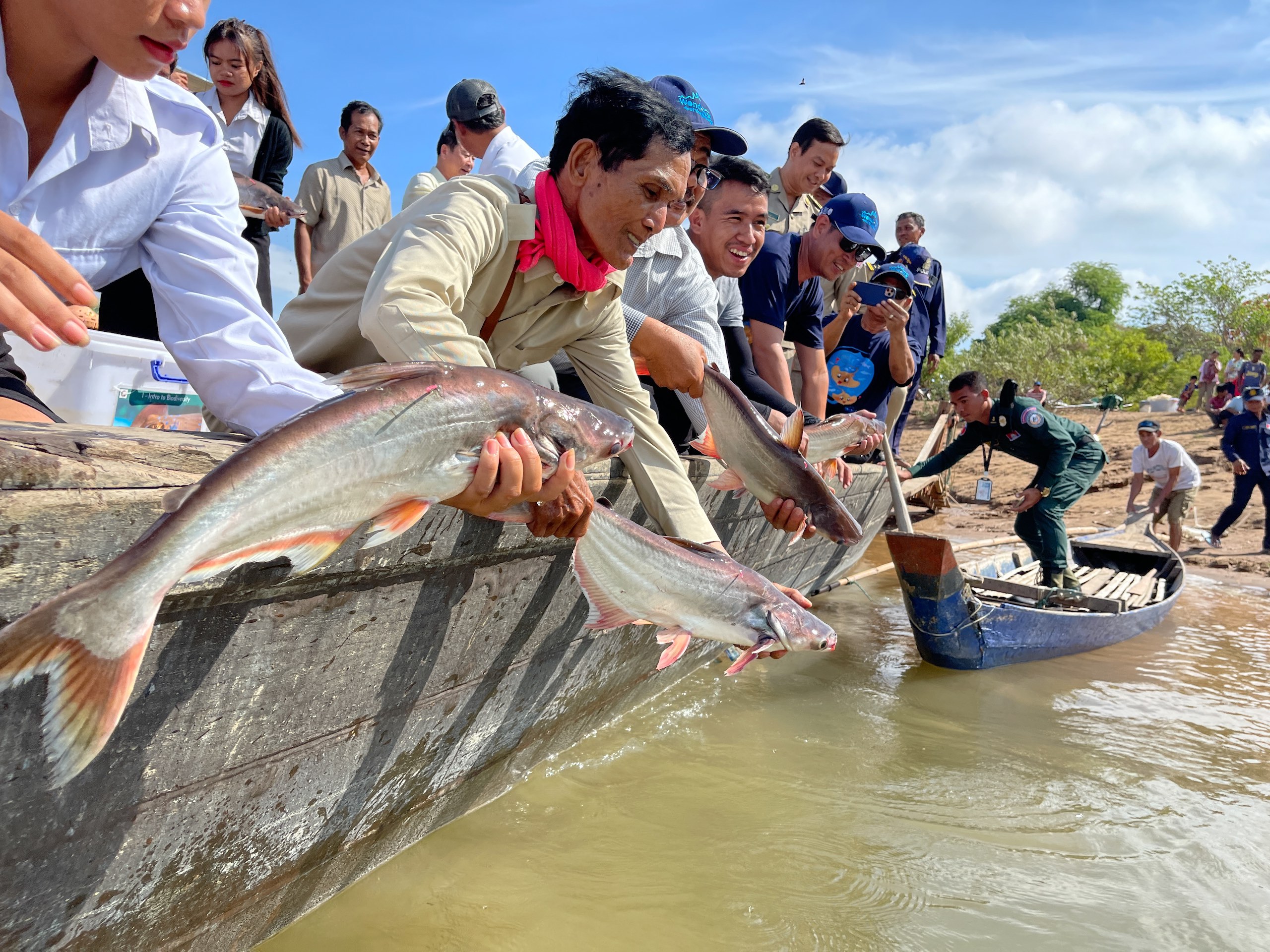
In Cambodia, efforts are underway to release captive-raised fish, including giant barbs, back into Tonle Sap Lake. The government has also signed up to the international Freshwater Challenge, which aims to restore 300,000km of degraded rivers and 350 million hectares of degraded wetlands globally by 2030.
Still, not enough is being done in scale with the size of the problem, says Pomun. He is calling for enhanced regional cooperation to restore the ecosystem, emphasising the need to work with local authorities and communities to implement effective solutions.
The signing of the Kunming-Montreal Global Biodiversity Framework by Mekong countries in 2022, committing them to protecting and restoring 30% of inland waters, marks a promising milestone. However, the report urges the signatories to go further by implementing a transboundary emergency recovery plan for freshwater biodiversity. This plan would prioritise ensuring the natural flow of rivers, improving water quality and ending unsustainable resource exploitation.
Until such measures are implemented, however, the giant barb and other fish species remain perilously close to extinction – their once significant role potentially reduced to mythical status. According to Hughes: “Reversing decades of decline will be hard, but it’s possible, if we act collectively and urgently.”