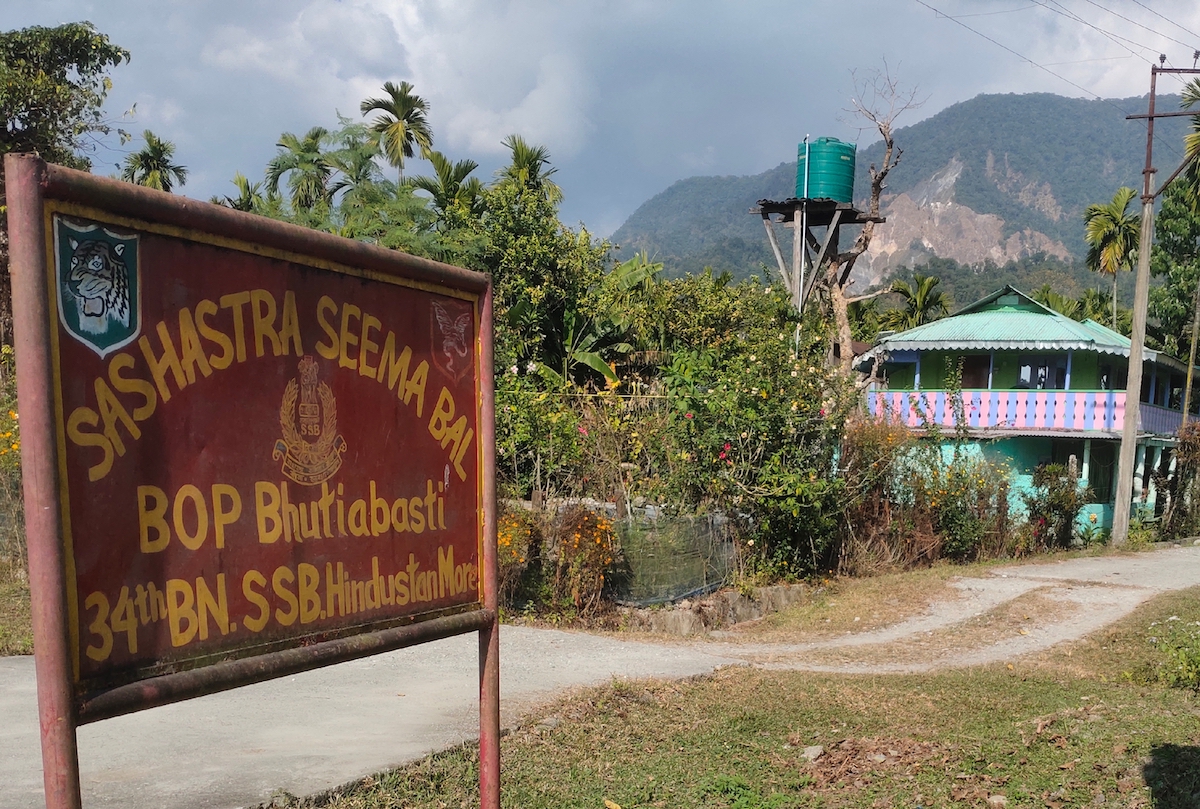
Geeta Chhetri, a widow in her late 40s, lives alone in Bhutia Basti, a small Indian village along the India-Bhutan border in the eastern Himalayan foothills of Dooars. Her son, Badal, lives in the neighbouring village of Jayanti where he runs a six-room homestay with his uncles. Both villages fall within the core area of Buxa Tiger Reserve (BTR), where a Bengal tiger was sighted in December 2021 – the first in 23 years.
Chhetri may now have to move several kilometres away from her son. The government has obtained consent from Bhutia Basti residents to relocate outside the BTR area in order to reduce the risk of human-tiger conflict. There is no such plan for Jayanti village, and Chhetri will not receive compensation for relocation if she moves in with her son there.

The Indian government’s project to relocate human populations from the core area of the country’s tiger reserves says relocations must be voluntary and adhere to the provisions of the Scheduled Tribes and Other Traditional Forest Dwellers (Recognition of Forest Rights) Act of 2006. Resettlement of communities must be agreed with the free and informed consent of village authorities and is a last resort after all other viable options for human-tiger coexistence have been explored.
The relocation of the human population from the core area of BTR has a long history – mostly of failure. However, in April 2021 initiatives were revived after the Indian government increased the compensation for voluntary relocation of villages from the core area of the country’s tiger reserves to INR 1.5 million (USD 20,000) from INR 1 million (USD 13,350) for every family and single adult. In September, the government in the eastern Indian state of West Bengal, where BTR is located, resumed talks with the residents of Bhutia Basti and Gangutia villages. The process was expedited after camera traps captured the images of a tiger in December.
The tiger sighting has prompted government plans to restrict entry inside the core area. Jyoti Priya Mallick, West Bengal forest minister, told The Third Pole: “The tiger caught in camera traps is a female and we have got evidence of cubs. If people keep entering the core area, tigers will either kill or get killed.”
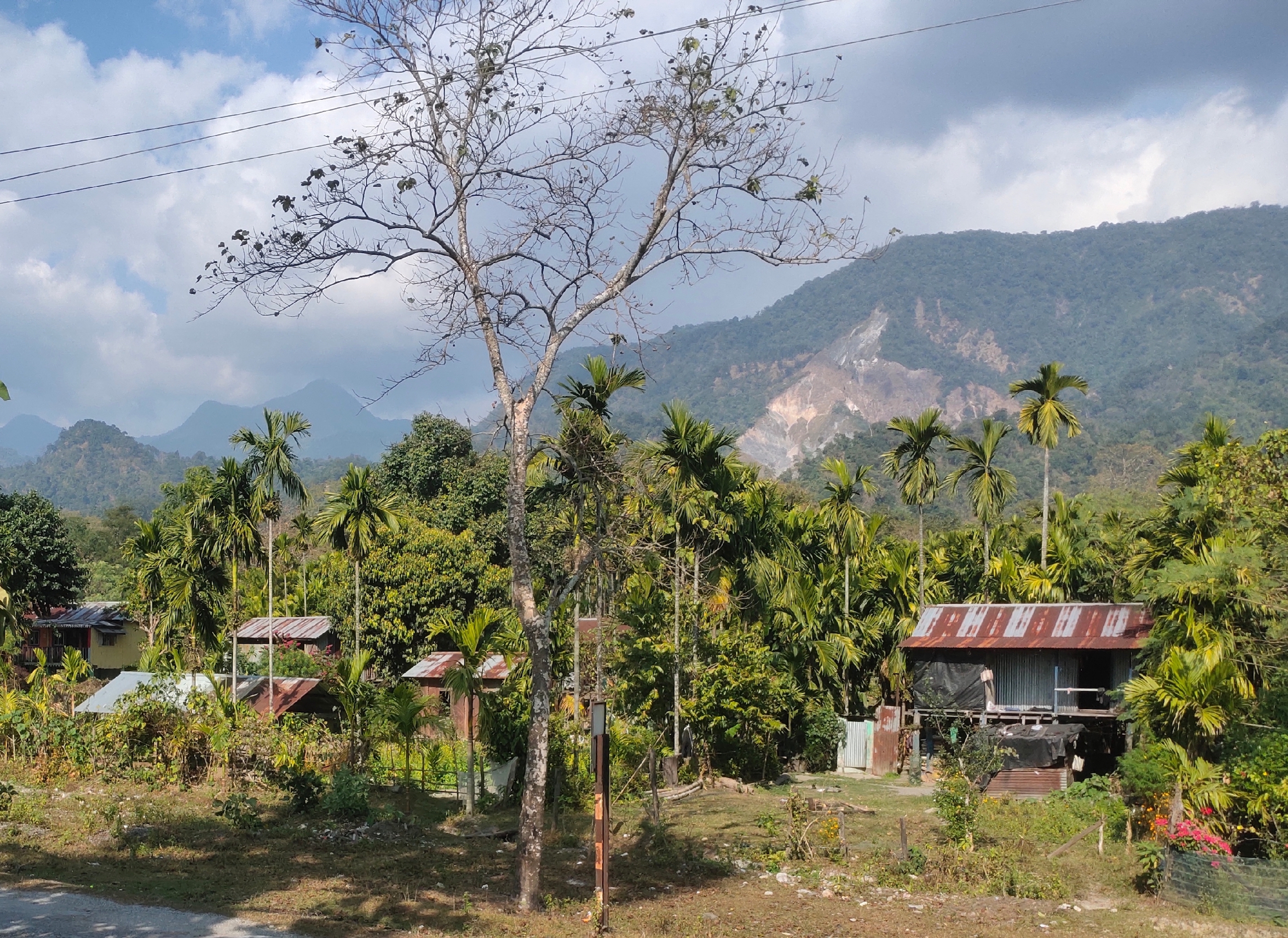
However, entry restrictions inside the core area, which has flourished as a tourist destination in the past decade, will rob Jayanti villagers of their prime source of income, pitting them not only against the government but also environmentalists, who are concerned about the emergent industry’s footprint.
Relocation and compensation
Himal Chhetri, a resident of Bhutia Basti, said there were other factors that may have persuaded Bhutia Basti residents to relocate outside the BTR.
“All Bhutia Basti residents were more than willing to relocate because floods from the Jayanti River made their lives miserable every monsoon,” he told The Third Pole. “But the relocation offer should also be made to Jayanti residents simultaneously.”
According to a forest department official who did not want to be identified, Bhutia Basti has 33 families, while 301 families live in Gangutia and 300 in Jayanti.
“Operating homestays and organising safaris and treks serve as a regular source of income. What would we do with a one-time compensation if the government does not ensure an alternative income plan?” Spandan Bhowmik, a resident of Jayanti, told The Third Pole. He and his elder brother run a four-room homestay along the riverbank.
Another Jayanti resident, Sushmita Bhattacharya, a homemaker in her 40s, was among the villagers ready to consider the government’s proposal. “We’ll surely consider the proposal but let the government first approach us. We find it fishy that the government recently approached villagers at Bhutia Basti and Gangutia but avoided us,” she said.
If people keep entering the core area, tigers will either kill or get killedJyoti Priya Mallick, West Bengal forest minister
The government attempted to relocate Jayanti in 2008, when forest officials advised locals to form a rehabilitation management committee. Subsequently, a majority of the villagers submitted a letter of consent on two conditions: receipt of compensation payments for all on a single day and advance information on the economic rehabilitation plans for those employed in local public services. However, the relocation did not materialise as not all the villagers signed their consent. Since then, Bhattacharya suspects, the government has been trying to “slow poison” Jayanti residents.
“We suspect the government is trying to create an atmosphere in which villagers will be forced to agree to relocation,” she said. “We used to have JL numbers [identifying ownership of a plot of land] but the government has recently removed those from its records. Our postal code no longer shows our village but refers to Jayanti tea estate. The riverbed has lost all its depth and the village gets flooded every monsoon but the government takes no effort to restore the river depth.”
Mallick, the forest minister, denied that the government is putting pressure on people to relocate. “Villagers of Jayanti earlier had a difference in opinion. We’ll first complete the process for Bhutia Basti and Gangutia. Jayanti and some other villages will be approached later,” he said.
Sightings rare in Buxa Tiger Reserve
Buxa was announced as a tiger reserve in 1983, but sightings of the endangered big cat have been rare. The forest stretches from the plains up to an elevation of 1,750m. Before December 2021, no tiger had been seen since 1998, but their presence was ascertained through analysis of ‘scat’, or tiger excrement. In 2006, the first nationwide survey of the population in India said Buxa had 8-12 tigers. None were recorded by the national tiger census in 2010 and in 2014 it estimated the presence of just three tigers through scat analysis. In 2018, again, no tiger was recorded.
The 2018 census report says that Buxa could be repopulated through the reintroduction of tigers from Kaziranga, in the neighbouring state of Assam, and the restoration of prey within the reserve. Subsequently, the West Bengal government took measures to increase the prey base and started talks with Assam to exchange tigers for the state’s rhinos and leopards.
Some environmentalists, however, say the ecology in the BTR’s core area is largely under threat from flourishing tourism. As well as increased traffic and disturbance of wildlife, commercial tourism leads to deforestation as accomodation is built. Environmental activist Subhas Dutta filed a petition in 2016 in this regard at the National Green Tribunal (NGT), a special body for processing environmental complaints. In a December 2021 order in the case, the NGT wrote: “This court… had directed to close down all illegal establishments which have been raised within the core area of the Buxa Tiger Reserve but it is alleged that instead of closing down the hotels/resorts and illegal constructions, more such constructions have been allowed to propagate.”
Shortly afterwards, the government razed three illegal establishments that were under construction in Jayanti. The NGT also rejected an appeal made by operators of homestays on the grounds that none could supply their land plot identification numbers.
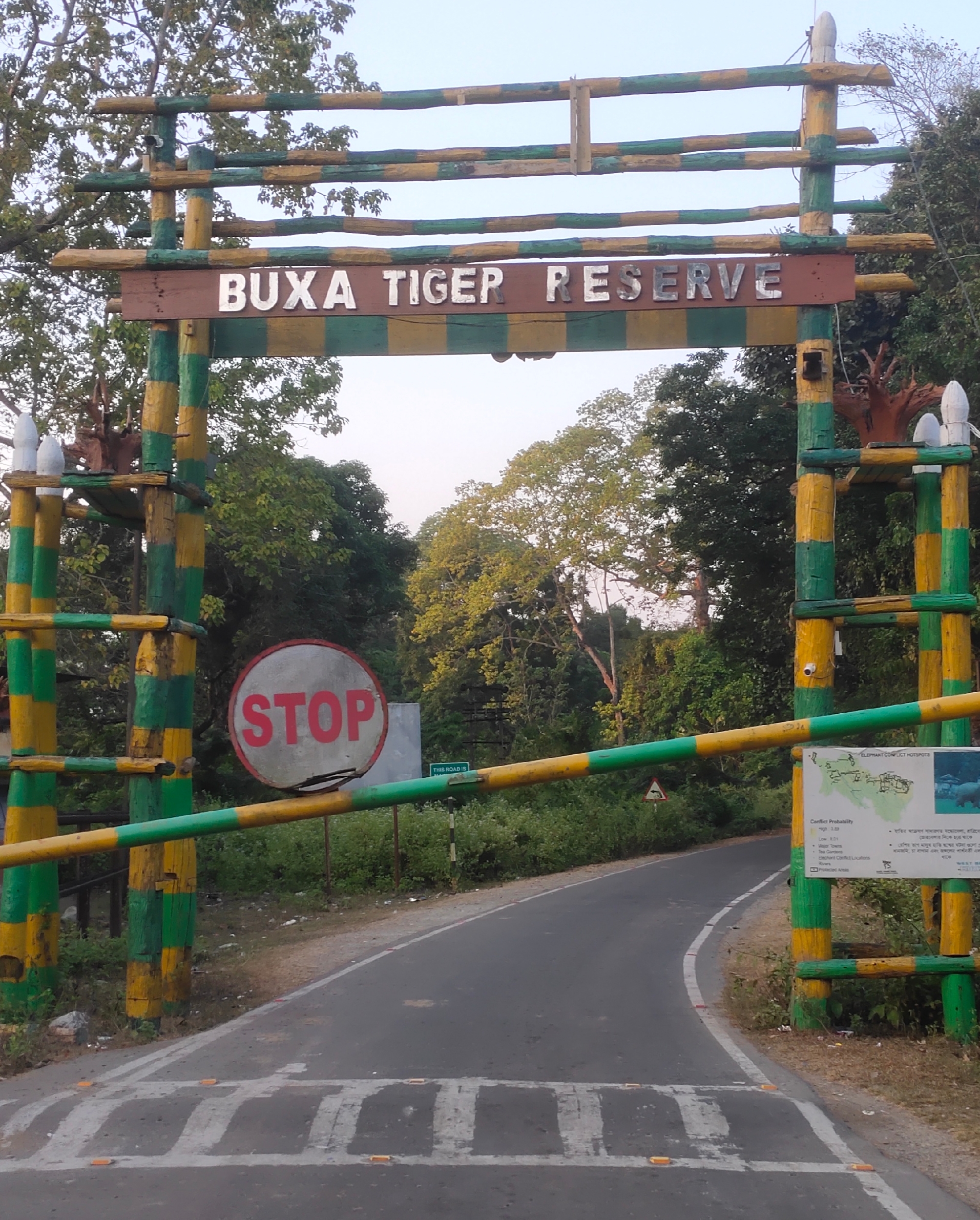
Opinion varies among wildlife experts, but some believe human populations should relocate from the Buxa core area to allow the tiger’s natural habitat to regenerate. Joydip Kundu, who heads the NGO Society for Heritage and Ecological Researches, said: “The flora and fauna in Ranthambore National Park flourished after relocating the human population and the Sariska Tiger Reserve [both in the western Indian state of Rajasthan] showed similar results. The wild will reoccupy its space if human interventions are excluded.”
Biswajit Roy Chowdhury, a conservationist and wildlife expert, and secretary of the NGO Nature Environment & Wildlife Society, agreed. “Even if we consider the tiger to have strayed into Buxa from Bhutan, restoring the forest atmosphere is necessary to ensure that they keep coming and settle here,” he said.
Pranav Chanchani, the national lead for tiger conservation at WWF India, took a slightly different view. He said the reappearance of a tiger serves as a reminder of how, even in its current state, Buxa may still have the potential to harbour tiger populations. However, he also argued that tigers can appear in various places, including where communities reside within their habitats. Therefore, he said, relocation of people out of a protected area should not be considered a prerequisite condition for tiger conservation.
“In the case of Buxa, before any such action [of relocation] is planned, all effort needs to be made to promote coexistence and carry out a rigorous assessment to determine whether relocating communities is essential,” Chanchani told The Third Pole.
“Such proposals must be aligned with the rights and aspirations of concerned communities, which must give free, prior and informed consent for any such plan.”