
A mother sobbed in a Nairobi courtroom as her teenage son stood in the dock, accused of attempting to traffic 5,000 queen ants out of Kenya. The test tubes had been packed with precision – cotton wool sealed each rare specimen as if part of a biology project.
But the authorities declared this no innocent hobby. They said the ants, which included the giant African harvester ant – the largest known harvester ant in the world – were bound for underground exotic pet markets in Europe and Asia, with a street value exceeding USD 7,700.
David Lornoy, along with fellow Belgian teen Seppe Lodewijckx, told magistrate Njeri Thuku they didn’t know it was illegal and were collecting the ants just for fun. The court ordered each to pay a fine of 1 million Kenyan shillings (USD 7,700) or spend a year in prison.
While African wildlife trafficking often conjures images of bloodied tusks and rhino horns, the case of the Belgian teens draws into the light a troubling rise of trafficking in lesser-known species. So did a related case involving a Vietnamese national and his Kenyan partner caught with 400 ants in their Nairobi apartment.
Thomas Ungerbuehler, assistant director for environmental security at Interpol, told Dialogue Earth that the frequency of recent seizures in Africa suggests the “trafficking of various non-charismatic species is gradually increasing.”
Demand largely driven by pet trade
Unlike charismatic megafauna (think lions, elephants, gorillas), insects, arthropods and small reptiles don’t inspire tourist safaris, plush children’s toys, or global conservation campaigns. But they do form the backbone of our ecosystems and are ecologically indispensable.
Experts at Traffic – a leading NGO working globally on trade in wild animals and plants – told Dialogue Earth that non-charismatic species such as ants are increasingly being smuggled from Africa mostly to parts of Europe and Asia for the pet trade, while termite colonies are reportedly used in traditional medicine in some parts of Asia.
They say this new trend may reflect improved detection and enforcement around high-profile species like elephants, rhinos and pangolins, “prompting traffickers to shift towards lesser-known but ecologically important species”. The government agency tasked with combatting illegal wildlife trade, the Kenya Wildlife Service, did not respond to Dialogue Earth’s request for comment before this article was published.
Odino Martins, an entomologist and evolutionary biologist who serves as director of the Turkana Basin international research institute in Kenya, says those buying the ants illegally are collectors “really interested in and passionate about ants”.
“The queen ants are one of the most amazing insects, with their social behaviour, foraging and nest building,” he says. “That is why they are so popular.”
There is also strong interest and demand from the invertebrate-enthusiast community, and a rising hobbyist and collector trade in exotic pets, according to Ungerbuehler. This, he says, makes “exclusive arthropods… a high-value commodity, leading prices to positively correlate with volume, logistics and trafficking risks”.
Melissa Castlemaine is an analyst at the Global Initiative Against Transnational Organized Crime. Talking about South Africa, she says species commonly trafficked from the country include girdled lizards (Cordylus), geckos (Pachydactylus, Chondrodactylus), chameleons (Bradypodion), dwarf adders (Bitis), and angulate tortoises (Homopus).
Much of the trafficking of these endemic species is driven by their uniqueness, according to Castlemaine.
“Rarity as well as unusual appearance make the species more desirable, especially if they are new to the market,” she told Dialogue Earth.
Castlemaine says most collectors have resorted to trafficking small reptiles because they are easier to conceal and don’t require large-scale trafficking infrastructure.
Small reptiles can also go long periods without water, making them easier to keep alive in transit, she explains.
Lower enforcement priority
Stemming the trafficking of non-charismatic species is a tall order partly because the animals do not get an adequate “amount of conservation attention and care” globally.
Experts say they often receive lower enforcement priority and funding than high-profile species. The other challenge is the difficulty of detecting the crime since the species are mostly packaged in containers labelled as research samples.
However, Castlemaine notes the trafficking of small reptiles is facilitated by a combination of legal loopholes and weak enforcement.
“Not all small reptiles have international protection, as many are not listed on Cites [the Convention on International Trade in Endangered Species of Wild Fauna and Flora],” she says. “For example, in South Africa, species may be listed on Provincial Ordinances, which means there is inconsistent protection between provinces.”
Without international protection, these reptiles can be sold openly without consequence once they have been trafficked. Castlemaine says traffickers are aware of these gaps in legislation and find ways to exploit them.
The rise of social media and online platforms, which are increasingly used to sell reptiles, has outpaced regulatory and enforcement mechanismsMelissa Castlemaine, analyst at the Global Initiative Against Transnational Organized Crime
“Again, the rise of social media and online platforms, which are increasingly used to sell reptiles, has outpaced regulatory and enforcement mechanisms,” Castlemaine notes. “Sales on these platforms are hard to monitor, especially with the use of private messaging apps and closed groups.”
Biodiversity loss, dwindling populations
The trafficking of non-charismatic species leads to dwindling populations in Africa and damages the ecological environment.
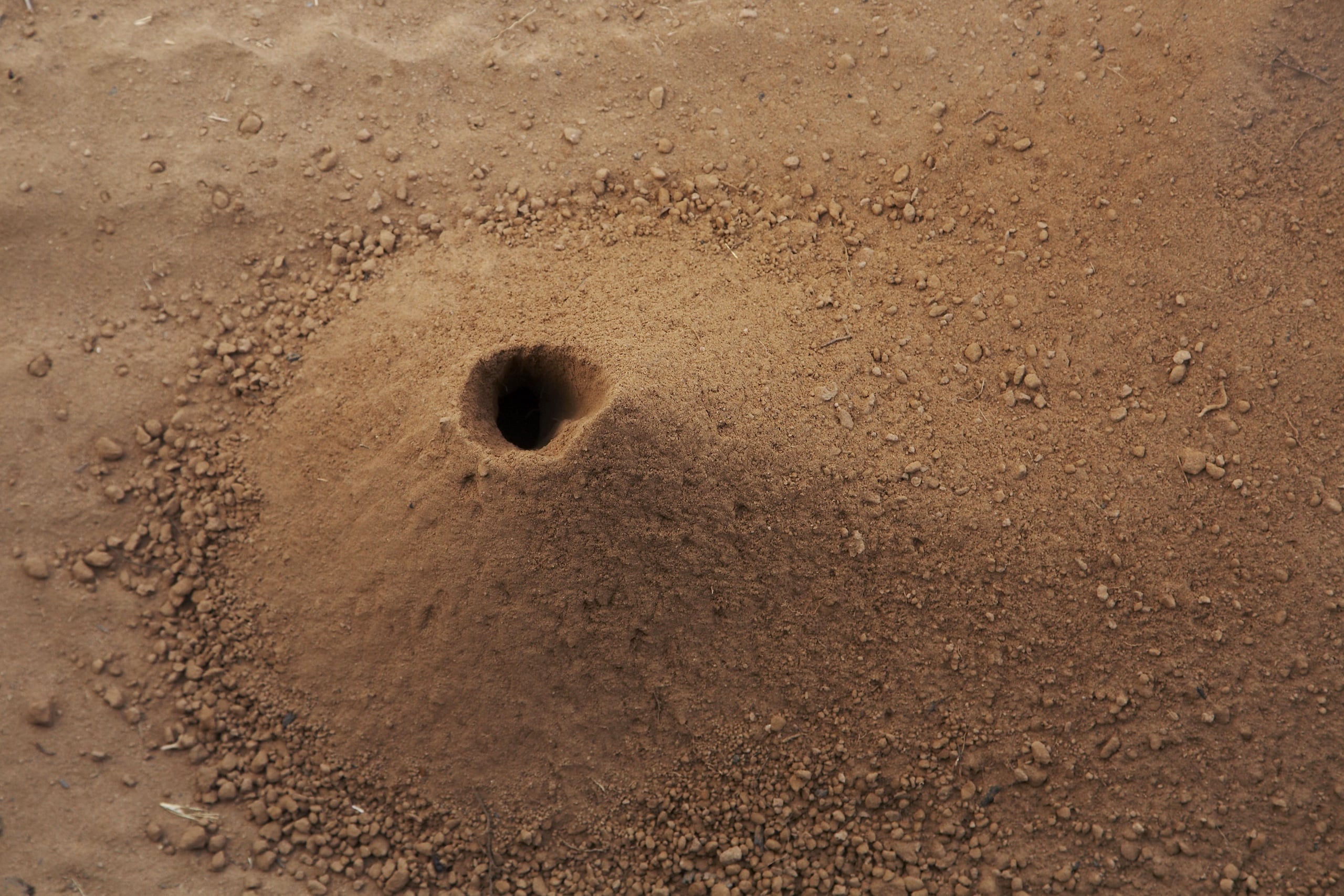
Martins observes that harvester ants, which collect and store seeds in their nests, have the function of dispersing and mixing seeds in the East African savannahs.
He explains that as seed dispersers, the ants help keep grasslands healthy. They are also important in the dispersal of seeds of endangered plant species, he adds.
“Harvester ants build large nests that change the shape of the grassland, influencing and providing opportunities for many other species,” Martins tells Dialogue Earth. “They also serve as food for various birds and mammals, including endangered pangolins, as well as the aardvark, aardwolves and elephant shrews.”
Small reptiles, meanwhile, help control insect populations and serve as prey for birds, mammals and other reptiles. Castlemaine says many of the species targeted for trade have small ranges and low reproductive rates. As such, “illegal collection can wipe out local populations rapidly,” she says, adding that some species are endemic, meaning their removal from one region could trigger extinction globally. Once these species are out of the country, they are near-impossible to retrieve, and repatriation is rare, Castlemaine adds.
“Additionally, there is the risk of the small reptiles being released in non-native environments and becoming invasive, which threatens native species. And there is also zoonotic-disease risk from increased handling and cross-border movement.”
To disrupt the physical and increasingly online methods used by trafficking networks, authorities must adapt, says Castlemaine. “Law enforcement efforts need to be as agile as the traffickers themselves,” she concludes.