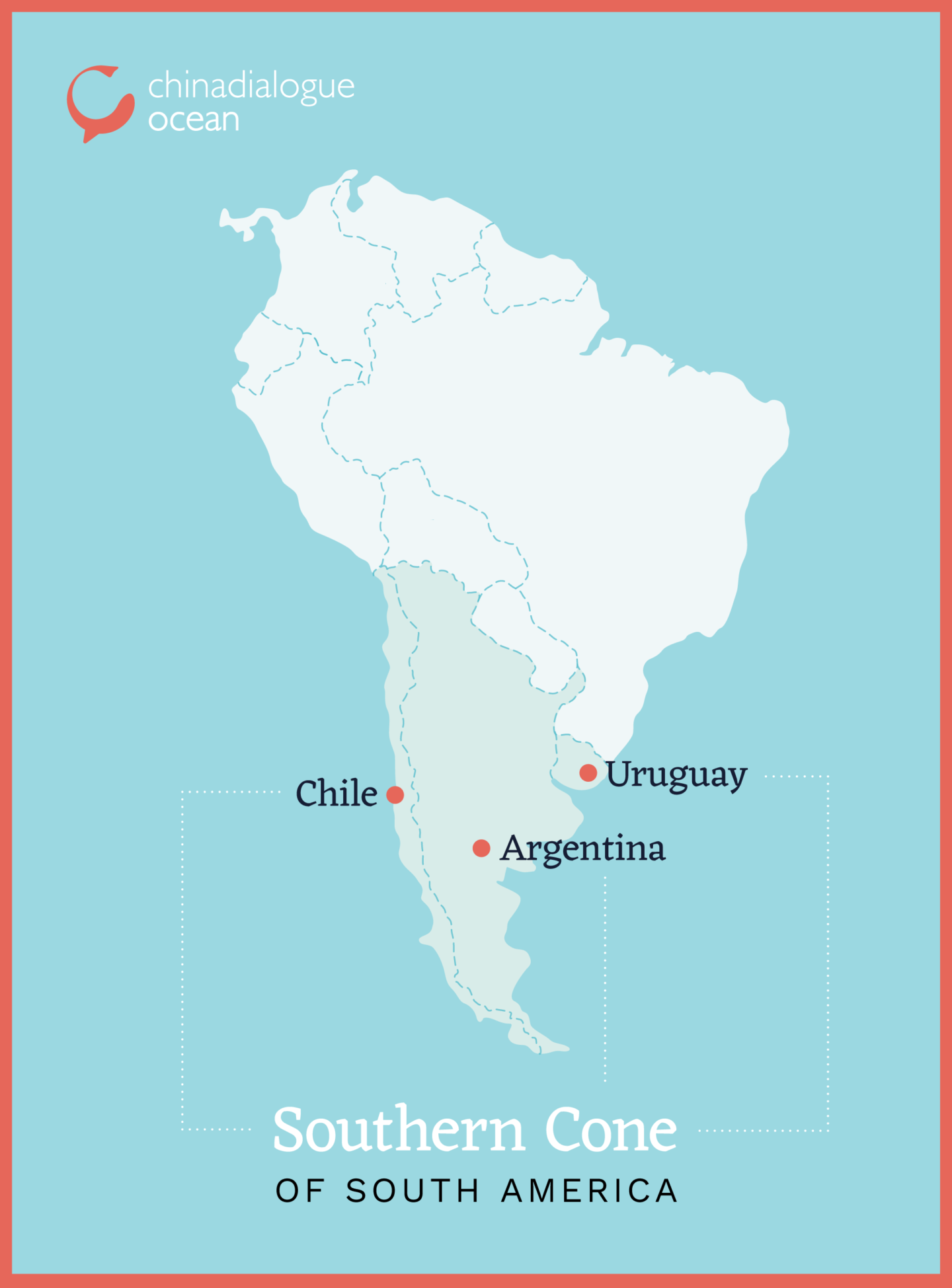
Sandwiched between Argentina, Brazil and the Atlantic ocean, Uruguay is one of the most politically and socially stable countries in Latin America.
Environmental protection has become a key concern for Uruguayans, which their new president, Luis Lacalle Pou, must face as a priority.
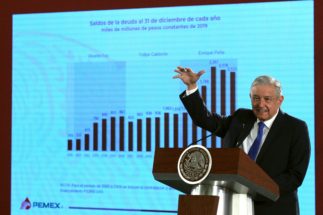
Lacalle Pou, 46, began his presidency a few weeks ago, heading a coalition of political parties. He is Uruguay’s youngest president and his interest in ocean conservation has already generated some optimism among environmentalists.
His first proposal – to create a dedicated Ministry of Environment and Water – signals a move in the right direction.
Will Lacalle Pou, a surfer and sea lover, respond to calls for a healthier environment?
Algal blooms and papermaking
Uruguay is facing a number of water-related challenges. Excessive fertiliser use, untreated effluents from cities, and reservoirs that limit river circulation have allowed algal blooms to clog waterways and hit oceanic beaches.
Meanwhile, the construction of a third giant paper pulp plant, that will absorb millions of litres of water from Uruguay’s main river, the Río Negro, has sparked protests. The new government has proposed to review the project.
On land, the monoculture forest that will serve the pulp plant occupies more than one million hectares, some 6% of the country’s surface. That’s more than the primary forest cover, and will have a big impact on biodiversity and water demand.
A new Irrigation Law, which seeks to boost agricultural production by damming river basins, is under consideration by the Supreme Court after various organisations and unions demanded its annulment on constitutional grounds.
The ocean agenda
With its position between the Atlantic and the estuary of another major river, the Río de la Plata, almost half of Uruguay’s territory is aquatic. Fishing has traditionally been a major activity but has been in decline for over two decades.
The number of industrial vessels has fallen by 50% in the last decade. Like artisanal fishing, it is threatened by high operating costs and competition from cheap imports of seafood from Southeast Asia, such as the shark catfish, that are served in Montevideo’s restaurants.
Marine biodiversity is further threatened by dozens of vessels of different nationalities operating right on the edge of Uruguay’s national waters, and sometimes within them, capturing species once the preserve of local boats. Worldwide, overfishing is pushing vessels to look for catches in new locations, including in Uruguay. Plans for a new Chinese fishing port west of Montevideo sparked particular controversy, before being shelved in the summer.
50%
the drop in Uruguayan industrial fishing vessels in its waters in the last 10 years
The same vessels that deplete Uruguay’s resources often unload their catch in Montevideo port, where they are exempt from taxes and controls, and where labour and sanitary conditions are notoriously poor. Local vessels, by contrast, must meet stricter measures.
Uruguay sits near the bottom of the IUU Fishing Index, which ranks nations on their defence against illegal, unreported and unregulated fishing. A major challenge for Uruguay’s new administration will be to regain control of Montevideo’s port – to clean up the “pirate port” image.
Renewable energy
Though Uruguay is not a major actor on the global climate stage, it is an example to others. It derives 98% of its energy from wind, solar and hydro, and even exports a surplus.
The creation of a Ministry of Environment and Water will be a good step, but not enough to resolve socio-environmental conflicts in a country that demands more, and whose tourist board has dubbed it “Uruguay Natural”.
A rethink of the country’s destiny is necessary. Uruguay could either become a great plain of monocultures with polluted rivers, or it could limit the growth of agribusiness and emphasise organic farming and the protection of its land, rivers and ocean.
Responsible tourism, sustainable fishing, organic agriculture and renewable energy can generate employment and income for the country, closing a virtuous circle for society, the economy and the environment. In order to do this, the new government must engage Uruguay’s discontents and disclose more environmental information.
Lacalle Pou and his team must balance the demands of sectors such as agriculture with the increased support for nature that they promised during the campaign. By doing so, the new government can help reinforce Uruguay’s reputation as a beacon of stability in Latin America.
This is an edited version of an article that originally appeared on our sister site Dialogo Chino.