Conservationists are enthusiastically trying to rehabilitate China’s coral reefs but there is disagreement over how best to do so. Some prefer large-scale nursery planting, others believe that human intervention should be limited.
This debate was highlighted recently following a high-profile campaign by conservationists affiliated with the Shenzhen Institute of Guangdong Ocean University who installed 30,000 coral pots in Dapeng Bay in July. They covered a combined seabed area north of Hong Kong of over 11,000 square metres. The restoration project was sponsored by a liquefied natural gas terminal operated by CNOOC, a major national oil company.
Days after the pots were laid, Dive for Love, a local environmental group involved in coral restoration work in the area, expressed doubts over the campaign’s impact. Divers from the group discovered that shelves that provided a fixing point for the coral pots had been placed on top of healthy coral, instead of directly onto the seabed. They also found dozens of plastic fixings scattered underwater that were used to connect the corals to the shelves.
Worse still, members of Dive for Love found fragile staghorn corals they had nursed in earlier years had been snapped off. There was no evidence that the missing parts were harvested for the sake of coral restoration. Still, they feared that the university team had used the healthy wild corals as “seedlings” for the 30,000 coral pots.
Liao Baolin, director of the coral rehabilitation centre at the university disputed the criticisms. He denied his team had harvested any wild corals or used plastics, saying the shelves were mostly made from pottery or tempered glass. He said that 30,000 pots was by no means “large-scale” for the ocean, and insisted the survival rate of the coral was 85%.
Coral rehabilitation projects are difficult for donors and government authorities to monitor, which makes their effectiveness hard to measure, according to Xia Jiaxiang, secretary general of Dive for Love. In the group’s early years, it also pursued large-scale coral nurseries but later switched to saving damaged coral fragments.
“The coral ecosystem is very complicated. It took years for us to realise the country’s massive, single-species tree-planting initiative had contributed to a loss of biodiversity. We don’t want to see that happen again underwater,” said Xia.
In late July, at a closed meeting with the Dapeng government, the coral reefs branch at Pacific Society, a Chinese research institute, suggested putting a pause on large-scale coral planting, citing the negative ecological impacts. Liao said his team have no current plans for further coral planting.
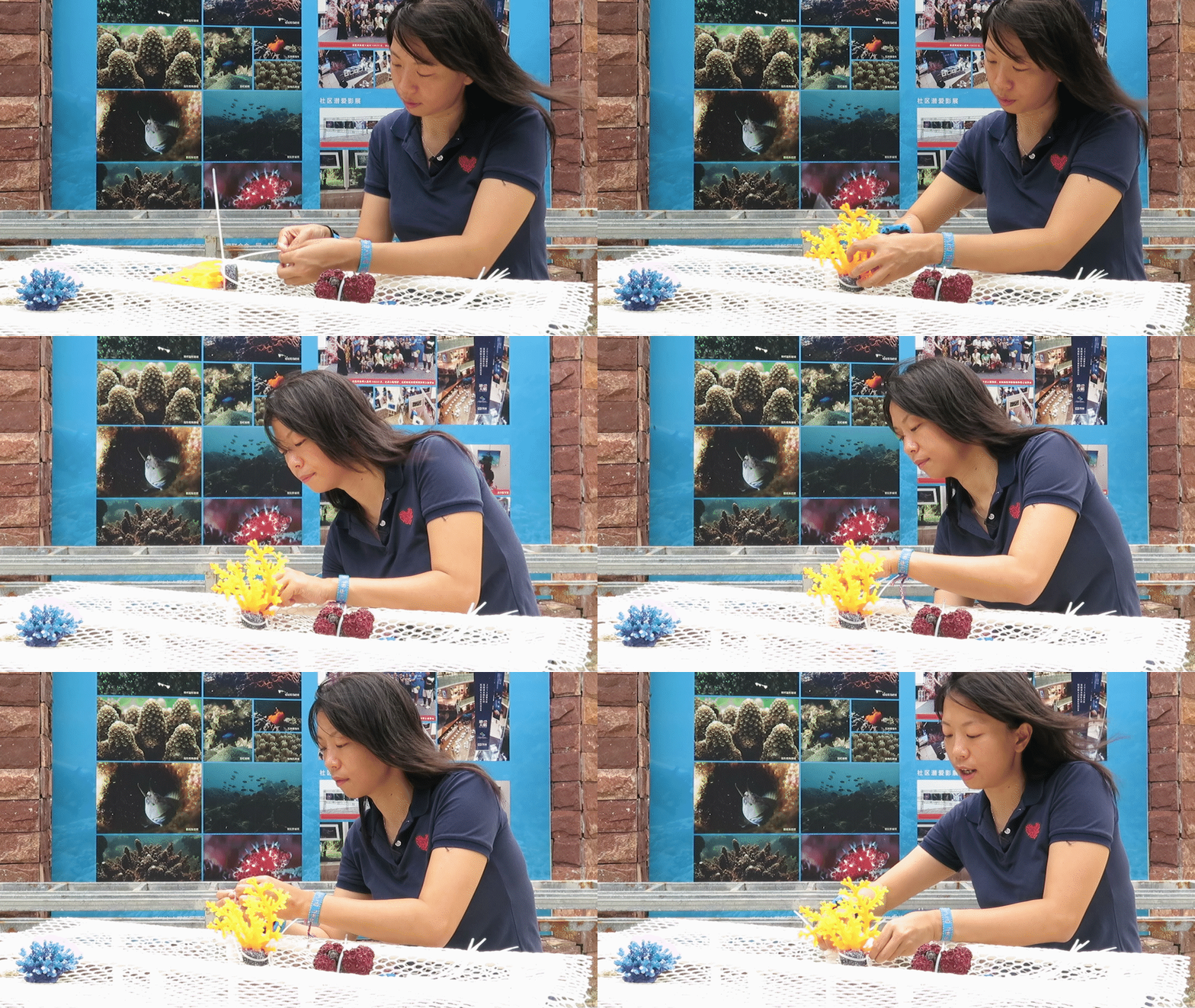
Corals under threat
Coral reefs worldwide are threatened by global warming. In its latest report, the Intergovernmental Panel on Climate Change (IPCC) warned that 70-90% of existing coral reefs will be lost even if countries manage to limit the global temperature rise to 1.5C. At 2C, all coral reefs will cease to exist, according to the IPCC’s assessment.
2C
the rise in global temperature that will wipe out coral reefs
The world has warmed by 1C since pre-industrial times and the IPCC predicts that if current trends continue, the 1.5C threshold will be passed as early as 2030.
Coral reefs are already subject to substantial stress, degradation and unprecedented bleaching. The latter occurs when water is too warm and corals expel algae (zooxanthellae) living in their tissues, causing them to turn white. While corals can survive a bleaching event, they take time to recover.
According to IUCN, at least 500 million people rely on the ecosystems supported by coral reefs for food, coastal protection and their livelihoods.
“Fishermen and tourism operators know the consequences [of losing coral reefs] because they see their income being affected,” said David Baker, an assistant professor at the University of Hong Kong’s School of Biological Sciences. “But as a society, humanity still lacks the awareness that we might have for other environmental issues that we can see.”
Coral reefs in China account for around 13.5% of global coverage, but they have been damaged by the discharge of sewage from industry, excessive fishing and decades of land reclamation along the coastline.
Just how degraded the corals are is unknown as there is yet to be a full survey. Scientists from the Chinese Academy of Sciences hope to set up a unified monitoring network and release an evaluation of the country’s coral reefs this year.
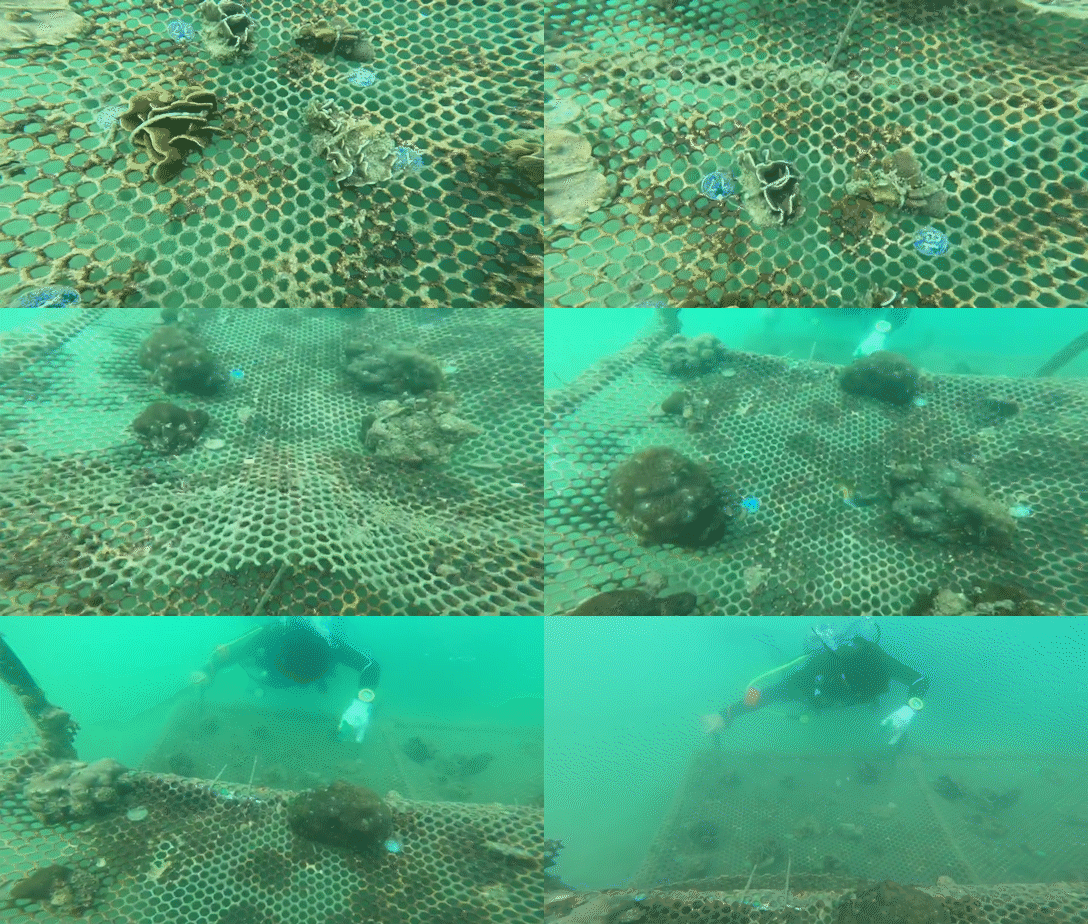
Save the corals
As China improves its coastal protections, more research institutes and grassroots conservation groups are getting involved in coral reef restoration. At least four different teams are involved along the country’s southern coast. However, some scientists argue that attempts to help coral adapt to warmer seas using artificial reefs are a waste of time and resources.
Coral restoration is a labour intensive practice and cannot be done easily across large areas, according to Baker. As a result it is less supported by scientists in Australia, home to the massive Great Barrier Reef.
Baker advocated for experimenting with an array of tools and approaches, including radical changes such as tinkering with corals’ genomes to make them more resilient, as well as simpler practices such as restoration.
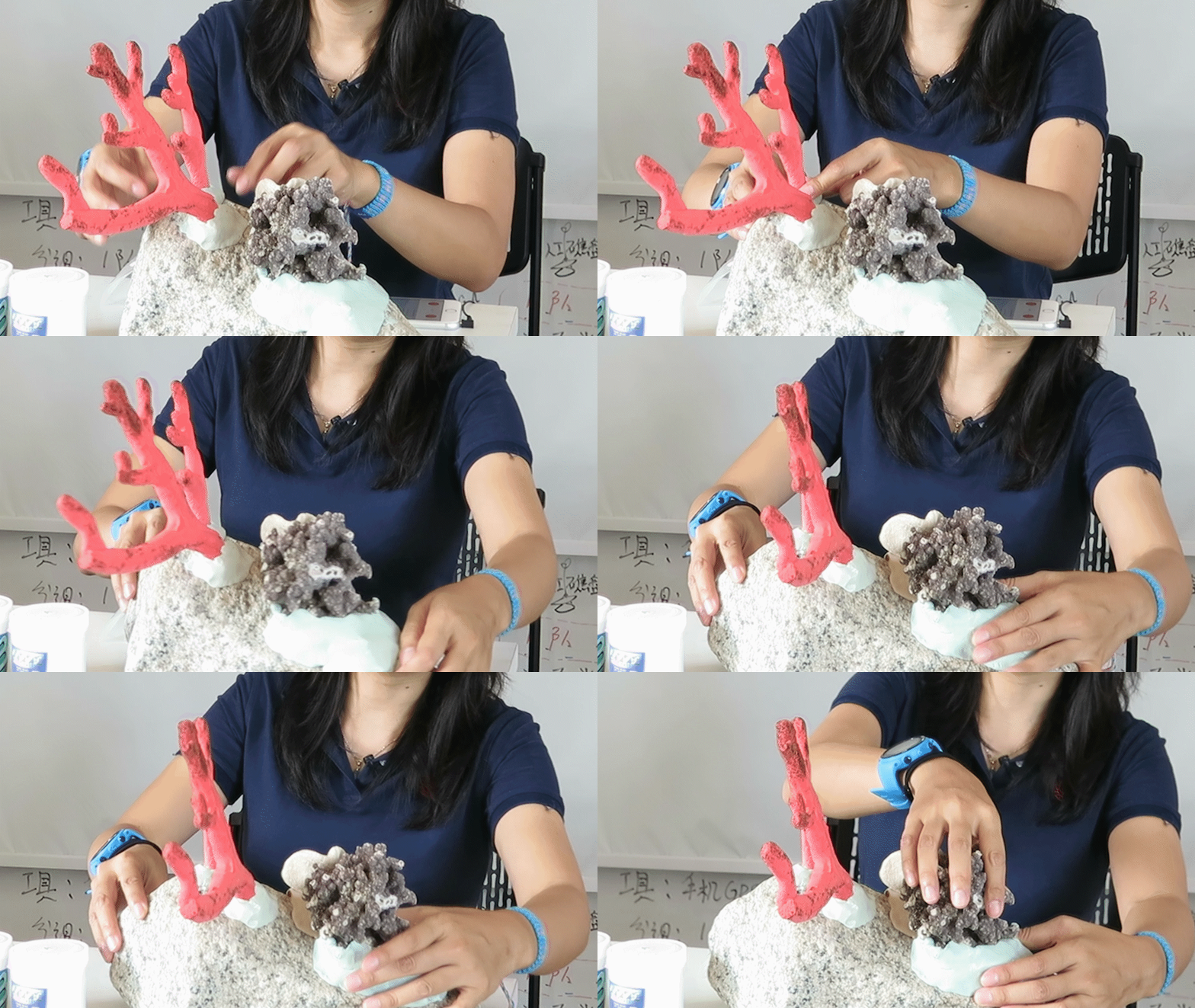
A job well done
Globally, coral restoration has expanded over the past 15 years. Researchers at the University of California have counted more than 150 operations transplanting nursery-raised corals to degraded reefs in the Caribbean, for example.
But good intentions are not always backed up with a strong scientific understanding, said Baker.
Given the labour-intensive nature of restoration work, Keith Kei, executive director of the Hong Kong Reef Check Foundation, believes that involving recreational diving groups could help scale up efforts.
“With proper training, divers could learn the practices in a short time – that will greatly enhance the efficiency,” said Kei.
Conservationists need to make science-backed decisions about which species of corals should be fragmented and farmed, and how they should be transplanted. The aim is to maintain genetic diversity while avoiding waste or unintended consequences for the underwater environment because some species of corals are aggressive, while others are particularly sensitive to certain diseases.
“We can protect what we have,” said Baker. “We can also enhance the diversity [of corals] in some sites… We can assist their migration.”
Baker thinks China can become a world leader in coral restoration.
“Maybe we could start with the species in Hainan province, helping them to get a foothold at other locations along the coastline,” he said.
It’s important that China prepares because the southern part of the country will be at the frontline for coral migration northwards as the ocean warms.
But Xia Jiaxiang is concerned that divers could still unintentionally damage wild and healthy corals to meet large coral transplant targets. “For me, the best way to protect the coral reefs is to leave them undisturbed.”


![Hilsa fish at a market in Barisal, Bangladesh [image by Finn Thilsted]](https://dialogue.earth/content/uploads/2016/04/Hilsa-fish-bangladesh-pic-300x199.jpg)