Ocean

We need to better understand the deep ocean if mining is to go ahead

There is a strong chance we will change the seabed irreparably before we fully understand what’s down there
English
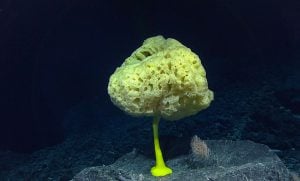
<p>Anemone, a wonder of the deep ocean, attached to a carbonate boulder at 1,500 meters depth. (Image: <a href="https://www.flickr.com/photos/oceanexplorergov/4274776049/in/album-72157612194897811/">NOAA</a>)</p>

Anemone, a wonder of the deep ocean, attached to a carbonate boulder at 1,500 meters depth. (Image: NOAA)

Human activity is transforming the planet and the deep ocean is no exception. As the demand for metals increases humans are seeking them in ever more remote places. The next frontier may be the deep seabed.

Valuable metallic ores laden with cobalt, copper, nickel, gold and other rare metals are found in polymetallic sulphides at hydrothermal vents, polymetallic nodules on abyssal plains and ferromanganese crusts on seamounts. As many of these habitats are found in international waters, they fall under the mandate of the International Seabed Authority (ISA), which has allocated 29 mining exploration contract areas globally, some of which are up to 75,000 square kilometres, or roughly the size of Panama.

The deep sea regulates our climate by removing heat and carbon dioxide

Let’s be honest, deep sea mining is going to do some damage. The removal of nodules, vents and crusts will result in the loss of biodiversity whilst leaving no possibility for their re-establishment given that some of these resources form at rates of a few millimetres per million years. Mining will also create plumes of sediment, which may travel for kilometres before depositing. Further entombment of the seafloor will occur when tailings from the mining are discharged into the water column.

Other possible impacts include light and noise pollution from machinery, and major changes to the geochemistry of the sediment, food webs and carbon sequestration pathways. The cumulative impacts of these operations aren’t yet understood but will likely be long-standing and ocean-wide.

Despite this looming threat, most of the deep ocean is critically under-explored. It is the largest ecosystem on the planet, providing more than 95% of all habitable space and yet less than 5% of it has been explored.
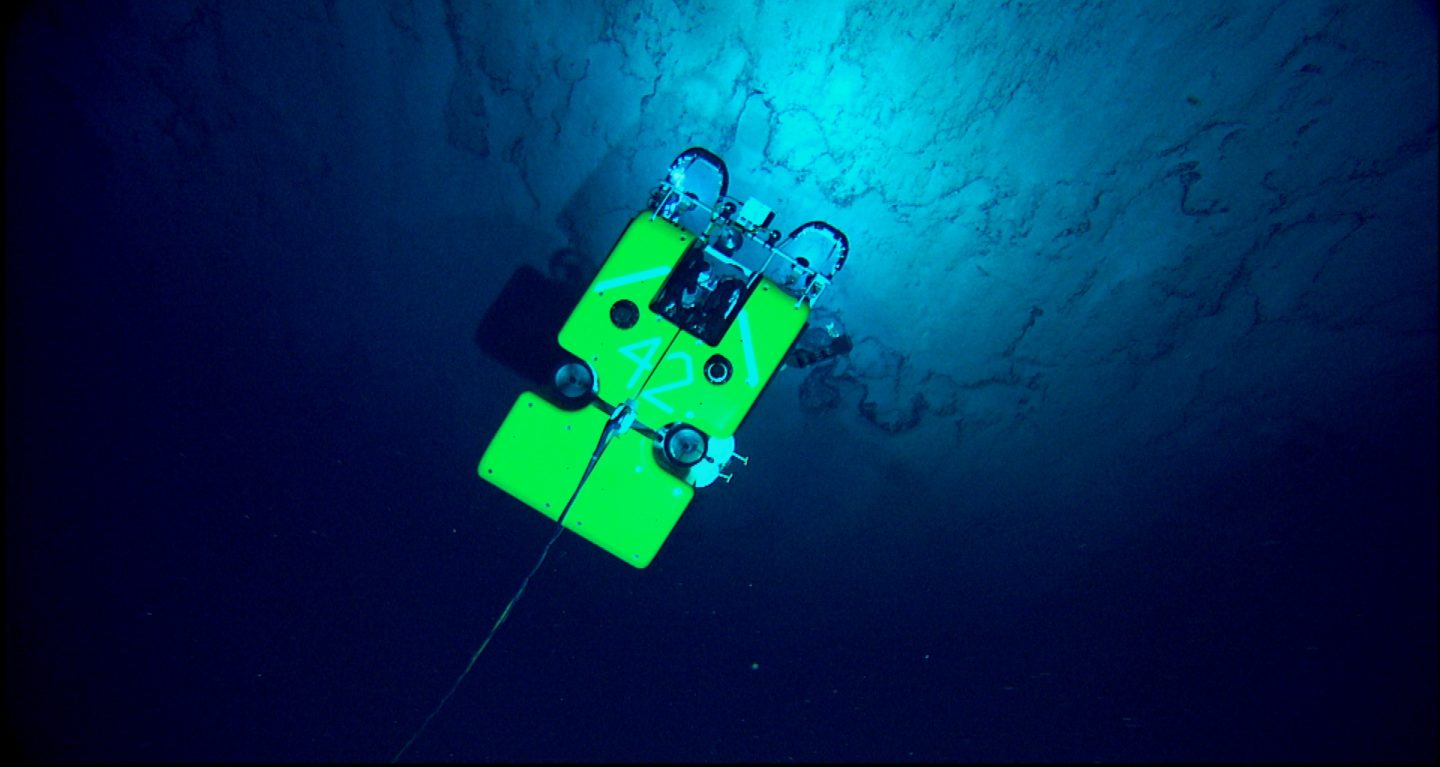
The Remotely Operated Vehicle (ROV) Hercules searches for deep ocean fauna.
The remotely-operated Hercules searches for deep sea fauna. (Image: NOAA)

It is also the largest reservoir of novel biodiversity, with new species discovered on nearly every expedition. It provides ecosystem services that keep our planet healthy and keep humans alive. Its great size means that it regulates our climate by removing heat and carbon dioxide from the atmosphere. It cycles nutrients and chemicals and detoxifies our oceans.

However, major knowledge gaps threaten our ability to ensure the deep sea is governed for the benefit of humankind, today and tomorrow. As we can’t even answer the most basic question – “What lives there?” – for most of our deep ocean, how are we to understand the ecological consequences of human disturbance in this remote and unique ecosystem?

We can’t effectively manage what we don’t understand or protect what we don’t know. We must continue to explore the deep ocean in order to understand it better. Holistic management based in sound science is urgently needed to prevent the loss of biodiversity and ecosystem services in this area of rapidly expanding human activity.

Not only do the deep ocean and its inhabitants amaze and inspire us, but they also have the potential to provide solutions to some of the world’s greatest challenges. If we don’t balance the needs of both society and nature, there is a very real chance that we could change our oceans irreparably before we fully understand them. That would be a catastrophic loss for humanity.

This article is part of our deep-sea mining series. Read more here:

The future of deep seabed mining

Can a ‘mining code’ make deep seabed extraction sustainable?

Deep seabed mining: key questions
Species threatened by deep-sea mining

Is China ready to mine the deep sea?

Cookies Settings

Dialogue Earth uses cookies to provide you with the best user experience possible. Cookie information is stored in your browser. It allows us to recognise you when you return to Dialogue Earth and helps us to understand which sections of the website you find useful.

Required Cookies

Required Cookies should be enabled at all times so that we can save your preferences for cookie settings.

Dialogue Earth - Dialogue Earth is an independent organisation dedicated to promoting a common understanding of the world's urgent environmental challenges. Read our privacy policy.

Cloudflare - Cloudflare is a service used for the purposes of increasing the security and performance of web sites and services. Read Cloudflare's privacy policy and terms of service.

Functional Cookies

Dialogue Earth uses several functional cookies to collect anonymous information such as the number of site visitors and the most popular pages. Keeping these cookies enabled helps us to improve our website.

Google Analytics - The Google Analytics cookies are used to gather anonymous information about how you use our websites. We use this information to improve our sites and report on the reach of our content. Read Google's privacy policy and terms of service.

Advertising Cookies

This website uses the following additional cookies:

Google Inc. - Google operates Google Ads, Display & Video 360, and Google Ad Manager. These services allow advertisers to plan, execute and analyze marketing programs with greater ease and efficiency, while enabling publishers to maximize their returns from online advertising. Note that you may see cookies placed by Google for advertising, including the opt out cookie, under the Google.com or DoubleClick.net domains.

Twitter - Twitter is a real-time information network that connects you to the latest stories, ideas, opinions and news about what you find interesting. Simply find the accounts you find compelling and follow the conversations.

Facebook Inc. - Facebook is an online social networking service. China Dialogue aims to help guide our readers to content that they are interested in, so they can continue to read more of what they enjoy. If you are a social media user, then we are able to do this through a pixel provided by Facebook, which allows Facebook to place cookies on your web browser. For example, when a Facebook user returns to Facebook from our site, Facebook can identify them as part of a group of China Dialogue readers, and deliver them marketing messages from us, i.e. more of our content on biodiversity. Data that can be obtained through this is limited to the URL of the pages that have been visited and the limited information a browser might pass on, such as its IP address. In addition to the cookie controls that we mentioned above, if you are a Facebook user you can opt out by following this link.

Linkedin - LinkedIn is a business- and employment-oriented social networking service that operates via websites and mobile apps.