Local lawyers and fishermen have raised concerns over a tuna fishing deal between the Somali government and a consortium of Chinese companies.
They say it will be difficult to regulate and could lead to overfishing, but their concerns appear to be driven largely by a lack of transparency and communication nationally, and confusion over the nature of the fishing practices.
The Somali minister of fisheries, Abdillahi Bidhan, signed a deal in December 2018, in which Chinese companies paid a total of US$1 million to fish 24 nautical miles from shore within Somali waters off north-east Africa.
$135 million
The contribution of Somalia's fishery sector to the economy
“We have conducted the signing of 31 offshore tuna licenses to FOCA [the consortium] in a transparent manner. Anyone applying for a tuna licence must go through the requisite process upon which we will inspect their vessels,” Bidhan said.
According to the ministry of fisheries website, the deal allows 31 Chinese long-line vessels to fish for “tuna and tuna-like species” twice a year for one year, and will be renewed depending on an independent annual stock assessment.
Although the international community was fully informed, the government was reluctant to declare the full terms of the contract, according to Mohamud Nur Hasan, a member of parliament’s sub-committee on fisheries and natural resources, who also represents fisheries communities in the Lower Shabelle region in the southern part of the country.
“The deal will certainly impact our local fishermen who depend on fishing for their livelihood,” the lawmaker said. “Chinese vessels have poured into African waters to get nice seafood for trade, degrading fish stocks.”
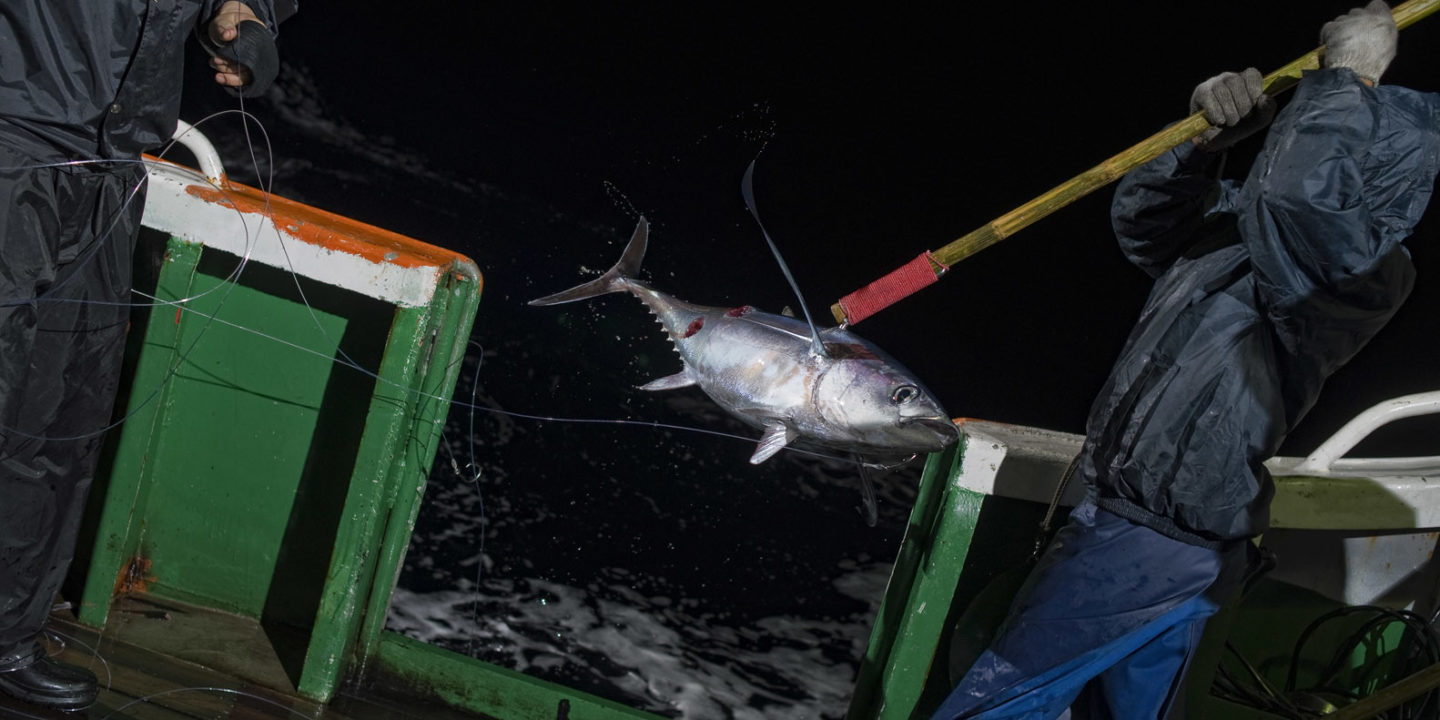
However international experts emphasised that tuna fishing takes place in the deep sea that is outside the range of many small-scale, local fishing fleets. The deal is explicitly for longline fishing, not the more destructive trawling method that has come to be associated with overfishing in other regions.
Hasan said he was worried about the environmental impact of such contracts. “We worry [about] overfishing, destruction of fish species and availability of the tuna which the Chinese were granted to catch. In the long term this deal is not benefiting Somalis,” Hasan added.
However much of these deepwater tuna would travel through Somalian waters to be caught in international waters, whereas under this deal the country gets a revenue not otherwise available. Long lining vessels use hooks baited onto a long line in waters of 2,000m deep and do not come into contact with the ocean floor, and while there can be entanglement and bycatch of other species, it has less of an impact on the marine ecosystem than trawling.
Local fishing communities operating from Mogadishu’s Liido beach were worried about their catch, but as they do not typically venture beyond 24 miles of the coast and target different fish species, it is unlikely that the deal would materially affect them.
Abdirahman Omar Hassan, a Mogadishu-based environmental activist and lawyer, says lack of ecological protection and the government’s weak or ineffective policies make it difficult to manage the fishing sector. He said he was concerned that this would provide an opportunity for some countries that are believed to overfish in many African countries and elsewhere.
“Overfishing by Chinese trawlers has cost thousands of jobs in West Africa. Thousands of fishers were left idle in their home towns. Now if they come to Somalia, they will ruin the local fishers and destroy our waters,” he said. While West Africa continues to suffer from overfishing, their fishing area is much greater, made up of many different countries, and therefore harder to regulate.
Hassan Mohamed Roble, head of Iskaashato, the Mogadishu fishing umbrella of more than 200 local fishers, says the Somali government hastily signed the contract.
“It is not the right time. We needed some laws and regulations to protect the local fishers first,” Roble said. “The contract is about tuna but we are afraid the Chinese will catch everything and leave us nothing.”
Existing fishing laws in Somalia are thought to be weak, but they do ban trawling. However consultation is not good between government and communities and there are strong disagreements between states.
Confusion over practices
A major concern raised by local fishermen is the type of fishing equipment that will be used in Somali waters. They believe that the Chinese vessels will be using a destructive trawling practice, but in reality all the licenced vessels are long liners that will be monitored to ensure they stick to the agreed fishing activity.
“Local fishermen use small nets and if sea creatures are accidentally trapped in their nets, they discard them back to the ocean,” Mohamed Sheikh Ahmed, a boat owner and fisher in Mogadishu said. “These foreign trawlers catch even sea turtles which they later sell on the black market.”
But minister Bidhan said the government will deploy its own personnel onboard the Chinese vessels to ensure the companies adhere to the terms of the contract, which includes not exploiting other sea resources.
“There will be two government personnel onboard every vessel of the Chinese fleet,” the minister said.
Officials in Somaliland, an independent region in northern Somalia, have rejected the Chinese fishing deal with the government in Mogadishu, saying that it does not cover their waters.
“The Somaliland navy is regularly patrolling our coast, and will defend its territorial integrity from Chinese or any other illegal fishers,” the Somaliland minister for livestock and fisheries, Hassan Ali Gafadhi, said.



![Jagdishpur lake in Nepal, full of birds [image by: Manoj Paudel]](https://dialogue.earth/content/uploads/2019/03/Birds_Manoj-Paudel_17-300x142.jpg)