


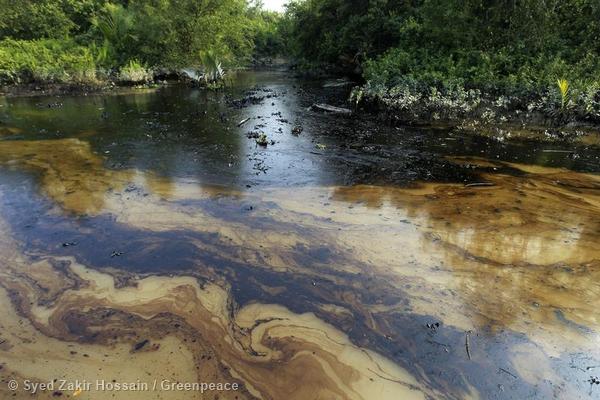

An oil tanker carrying around 350,000 litres of oil capsized on the Shele River in the Sundarbans early Tuesday morning, threatening the world’s largest mangrove ecosystem.
The oil tanker collided with another empty tanker in dense fog and capsized early Tuesday morning, according to local forest officer Amir Hossain Chowdhury.
Two naval ships and two other vessels have been dispatched to the scene but they may take two more days to arrive, said Shahjahan Khan the Minister of Shipping on Wednesday.
The forest department said it does not have the capacity to clean up the oil but it has filed a case against the owners of the two vessels and set up an inquiry to investigate the incident.
Meanwhile the oil spill has already spread across a huge area of the forest and the Shele River, a major sanctuary for the endangered Irawaddy and Ganga dolphins. The Sundarbans is also a unique habitat for a number of other rare species including the Bengal tiger, Indian otter and spotted Deer.
The tanker was heading to Gopalganj from Khulna, an important industrial port. Since the legal shipping route collapsed due to heavy siltation in 2011, vessels have been using alternative routes through restricted forest areas to save time and costs.
Environmental activists claim this was an accident waiting to happen: they have been calling for the government to stop the use of illegal shipping channels for years in order to protect the fragile ecology of the mangrove forest.
The Centre for Environmental and Geographical Information Services (CEGIS), an independent body of the Ministry of Water Resources, has also warned that plying large vessels along the sensitive channel will cause environmental damage in the area from pollution and riverbank erosion.
Since 2011 more than five hundred large vessels and oil tankers have been illegally navigating the forest (from Mongla port to the Bay of Bengal and along the Shele River), according Yunus Ali, chief conservator of forests.
Government officials have now admitted the oil spill – – the first major spill in the Sundarbans – – will have a long-lasting impact on the forest.
The Sundarbans is a designated Unesco world heritage site and wildlife sanctuary on the northern shore of the Bay of Bengal. The vast river delta comprises 4% of the country’s total land mass and 40% of its forest land, according to the forest department.
Ecosystem breakdown
There is particular concern over the risks to the Irrawaddy dolphin. The government declared areas in the southern Sundarbans to be a dolphin sanctuary in 2011, after research suggested some 6,000 dolphins lived in the area.
“The (dolphins) will find it hard to breathe because of the thick layer of oil over the river water will reduce the level of oxygen,” said Monirul H Khan, associate professor of Zoology at Jahangirnagar University.
Water expert professor Ainun Nishat warned the oil leak must be stopped as early as possible to save forest vegetation and avoid a complete breakdown of the food chain.
The salt water trees of the mangrove ecosystem reproduce from windfall seeds that fall on the ground, he explained. As oil settles on the forest topsoil, these seeds will die and the mangrove forests will not be able to regenerate. This in turn will put deer and other animal species at risk. These seeds are also the staple food of Pungash fish which inhabit the river and are the main source of food for crocodiles.