Ocean

Can cultivated fish maw help endangered species?

In this exclusive video, we speak to Avant Meats CEO Carrie Chan about lab-grown seafood, and its potential role in ocean conservation
English

Carrie Chan heads the first company in Asia attempting to cultivate seafood for the consumer market. With operations in Hong Kong and Singapore, Avant Meats is developing products that include an animal-free alternative to one of China’s four “treasures of the sea” – fish maw.

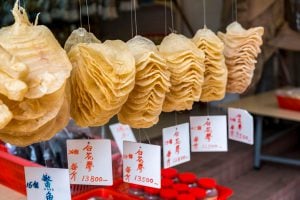
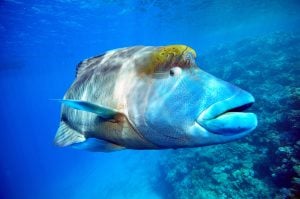
Maw is the dried version of the swim bladder that fish use to control their buoyancy. In different parts of Asia, particularly southern China, the amber-hued organ is perceived to possess great nutritional and medicinal value.

However, intensifying demand for certain types of maw has pushed several species towards extinction, including the Chinese bahaba, and the totoaba and vaquita in Mexico’s Sea of Cortez.

Chan plans to have a cultivated fish maw product ready for the public in the near future. She hopes this will reduce demand for the real thing. But although the cultivated version will provide the same proteins as the original, it’s uncertain whether it will imbue the same prestige as the eating and serving of real maw.

A recent study revealed less than half of Chinese consumers say they are willing to try cultivated meat, and only one-third might consider buying it. There are also concerns that, once production costs and so sale price are lowered, the cultivated variety could make maw available to more people, thus stimulating demand for the real thing.

Whatever the eventual impact of lab-grown maw, Chan is committed to raising the issue of the ecological impact of the fish maw trade. Her company’s marketing strategy could be said to double as an awareness-raising campaign.

She is also keen to highlight the potential health benefits of cultivated fish maw. “It is very difficult to totally get rid of the marine pollutants [in conventional maw], but our samples show no heavy metals,” she said when talking to China Dialogue Ocean about her video interview.

Production credits:

Singapore footage filmed by Chen Jing Lian
Hong Kong footage filmed by Carol Mang, Shanshan Kao
Edited by Carol Mang
Produced by Carol Mang, Lizi Hesling
Archive materials courtesy of Alamy, Sea Shepherd Conservation Society, Avant Meats

Music:

Apollo Diedre” by Blue Dot Sessions, CC BY NC
Plate Glass” by Blue Dot Sessions, CC BY NC

This video is released under the Creative Commons Attribution Non-Commercial No Derivatives licence. For a copy of the video file, please contact: [email protected]. A clipreel of the original footage (excluding archive) is also available on request.
Cookies Settings

Dialogue Earth uses cookies to provide you with the best user experience possible. Cookie information is stored in your browser. It allows us to recognise you when you return to Dialogue Earth and helps us to understand which sections of the website you find useful.

Required Cookies

Required Cookies should be enabled at all times so that we can save your preferences for cookie settings.

Dialogue Earth - Dialogue Earth is an independent organisation dedicated to promoting a common understanding of the world's urgent environmental challenges. Read our privacy policy.

Cloudflare - Cloudflare is a service used for the purposes of increasing the security and performance of web sites and services. Read Cloudflare's privacy policy and terms of service.

Functional Cookies

Dialogue Earth uses several functional cookies to collect anonymous information such as the number of site visitors and the most popular pages. Keeping these cookies enabled helps us to improve our website.

Google Analytics - The Google Analytics cookies are used to gather anonymous information about how you use our websites. We use this information to improve our sites and report on the reach of our content. Read Google's privacy policy and terms of service.

Advertising Cookies

This website uses the following additional cookies:

Google Inc. - Google operates Google Ads, Display & Video 360, and Google Ad Manager. These services allow advertisers to plan, execute and analyze marketing programs with greater ease and efficiency, while enabling publishers to maximize their returns from online advertising. Note that you may see cookies placed by Google for advertising, including the opt out cookie, under the Google.com or DoubleClick.net domains.

Twitter - Twitter is a real-time information network that connects you to the latest stories, ideas, opinions and news about what you find interesting. Simply find the accounts you find compelling and follow the conversations.

Facebook Inc. - Facebook is an online social networking service. China Dialogue aims to help guide our readers to content that they are interested in, so they can continue to read more of what they enjoy. If you are a social media user, then we are able to do this through a pixel provided by Facebook, which allows Facebook to place cookies on your web browser. For example, when a Facebook user returns to Facebook from our site, Facebook can identify them as part of a group of China Dialogue readers, and deliver them marketing messages from us, i.e. more of our content on biodiversity. Data that can be obtained through this is limited to the URL of the pages that have been visited and the limited information a browser might pass on, such as its IP address. In addition to the cookie controls that we mentioned above, if you are a Facebook user you can opt out by following this link.

Linkedin - LinkedIn is a business- and employment-oriented social networking service that operates via websites and mobile apps.