In the past decade, Chile has emerged as a global leader in marine conservation – at least on paper. The country has won international praise for designating more than 40% of its territorial waters as Marine Protected Areas (MPAs), and for leading international ocean initiatives. But at a recent gathering in the coastal city of Viña del Mar in central Chile, participants from civil society groups, Indigenous organisations, academia and coastal communities painted a more complex picture.
In July, Dialogue Earth and the Chilean NGO FIMA brought together more than 30 participants for a workshop to assess the country’s ocean governance and explore pathways forward. Discussions revealed concerns over enforcement gaps, pressures from extractive industries, and the exclusion of key stakeholders. But they also spotlighted powerful local efforts to reclaim stewardship of the sea.
The meeting was held under the Chatham House Rule, which bars attendees from revealing the identity or affiliation of each other. Dialogue Earth does therefore not identify individual speakers in this article.
Triple ocean crises
Chile’s marine ecosystems face mounting pressures across three interlinked fronts: climate change, biodiversity loss and pollution.
The impacts of global warming on the ocean – such as rising temperatures, acidification and species migration – are altering ecosystems in unpredictable ways. “Science is our evidence,” said one expert at the workshop. They called for greater scientific input into marine policymaking.
At the same time, industrial fishing practices, such as bottom trawling, continue to destroy vital marine habitats. And the overexploitation of seaweeds threatens the base of the marine food web. Plastic pollution, nutrient runoff and the impacts of salmon aquaculture – including massive antibiotic use and waste discharge – have created dead zones and degraded coastal waters in many places along Chile’s vast coastline.
Despite the country’s extensive MPA network, these threats persist in part because protections often exist in name only. Participants highlighted a lack of management plans, inadequate monitoring, and limited inclusion of local or Indigenous communities in several allegedly protected areas. Another issue raised was the difficulty of identifying the ultimate beneficiaries of the companies involved in illegal fishing or pollution – a critical gap in Chilean ocean governance.
Other participants noted that despite the high overall figure of 40% of Chile’s ocean being under protection, there are significant gaps in the network. In central Chile, for example, only a small fraction of coastal waters is protected, despite their high ecological and human value.
Grassroots conservation: Marine shelters and beyond
Contemplating these challenges, the workshop showcased local initiatives offering a more hopeful vision of marine stewardship.
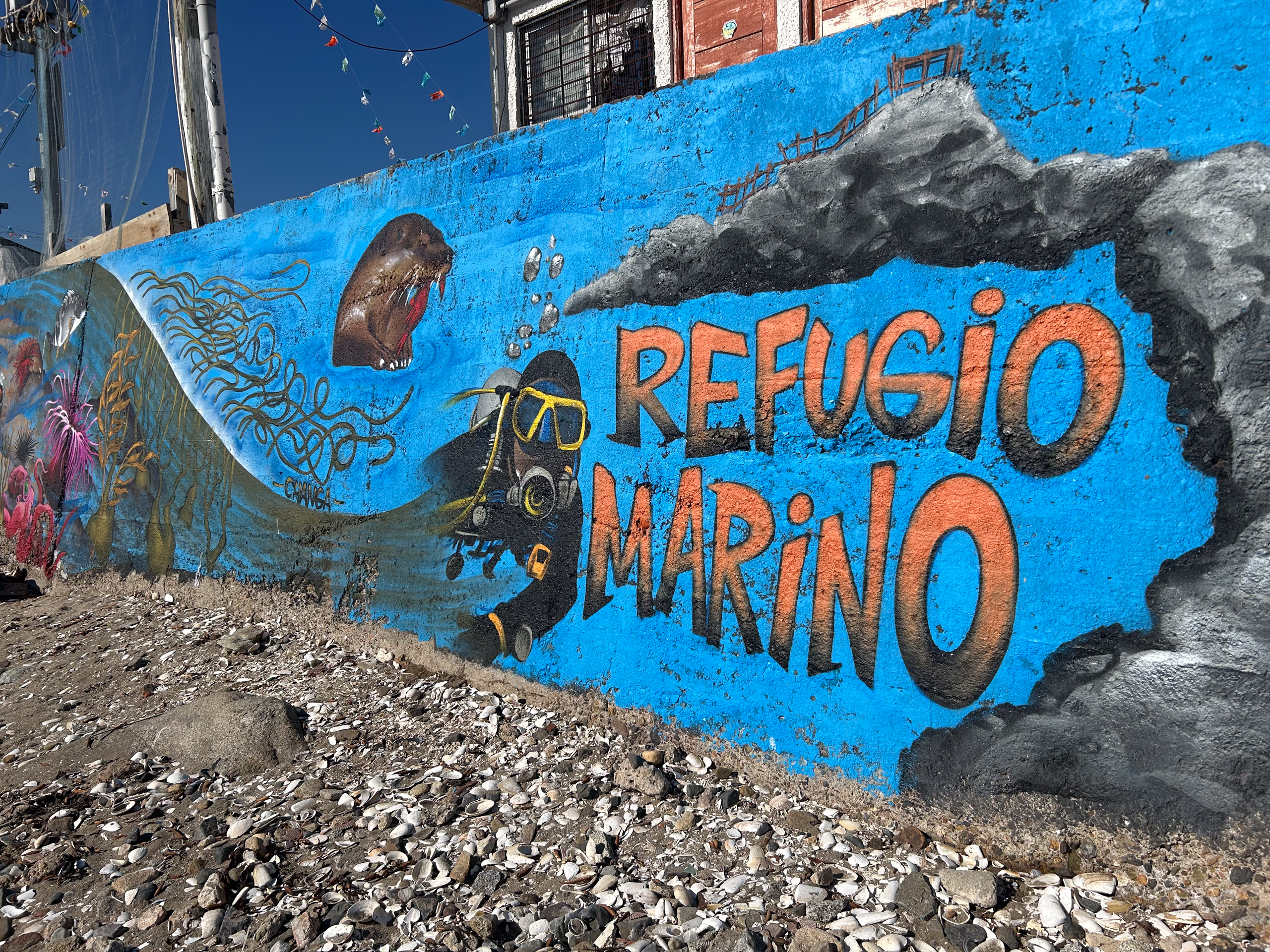
One such model is the marine shelter. In these community-managed zones, no extraction of any kind is allowed. In the Valparaíso region, artisanal fishing communities have established five such shelters in collaboration with Fundación Capital Azul. These areas, which include Maitencillo and Cachagua, are monitored by both scientists and fishers, the latter enforcing rules and educating younger generations. Over time, species like abalone (known locally as locos) and sea urchins have returned, while community cohesion has deepened.
“Initially, there was resistance – people feared losing access to key species,” one fisher recounted during a field visit to Maitencillo. “But we’ve come to understand that protecting a part of the ocean ensures its abundance for everyone in the future.”
Other civil society initiatives include using citizen science to monitor and regulate the harvesting of kelp, which is essential for biodiversity and carbon storage. One presentation at the workshop detailed a kelp-mapping and habitat protection advocacy project involving local groups in northern Chile.
The workshop also touched on the transparency tools that are helping to monitor marine industries. For example, organisations such as Global Fishing Watch are using satellite imagery and AI to track fishing vessels, detect illegal activity and strengthen enforcement. As one workshop participant said, “you can’t manage what you can’t see”.
The power of education and imagination
Beyond technological and legal tools, the need for cultural transformation was stressed by many participants. Chilean organisations like Aula de Mar and Oceanósfera are pioneering ocean literacy efforts – from ocean-themed school programmes to wild swimming groups and hands-on algae identification workshops.
“Conservation isn’t just about biodiversity,” said one participant. “It’s about the emotions, memories, and stories we share with the sea.”
These programmes aim to cultivate a “biocultural” connection with the marine environment – encouraging people to see whales, fish and crustaceans not merely as resources, but as fellow beings with whom we share a territory. Some participants spoke of an “oceanic imagination” that expands the ethical framework of governance to include interspecies care and collective futures.
Indigenous ocean governance
A recurring theme throughout the workshop was the exclusion of Indigenous peoples from marine decision-making. This is despite Chile’s ratification of international agreements like ILO Convention 169, which supposedly guarantees Indigenous peoples’ right to self-determination.
“There’s structural racism in coastal policies,” claimed a workshop participant. “Inclusivity isn’t a favour. It’s a right.”

Communities and networks across Chile are fighting to reclaim ancestral marine spaces and knowledge systems but more can be done. Workshop participants agreed, for example, that Marine Coastal Areas of Indigenous Peoples (ECMPOs), enshrined in Chilean law to enable Indigenous marine co-governance, are still overlooked and underresourced.
For many communities, marine governance is not merely a bureaucratic framework that must be complied with. It is about living with and within the ocean. The general consensus at the workshop was that understanding this requires a shift away from top-down models toward co-management structures that centre Indigenous voices and lifestyles.
Chile’s global role – and its contradictions
The workshop also delved into Chile’s potential leadership in international ocean governance, particularly through the Biodiversity Beyond National Jurisdiction (BBNJ) treaty. Adopted after two decades of negotiations, the treaty aims to protect biodiversity in the high seas and promote equity in the use of marine resources.
Chile has played an active role in these talks and expressed interest in hosting the BBNJ secretariat in Valparaíso – a move participants saw as both symbolic and strategic.
“If the Global South is going to be part of the solution, it needs to lead,” one speaker noted. Hosting the treaty could help shift the centre of marine diplomacy closer to the realities of frontline countries like Chile.
But participants also flagged tensions between Chile’s international aspirations and domestic realities. They pointed out examples of the gap between rhetoric and implementation: ongoing expansion of salmon farms in sensitive coastal areas, weak enforcement of Indigenous rights and limited progress on local conservation.
Moving forward
As the workshop concluded, a consensus emerged: meaningful ocean governance in Chile requires more than declarations. It needs inclusive, transparent and community-driven processes that respect both ecosystems and the people who depend on them.
Key priorities cited by the participants include strengthening the implementation of MPAs with genuine community and Indigenous participation, and supporting grassroots models like marine shelters and ECMPOs. Additionally, scaling up ocean literacy through education, art and public engagement, and ensuring full traceability and corporate accountability for fisheries and aquaculture.
Most importantly, participants called for a deeper cultural shift – a move to embracing the ocean not just as a space to be regulated, but as a living thing with which we are all intertwined and must take care of. As one person reflected during the workshop’s concluding moments: “We must speak of the ocean, without forgetting the coasts, and the communities that live there.”