Ahead of the COP30 meeting in Belém, Brazil, countries around the world rushed to submit their climate pledges, with many incorporating ocean initiatives into their plans.
But activists and researchers who have combed through the commitments say the promises favour broad, ambiguous policies that focus on environmental protection, rather than the concrete targets that are urgently needed.
Phasing out fossil fuel, especially by halting new offshore extractions, is one of the overlooked elements, activists say. “It’s great to protect marine biodiversity,” says Bruna Campos from the Center for International Environmental Law. However, “when it comes down to… actually going to the root of the problem – phas[ing] out offshore oil and gas – they don’t say that”.
The ocean stores a huge amount of both the carbon dioxide and the heat that human activity produces. Safeguarding the ocean’s ability to capture and store carbon is considered vital to holding back the most devastating levels of global warming.
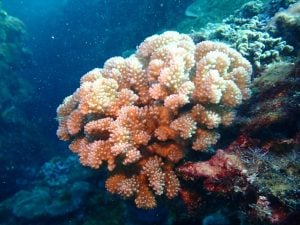
But that ability is also compromised by this very issue, because as the Earth heats, its carbon-trapping coral reefs, mangroves and other marine organisms struggle with warmer and acidifying waters.
Analysing ‘NDCs’
Under the Paris Agreement, parties must update and submit their national climate plans, known as Nationally Determined Contributions (NDCs), to the UN every five years. This month, dozens of countries, including China and the European Union bloc, submitted their new climate commitments ahead of COP30. Most countries had failed to submit their NDCs by the initial February deadline as well as an informal extension of September.
Under the 2015 Paris Agreement, countries are required to prepare an outline for their efforts to reduce national emissions and adapt to the impacts of climate change. These commitments are referred to as Nationally Determined Contributions (NDCs).
NDCs are submitted every five years, and successive NDCs are supposed to be more ambitious than previous ones (the so-called “ratchet mechanism”). Combined, these national targets should amount to a coordinated global effort to reduce the severity and impact of climate change.
Researchers from Australia’s University of New South Wales (UNSW) have analysed all 123 NDCs submitted before 19 November, when the study was published. They found that 85 of the 96 nations with a coastline had pledged at least one ocean-based action. This was an 82% increase compared to the previous round of submissions five years ago.
“There is an increasing awareness of the importance of the ocean to climate actions,” says the UNSW report’s co-author Eliza Northrop, who heads up the university’s Centre for Sustainable Development Reform.
Measures to conserve marine and coastal ecosystems were by far the most common among the latest NDCs, accounting for over 43% of all ocean-based measures. Safeguarding and restoring these ecosystems – especially mangroves, salt marshes and seagrass – can help them to better sequester so-called blue carbon and to defend coastlines. Saving these ecosystems also prevents the carbon they have trapped from being released.
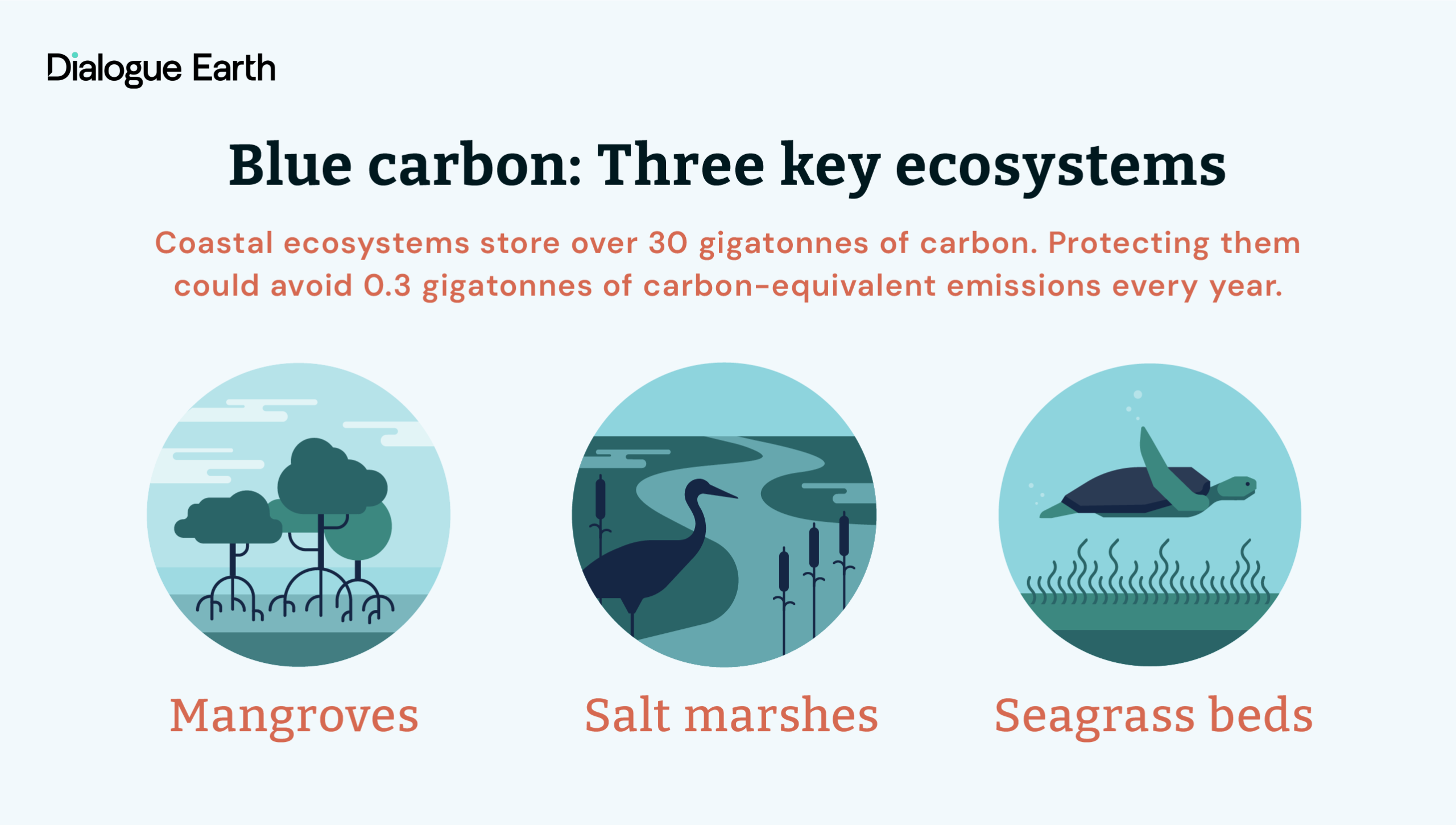
Nearly 70% of ocean-based measures in national plans primarily target adaptation, according to Northrop’s research. For example, conserving mangroves for coastal defence and managing the climate risks that fisheries face. Northrop tells Dialogue Earth that this emphasis on adapting to climate change has been persistent across the past three rounds of NDC submissions.
But some researchers and activists want to see more diverse – and tougher – ocean-related pledges.
“Right now, we’re seeing a lot of conservation measures,” says Marine Lecerf from the Ocean & Climate Platform, which promotes the science that underpins the connections between the ocean, the climate and biodiversity.
Lecerf urges countries to “diversify the type of solutions that they are using”. She co-authored a working paper analysing countries’ ocean action in NDCs submitted before early November. It notes that ocean-based climate mitigation measures, including phasing out offshore oil and gas, reducing emissions from the shipping industry, and scaling up offshore wind and other ocean-based renewables, remain underrepresented.
‘More actions needed on offshore drilling’
The least mentioned ocean-based action across all the latest NDCs is the phasing out of offshore oil and gas.
Among all the national pledges analysed in the UNSW report, the researchers identified just two measures specifically related to offshore fossil fuels.
Dialogue Earth found that these were pledged by Colombia and the United Kingdom. Colombia’s national plan celebrates its “historic” decision to suspend new hydrocarbon exploration contracts. It has also vowed to make the existing sector more efficient. And the United Kingdom’s plan pledges “to consult on not issuing” new oil and gas exploration licenses.
Most countries are not making specific commitments for the sector, although in some cases, oil and gas targets have been bundled up in broader, economy-wide targets. For instance, Japan and Norway, which have huge ocean industries, offered only a general commitment to emissions cuts covering all sectors. Neither detailed any marine goals in their NDCs.
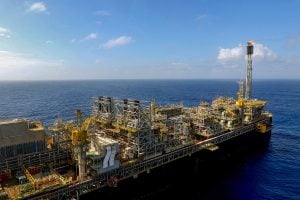
Currently, around 30% of oil and gas production comes from offshore wells. This number is likely to grow: over 70% of new oil and gas discovery, approval and production in the past year was ocean-based.
Campos argues that to really tackle climate change, explicit, time-bound and measurable targets to end offshore drilling are critical.
She cites Indonesia. Its NDC vowed to strengthen the protection of ocean carbon sinks but made no commitment to phasing out offshore drilling. In fact, the country is developing this sector.
“It’s about where your actions really are,” Campos adds.
Brazil: Leadership under scrutiny
COP30 host nation Brazil is facing a similar dilemma as Indonesia over its appetite to both grow offshore fossil fuels and champion the ocean.
The country has tried to take a leadership role in promoting ocean action, something its leaders had been at pains to stress in Belém. Brazil’s NDC, released one year ago, mentions protecting coastal ecosystems and expanding offshore wind energy capacity. It states the country has adopted guidelines to “promote the decarbonisation of oil and natural gas exploration”.
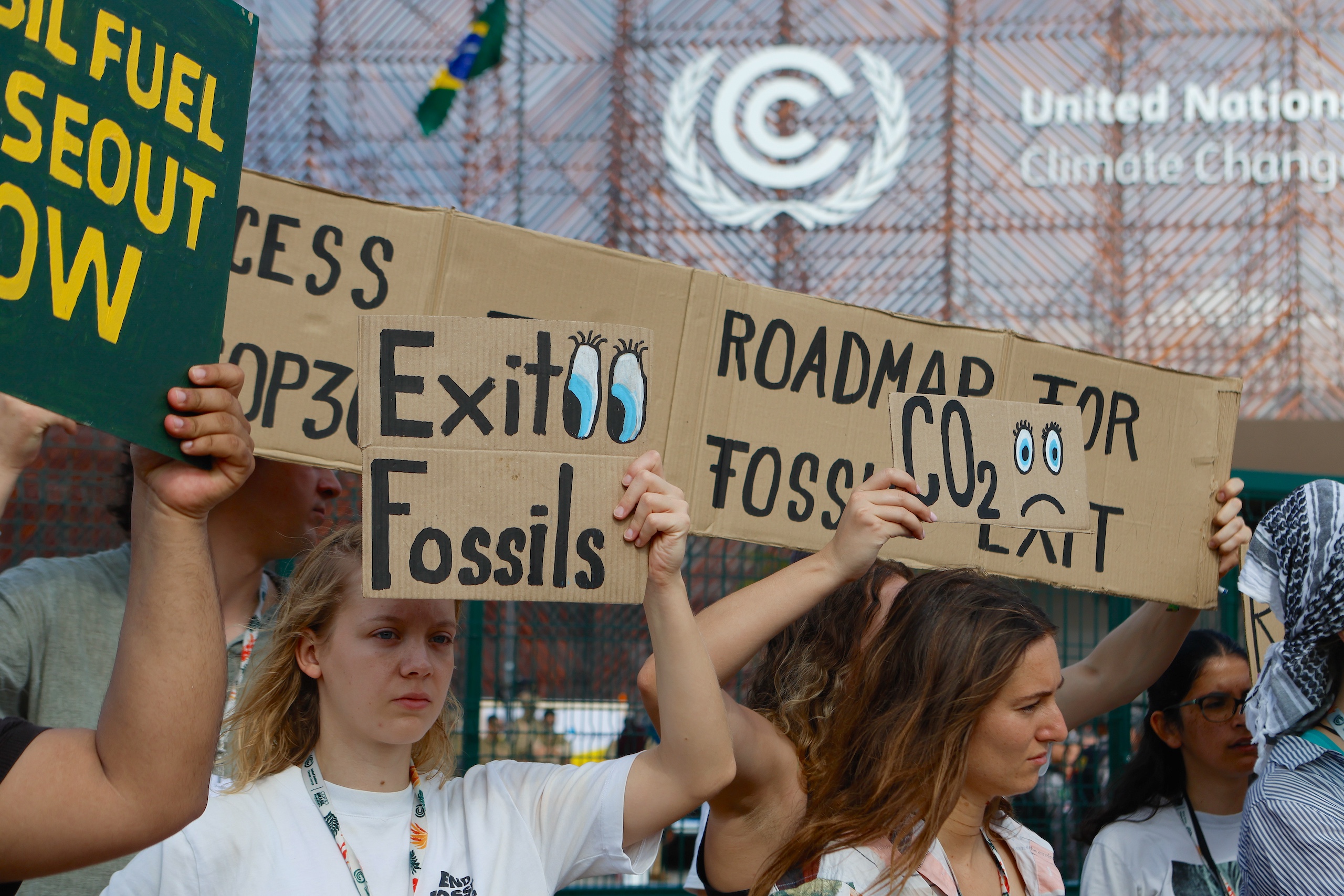
But in late October Brazil also permitted its state oil company, Petrobras, to conduct exploratory drilling in the sea of the Foz do Amazonas area at the mouth of the Amazon River.
Marinez Scherer, a professor at Brazil’s Federal University of Santa Catarina (UFSC) and the COP30 special envoy for the ocean, says the ocean emphasis in Brazil’s NDC “is a great step forward”. But she concedes that the approval of Amazon Basin oil exploration “can be seen as contradictory”.
She adds: “We have to keep the ocean alive. And there is one way: to stop burning fossil fuels at the level that we do.”
China: Ocean goals of the world’s largest emitter
China’s updated NDC, released just ahead of COP30, shows the tensions even relatively wealthy countries must contend with when it comes to balancing emissions cuts with maintaining industries and development.
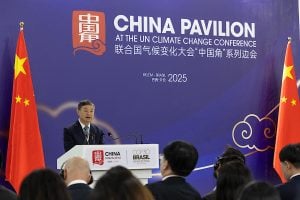
Commitments from the world’s largest emitter of greenhouse gases cover a wide range of marine policies, such as protecting blue carbon sinks, expanding offshore wind and other ocean-based renewable energy, developing green infrastructure in new ports, and promoting the use of clean shipping fuels. The government has set an economy-wide emissions-reduction target, but it does not specifically address offshore oil and gas.
Chen Jiliang, a senior researcher at the Beijing-based non-profit environmental think-tank Greenovation Hub, says the plan also underscores measures for adaptation, and for managing the risks that come with climate change.
But he notes that China’s NDC measures largely target short-term risks, particularly coastal hazards such as storms and floods. Less attention was given to addressing longer-term risks, such as developing climate-resilient marine protected areas or fisheries.
“These longer-term risks require more research to be determined and demand institutional-level measures,” Chen says.
Small island developing states: Big ambitions and money worries
Small island developing states continue to stand at the forefront of championing the ocean at climate COPs. NDCs from these nations represent over 40% of the ocean actions found across all submissions, despite representing just 22% of countries in the analysis, Northrop’s research shows.
Campos highlights Vanuatu’s climate plan, which was submitted in September. It has extensive, time-bound and concrete ocean-climate targets. Not only does the plan set out tangible goals, she says, but “they talked about how much it would actually cost them […] and that helps get the funding”.
And a lot of funding is needed. Vanuatu wants to support the Pacific nations’ partnership to build a 100% carbon-free maritime transport sector by 2050, introduce rules to reduce shipping emissions and greening all major ports, and it expects all this to cost USD 1.75 million. Vanuatu thinks adapting its fisheries sector to climate change by 2030 could cost USD 29.4 million. The country’s total climate commitments are estimated to cost USD 3 billion from this year to 2035.
Vanuatu cannot pay for this on its own. The money could come via blue bonds, grants from development banks and philanthropic support. There are also the climate-specific finance bodies, such as the Global Environment Facility.
This reflects a wider funding need across many ocean goals that nations are committing to. Nearly 60% of the ocean-based actions in the NDCs analysed in the UNSW report are conditional on obtaining international financial support, while another 20% are partially conditional, according to Northrop’s research.
“Right now, ocean solutions are extremely underfunded,” Lecerf says. National plans can serve as roadmaps to galvanise finance, she adds: “The more specific, the clearer these targets are, the easier it is for countries to receive support.”