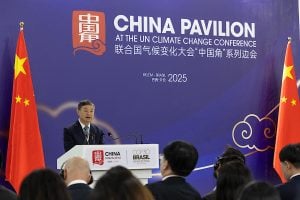
The ocean used to be missing from climate discussions. Some attendees at the recent COP30 climate conference in Brazil say it is now being given its rightful place, even if money is not currently following rhetoric.
António Guterres used a speech at the huge summit in the Amazonian city of Belém to outline what climate change is doing to the global ocean – “warming, acidifying and rising”.
The UN secretary-general went on to say: “Protecting forests and oceans is not charity. It is a legal and moral responsibility and smart economics.”
Brazil’s president, Luiz Inácio Lula da Silva, echoed that in one of his speeches: “This COP – the COP of truth – calls for a pact for the life of our forests, our oceans, and of humankind itself.”
Such language from leaders gives hope to those interested in the ocean.
“If we look back to 2015, the word ‘ocean’ does not exist in the Paris agreement,” says Kerstin Bergentz, a researcher at the Scripps Institution of Oceanography in the US who attended COP30. “Five years ago, you would have said ‘ecosystem’ or ‘forest’ or ‘land’. But now, the ocean has entered the conversation.”
Anna-Marie Laura, director of climate policy at the Ocean Conservancy NGO, cites some important COP firsts for the ocean in Belém. The world leaders’ summit included a specific ocean theme. Of 29 special envoys, only the one for oceans spoke at the summit. And COP30 saw the first high-level ministerial meeting dedicated to oceans. “All these firsts underscore how much more central ocean is in the climate conversation and in the actual actions being taken,” Laura tells Dialogue Earth.
Ocean pledges made
The sense of the ocean now being “in the conversation” is borne out in the climate pledges nations submitted in the run up to COP30 via their Nationally Determined Contribution (NDC) documents which are updated every five years.
Mentions of the ocean in the latest round of NDCs surged, according to work by Scripps researchers, who found four times as many versus NDCs in 2017.
Another analysis by the World Resources Institute, in collaboration with Ocean Conservancy, found that 92% of the NDCs so far submitted by coastal and island countries included ocean-related climate actions. This is much higher than the 62% that did in 2015, although about 40% of such nations had yet to submit their new NDCs when the study was conducted on 4 November.
But there is also caution over these pledges. Rather than trying to stabilise temperatures by phasing out fossil fuels, many nations are targeting conservation measures and habitat protection to address climate change impacts. (For more on this, see our recent deep dive into new NDCs and the ocean.)
This echoes wider criticism of the overall COP30 outcome, where the final text also neglects discussing a mooted roadmap away from fossil fuels.
Laura calls the omission “a disappointment”, adding “the number one thing we can do to protect the ocean is phase out fossil fuels.”
Who has joined the Blue NDC Challenge?
Signed at COP30: Belgium, Cambodia, Canada, Indonesia, Portugal and Singapore
Signed before COP30: Australia, Brazil, Chile, Fiji, France, Kenya, Madagascar, Mexico, Palau, the Seychelles, and the United Kingdom
More positively, six countries joined the Blue NDC Challenge in Belém, taking the total number to 17. Launched by Brazil and France at the UN Ocean Conference earlier this year, the challenge commits nations to increase the focus on oceans in their commitments.
The nations behind the initiative used the Belém meeting to promise a taskforce to help deliver ocean targets in NDCs via technical assistance and access to finance.
Ocean finance still in short supply
A statistic doing the rounds in Belém states that, by 2050, the ocean could potentially close 35% of the so-called emissions gap between likely greenhouse gas emissions and the level needed to limit warming to 1.5C. In many talks and discussions, there was a focus on the ocean as a potential solution to climate problems, rather than on the ocean having climate-related problems that need solutions, say attendees.
Another ocean number much cited in Belém was that only around 1% of climate finance is estimated to go to ocean projects. Funding is still a huge stumbling block to implementing ocean solutions to climate change, and delivering NDC commitments.
“Having ocean in more NDCs should translate to increased finance, given NDCs are investment plans for how countries want to deal with climate change,” says Laura.
Marinez Scherer, a professor at the Federal University of Santa Catarina in Brazil and the COP30 special envoy for the ocean, says funding was heavily discussed, especially by civil society, but the COP ended with no official document on ocean finance.
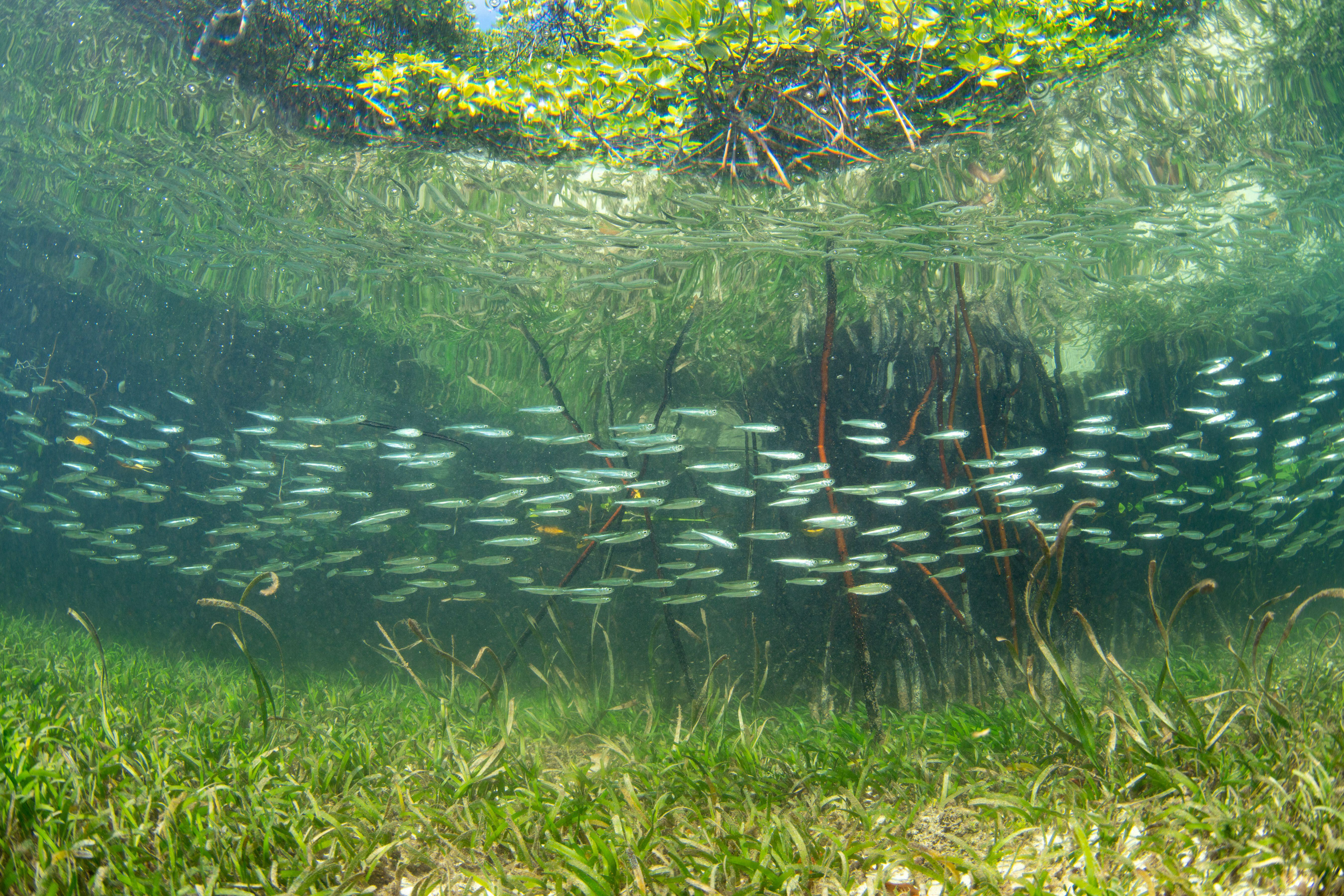
She notes that the meeting did see a group called the One Ocean Partnership announce plans to bring together USD 20 billion to help the so-called blue economy by 2030 and conserve mangroves and other ecosystems.
NGOs are also talking hopefully about the idea of setting up a dedicated ocean fund at COP31, potentially modelled on the Tropical Forest Forever fund pushed by Brazil as part of its COP presidency. “But we still haven’t got anything concrete yet,” says Scherer.
Brazil’s ocean record under scrutiny
As the host of COP30, Brazil’s ocean record was under immense scrutiny in Belém.
Brazil and its president, Lula, have tried to establish a leadership role in ocean issues – pushing the Blue NDC Challenge and promising to sustainably manage 100% of its waters by 2030. There was also emphasis on the ocean in the “action agenda” from Brazil, which guided COP discussions around voluntary contributions to fighting climate change outside the main negotiations.

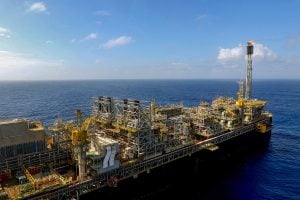
All this contrasts starkly with the country’s moves to open up fossil-fuel exploration at the mouth of the Amazon. Criticism on the issue, which was heard at the UN Ocean Conference earlier this year, continued in Belém. A new licence to explore for oil issued just before COP meant Lula had “sunk his claim to be a climate leader in the deep ocean at the mouth of the Amazon,” said Suely Araújo, coordinator of public policies at Brazil’s Climate Observatory.
Amazon Indigenous groups have been particularly incensed, and protestors even stormed the COP site at one point over this and other issues.
No ‘Pacific COP’ for 2026
There was also disappointment from some ocean watchers that next year’s COP will not be in Australia. The country was widely seen as in pole position and had pledged to co-host with Pacific nations already suffering the impacts of climate change while debates about reducing emissions drag on.
But, after diplomatic horse trading, COP31 will go to Antalya in Turkey rather than Adelaide. “It’s a big disappointment for the Pacific,” Justin Tkatchenko, foreign minister of Papua New Guinea, told ABC Pacific.
A preliminary meeting will take place in a currently undetermined Pacific island nation, and Australia has been promised the role of “president of negotiations”.
Tom Pickerell, global director of the ocean program at the World Resources Institute, says this gives him some hope that COP31 can still be the “blue COP” envisaged by the Australia/Pacific bid.
“That gives me cautious optimism, because we really do need a blue COP, a COP that has the ocean at the centre, on the front page,” he says. “We’ve had the forest one [COP30], we’ve had the finance one [COP29]. We’ve got to have a blue COP.”
Whatever happens to greenhouse gas emissions from now on, emissions so far will continue to warm the ocean for centuries. But the speed with which emissions are curbed can still have a major impact on how hot the ocean gets. So many hope the ocean will become a top priority in climate discussions and policy.
“A couple of years ago the ocean was just never even considered. It was not even an afterthought,” says Pickerell.
From that admittedly low bar, Belém “was actually one of the best COPs for the ocean”, he says.
Additional reporting by Regina Lam.