Media reports of abuse of fishers and illegal fishing are making consumers wonder whether the seafood on their plate is associated with these unsustainable practices.
Editor’s note
Drs Selig, Sparks and Wabnitz worked together on the research that this article builds on, which was also co-authored by Shinnosuke Nakayama, Henrik Österblom, Jessica Spijkers, Nathan A. Miller, and Jan Bebbington. This article reflects only the opinions of Drs Selig, Sparks and Wabnitz.
Our research suggests that there is reason to be concerned. We find that risks of labour abuses and IUU (illegal, unreported and unregulated) fishing are prevalent worldwide, and with high-risk areas for both activities present in all oceans. In over 750 ports that we were able to assess globally, 57% were associated with labour abuses or IUU fishing, including in places generally thought to have strong governance and fisheries management.
When tackling problems of this scale, governments and companies can use risk-based approaches to identify where to take action, collect additional data and work together to mitigate risks. We found the two main factors that determined risks are the flag the vessel flies, which indicates where it is registered, and what type of fishing gear it is carrying.
Negative impacts on fishers’ wellbeing and national economies
The stakes are high. Labour abuses can be matters of life and death, but it is also critical to address less severe forms of abuse for fishers. Poor working conditions, for example, affect health and livelihoods and can be a gateway to more exploitative behaviours.
In fact, one of the most common forms of labour abuse is wage theft – underpayment or non-payment of agreed-on wages, withheld wages or unpaid overtime. It can lead to forced labour and inhibit economic growth and prosperity for fishers and family members financially supported by them.
In parallel, the consequences of IUU fishing are felt from national governmental coffers to coastal communities reliant on nearshore fisheries for nutrition and livelihoods. Siphoning fish from the legitimate trade system results in economic losses estimated at US$26–50 billion annually and damages stocks for future generations.
Using risk to inform actions
Although labour abuse and IUU fishing risks can occur on the same vessels, they have different drivers and solutions. Often there is a focus on catching the ‘bad’ vessels or operators. While this is important, individual violators may be missed, so there is also a need to understand broader risks and their drivers. Therefore, in our research, instead of predicting incidents we assessed risk – the likelihood that these illegal activities might be happening in a specific area. When companies identify risks in their supply chains, they can dig deeper, establish a better understanding of their sourcing, and implement due diligence actions.
For IUU fishing, governments may initiate more robust monitoring of vessels with higher-risk flags or gear types when they come into port. In addition, a risk-based approach can incentivise efforts to establish supply chain transparency and traceability, because they all rely on accurate sourcing information.
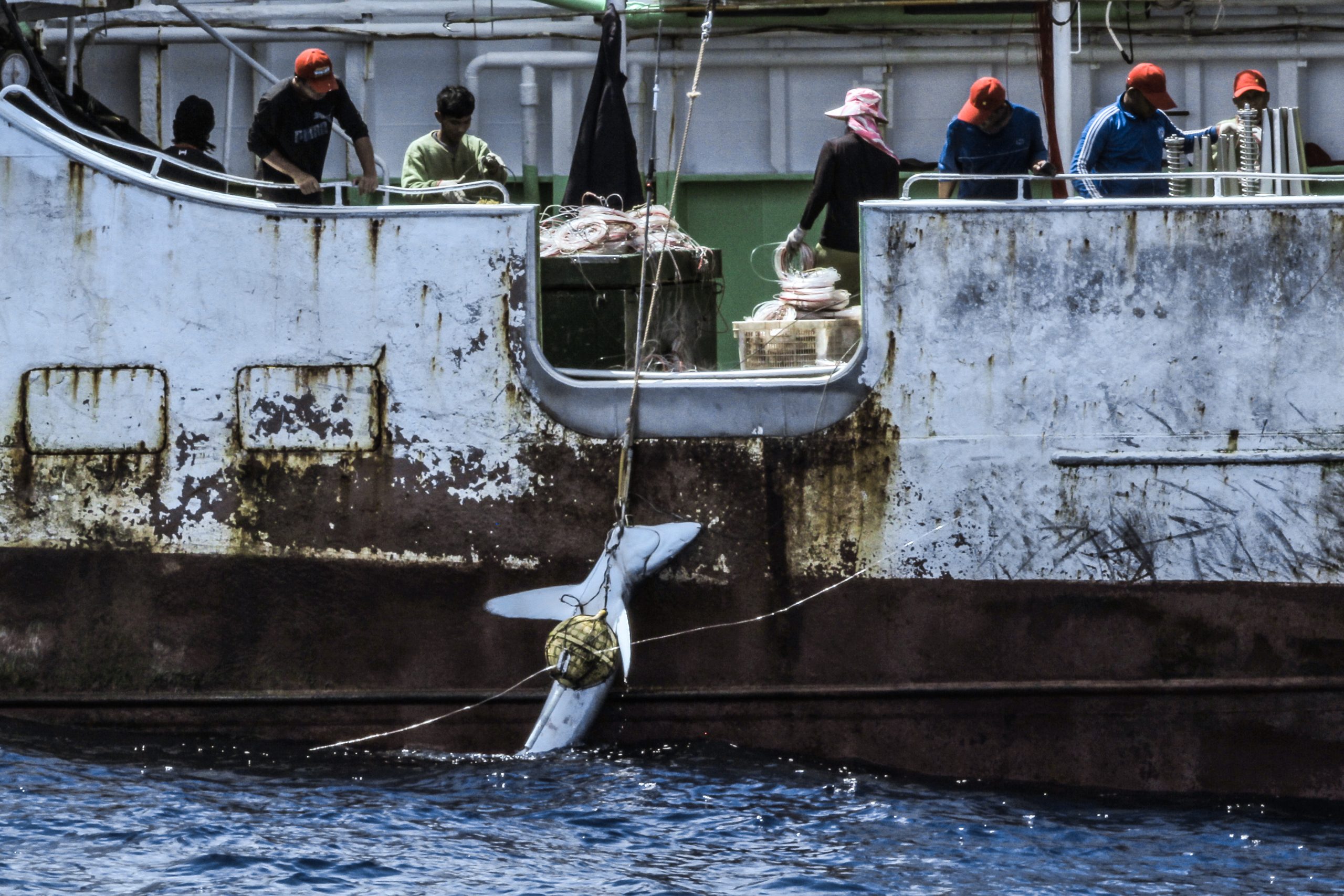
For labour abuse, transparency and traceability will be insufficient because they do not capture many of the dynamics that go ‘unseen’ like wage theft. They also will not capture dynamics like discrimination or incidents that happen off-vessel, like debt to job recruiters. Risk-based approaches for labour abuse will need continual refinement to overcome known data limitations and biases. Working closely with fishers is critical to producing better data and developing a more attuned understanding of risks.
In addition, greater efforts are needed to test assumptions underpinning risk-based approaches, find ways to detect abuse, and more consistently assess how risk manifests across the wide range of geographies and vessels where it is occurring. A risk-based approach can encourage actions that raise the floor, creating new norms that do not allow poor practices to continue to be acceptable, and complementing efforts focused on detecting problematic vessels.
Measures at port are crucial
Everyone has work to do. Acting on these risks is essential for governments to meet multiple UN Sustainable Development Goals and for major fishing companies to live up to their public commitments to remove labour abuses and IUU fishing from their supply chains.
Actions at port offer promise in helping to reduce risks. Ports are one of the few places to identify and respond to labour abuse. They are the easiest places to inspect and enforce the laws that govern labour abuses and IUU fishing, and they provide greater safeguards for labour inspections and allow for workers to connect to welfare services.
To evaluate how measures at port could play a role in reducing these practices, our research examined different aspects of vessel behaviour. For labour abuse, we analysed how long vessels registered or flagged to different countries remain in port. Those registered to countries with higher levels of corruption spent the shortest times in port. Short times in port mean fishers have less opportunity to disembark or access port services where they could report on their condition, and authorities have less time to find appropriate translators and conduct thorough inspections.
Our findings suggest several pathways for governments and companies to make a difference through individual and coordinated actions. Governments can establish greater transparency and accountability at port. To address IUU fishing, they can ratify the Port State Measures Agreement, an international treaty that is designed to prevent IUU fishing vessels from using ports and landing their catches. It does this by implementing aligned measures, standardising inspection criteria, mandating information sharing, and refusing port entry to vessels known to be associated with IUU fishing.
For labour abuse, they can establish or strengthen legally binding measures that guarantee protections for workers, promote interventions that bring greater visibility to workers in port, and ensure sufficient time and immigration conditions that allow workers to access ports and their services. They can also develop capacity for quality labour inspections and create legal and regulatory frameworks that provide clear recourse for fishers who have complaints, including ratifying the Work in Fishing Convention (ILO 188), an international labour standards for fishers.
At the same time, companies can focus on understanding their sourcing and improving assurance, confirming with high confidence what is actually happening in their supply chains. When seafood comes from higher-risk places or fleets, they can implement additional due diligence measures to ensure that they are not associated with labour abuse or IUU fishing. Until there is wider ratification of ILO 188 across flag states, companies can impose or reinforce standards analogous to it, including standardising contracts and establishing systems that track whether contract and payment terms are honoured. These systems should be part of wider collective bargaining agreements or social responsibility programmes that are worker-driven, enforcement-focused, and backed up by legally binding obligations.
Government and companies coordination
Although their respective actions are critical, governments and companies must also work collectively to reinforce their individual actions and to coordinate and co-develop solutions with key stakeholders. For example, voluntary company actions alone will not provide remedy or accountability. Governments need to codify standards into law and enforce them.
In addition, both governments and companies will need to collaborate with workers on any policies or solutions that affect them, so that they meet worker needs. Solutions will also need to be designed to avoid unintended consequences that allow those engaged in illegal activities to shift to another location or company. By leveraging their unique strengths and working together, governments and companies can make headway on tackling labour abuse and IUU fishing.