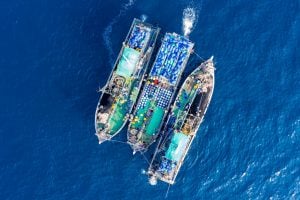
Each year, governments around the world give billions of dollars to their fishing sectors. These public funds – around USD 35.4 billion annually, according to 2018 estimates – pay for everything from building ports to research and development.
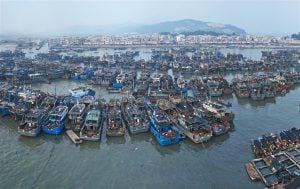
Some subsidies can be beneficial, for example by promoting conservation. Others are classified as harmful because they promote overcapacity (too many vessels chasing the same fish) and overfishing. Subsidising fuel for long-distance fishing, for example, supports excessive fishing that overexploits both fish populations and fuel, the latter leading to more greenhouse gas emissions. Worryingly, harmful subsidies make up the bulk of fisheries subsidies.
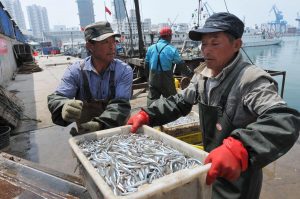
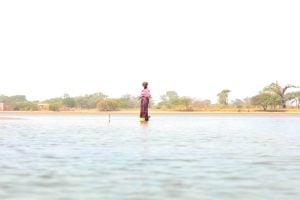
Fishery subsidies currently perpetuate social injustice too. Over 90% of the world’s fishers work in the small-scale fishing sector, predominantly in developing countries where average income is below the World Bank’s extreme poverty threshold, such as the Democratic Republic of the Congo and Tuvalu. However, the majority of subsidies go to large, industrial fisheries – around 80% according to the most recent estimates.
This injustice is compounded by the fact that while harmful subsidies mainly originate from nations that score highly on the Human Development Index, in other words rich countries, they have a disproportionate impact on low or very-low HDI nations.
What is the Human Development Index?
HDI is a UN ranking of countries based on per-capita GDP, life expectancy and educational level
When unsustainable practices are carried out by industrial fleets, the sheer scale of the resulting damage depletes the fish populations that are crucial to coastal, small-scale fisheries. Therefore, subsidising industrial fleets can contribute to harming marine ecosystems, human livelihoods, food security and the socioeconomic wellbeing of coastal fishing communities.
These low-HDI nations already tend to have low management capacity and a larger number of vulnerable fish populations, and may also face pressure from the distant-water fleets of a handful of rich governments.
Progress and setbacks at international level
Despite widespread recognition that harmful fisheries subsidies must be removed to ensure sustainable fisheries, efforts to counter this situation are stalling. The most recent international negotiations on such subsidies, held in February 2024 under the auspices of the World Trade Organisation (WTO), were a major disappointment.
In 2022, WTO members took the historic step of agreeing to prohibit subsidies that facilitate illegal, unreported and unregulated (IUU) fishing, the exploitation of overfished populations, and fishing on the high seas. By contrast, this year’s negotiations failed to produce a second set of broader rules to ban subsidies that contribute more generally to overcapacity and overfishing.
In addition to this setback, the 2022 agreement has only been ratified by 71 WTO members as of March 2024; to come into force, it requires 110. So, many governments continue to subsidise the overexploitation of our oceans and the injustices this produces.

A fairer way forward
Our group at the University of British Columbia has been studying both the amount and the effects of different types of fisheries subsidies since the early 2000s. Recently, we looked at the 30 least developed coastal countries and asked: how much current poverty among fishers could be eliminated by redirecting harmful subsidies?
We found that the average income of fishers in these 30 countries fell far below the World Bank’s extreme poverty benchmark of USD 1.90 per person per day. Put simply, the average fisher does not have enough money to support their basic living needs. This risks the wellbeing of their household and community.
The fisheries world finds itself in a situation where governments are subsidising environmentally damaging fishing practices, while coastal fishing communities are living in abject poverty: the latter is bearing the brunt of resource overexploitation.
The average fisher does not have enough money to support their basic living needs
Clearly, governments are not putting the public’s money in the right place. Would it not make sense if, instead of funding overfishing, governments put those same funds towards alleviating fishers’ poverty?
Our work shows it would cost approximately USD 2.65 billion per year to eliminate extreme poverty among fishers in the world’s 30 least-developed coastal nations. Together, these 30 countries provided USD 850 million in harmful fisheries subsidies in 2018. But in 11 of these countries, the amount spent on harmful fisheries subsidies would also be enough to lift their fishers out of extreme poverty. This implies these nations hold in their own hands the means to begin mitigating this situation.
The right thing to do
Redirecting harmful fisheries subsidies towards alleviating poverty in coastal fishing communities is worth considering because it could achieve a double benefit: to both biodiversity and human society. It could even be a way to bypass the WTO’s stalled negotiations; and no one country would be at a disadvantage, because each would simply be redirecting state subsidies.
In terms of the UN’s Sustainable Development Goals, such redirections would contribute directly to several: goal 14.6, the (overdue) target of eliminating many harmful fisheries subsidies by 2020; goal 1, zero poverty; and goal 2, zero hunger.
Many details need to be ironed out before this change could be implemented. What mechanism could be used to transfer money, and who would be eligible to receive it, are just two of the critical questions.
Nonetheless, there are numerous pre-existing national and international social assistance programmes that could serve as a model. The argument for a basic income, which centres on the same principle of providing a minimum level of income to a subset of a country’s total population, has gained momentum in recent years – especially since the Covid-19 pandemic began. For instance, Spain and Togo provided a minimum income level to poor and vulnerable people in response to pandemic-induced economic turmoil.
Ending harmful subsidies could do more than ending the damage of unsustainable fishing practices. It could also lift fishers out of extreme poverty and bring about social, human health and environmental gains.