The importance of tackling plastic pollution was one of the key messages British Prime Minister Theresa May wanted to deliver to President Xi Jinping during her visit to China last week.
On May’s visit, her first to China, she reportedly pressed Xi to do more to address the scourge of plastic waste at their meeting in Beijing. The message was reinforced by a carefully chosen gift: a box-set of BBC nature series Blue Planet II, with a specially recorded message from naturalist Sir David Attenborough.
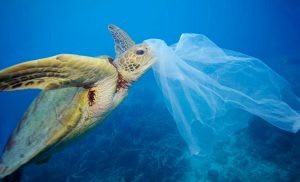
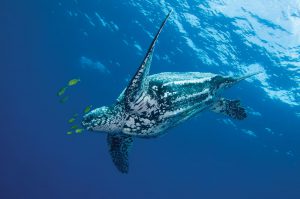
In 2017, the TV series was lauded for raising public awareness of ocean plastic pollution, specifically the destruction of marine life from industrial pollution and microplastics.
According to a Downing Street spokesperson, May told Xi that, “The world has a collective responsibility to tackle plastic pollution on behalf of future generations.”
She pointed to the work being done in China to remove plastic particles from the Yangtze River to stem their harmful flow into the ocean.
Xi and May also discussed a shared commitment to protecting the environment, including their support for the Paris climate change agreement and determination to tackle the ivory and illegal wildlife trades, according to a spokesperson.
In China, official news coverage of the meeting from Xinhua reported comments from the Chinese leader on tackling common challenges, although there was no specific mention about plastic waste.
“The two countries should enhance cooperation under multilateral mechanisms, including United Nations, Group of 20, and World Trade Organisation, and find solutions for global challenges, such as climate change,” Xi said.
Working together
One reason behind the lukewarm response from China may be the “lack of basis for bilateral cooperation” on plastic waste between the two countries, according to Mao Da, a senior researcher at the Rock Environment and Energy Institute in Beijing.
China’s ban on foreign waste imports, including plastics, paper, textiles, and some types of metal, came into effect in January. A side effect has been to sever ties between Chinese and foreign companies that deal in plastic waste, according to Mao, who has campaigned for a zero-waste agenda.
Nonetheless, the UK is likely to push engagement with China toward reaching a global deal to tackle ocean plastic pollution, referring to a United Nations resolution that is dedicated to achieving this.
The UK committed to significantly reduce, and where possible prevent, several kinds of marine plastic pollution, particularly land-based sources, in its recently released 25-year Environmental Plan.
However, environmental campaigners claim the plan does not go far enough because its 2050 target date is too far away. Also, it omits deposit return schemes that pay consumers to return plastic waste.
Some countries, led by Norway, have pushed for a more robust and binding international treaty to end marine plastic pollution.
“Xi Jinping is increasingly willing to put China in a leader position when it comes to global environmental governance, as in the case of the Paris climate accord,” said Mao.
“Similarly, if a robust international treaty on ocean plastic waste is to be reached, China’s active participation will be indispensable,” he said.
Plastic policy
China overtook Europe as the world’s largest plastics producer in 2011. Until last year, it was also the world’s biggest importer and recycler of scrap plastics. As the biggest producer of plastic waste, China’s role is being closely watched. Its stance in such negotiations is also influenced by other major developing countries, such as India.
China’s international reputation is now linked to its plastic policy at home. However, the massive challenge of curbing plastic pollution domestically may hinder China’s ability to play a more proactive role internationally.
Numerous small-scale recycling businesses in China, many of which are simple family workshops, have released toxic waste into the soil, air and water supply, prompting the authorities to ban waste imports. While this will deal a heavy blow to domestic recyclers, in the long run the shift could optimise the recycling industry, hope China’s rulers.
China’s National Development and Reform Commission is drafting new regulations to limit or replace use of plastics in manufacturing supply chains, as part of the country’s shift toward a circular economy – an economy where waste becomes a valuable input into new products. Yet China’s monitoring of plastics is still weak, posing challenges for policymakers, according to Mao.
The new digital economy has seen consumption of single use plastics soar due to massive demand for parcel packaging and food delivery through e-commerce businesses. This has added pressure to China’s waste disposal sector. For instance, in 2016 alone, a total of 14.7 billion plastic bags were used in packages from online shopping.
The need for better research on the impacts of microplastics on water systems is also pressing. Researchers at the Chinese Academy of Sciences say a major gap still exists between knowledge of the problem and effective management.