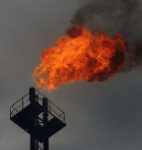
In northern China it is now the middle of the autumn planting season, and once again the farmers are burning off the crop stubble left after the harvest. The highways that run through the fields are covered in smoke, which seeps in through closed windows and can reduce visibility to half a kilometre. It gets worse at night; crop fires are illegal, so the farmers wait till it gets dark to avoid getting caught. However, you were unlikely to see this a decade ago.
When Qufu held its International Confucius Culture Festival the local government cracked down on the stubble burning to avoid the embarrassment of smoke veiling the proceedings. The authorities threatened fines of 4,000 yuan (US$532) and 15 days detention for farmers caught flouting the ban. But even that failed to stop the practice. Local farmers ended up playing a 24-hour game of cat and mouse with the authorities, waiting until the police had ceased their patrols to start burning the crop stubble.
So why are the farmers so determined to burn off their leftover straw? Because there is nothing else to do with it. In the past the straw was used as fuel, but now farmers are more affluent and burn coal or natural gas. At one time it could also have been used to feed draught animals, but now they have been replaced with tractors. The government has promoted the use of straw in methane production, but to date only 0.5% of China’s total 600 to 700 tonnes of straw produced annually is used to make the gas. Ideally it could feed livestock, but the cost of storing straw and the livestock itself makes this unfeasible. Even if you fed the entire nation’s herds with straw, there would still be a lot left over. One could increase the number of ruminants, but China’s straw is scattered around the country and the cost of collecting and transporting it is high. If farmers cannot make a decent profit from it (and they no longer care about earning a few yuan here and there) it will be burnt off to prevent it getting in the way of other work.
According to Science Times, 100 million tonnes of straw were burnt off in the provinces of Shandong, Henan and Hebei alone this year. But what exactly is China burning?
First of all, China is burning its beef. The country produces 480 million tonnes of grain every year; 180 million tonnes of this is eaten directly by humans; 120 million tonnes is used to feed cattle; the remainder is used as pig fodder. China no longer needs to worry about its grain supply – it is the supply of meat and milk that is under pressure. The country’s straw production could support between 180 and 210 million tonnes of livestock; assuming that 40% of that is meat and one kilogram of meat is equivalent to five of grain, that represents 360 to 420 million tonnes of grain. China currently uses huge quantities of fertiliser, pesticide, herbicide, insecticide, water, agricultural membrane and genetically-modified organisms to ensure its food security. But there is little scope to increase production. Making use of all the country’s wasted straw would be a significant step towards making its food supply secure.
China is also burning manure for fertiliser. A crop of wheat requires 200 tonnes of fertiliser per mu of land (667 square metres).However, if that straw can be converted into manure by feeding it to livestock and using it as fertiliser, we can cut down on the quantities of chemical fertiliser and water used, thus reducing costs. Cows and sheep can produce massive quantities of organic fertiliser; half of national straw production could therefore produce organic fertiliser equivalent to the total national demand for chemical fertiliser (33.9 million tonnes).
Thirdly, China is burning an energy source. Technologies have been fully developed to produce electricity from methane gas. Using straw to feed livestock, and the manure to produce power and fertiliser, would massively reduce the reliance of agriculture on traditional sources of energy and reduce the impact of global warming. Methane energy generation only releases carbon dioxide that was recently fixed from the atmosphere by the straw used in its production; it is thus effectively carbon neutral. Technical developments would allow methane to replace natural gas and power China’s rural industrialisation: our farms are natural gas factories waiting to be realised.
Crucially then, the scientific use of straw can increase rural incomes and do away with the problems caused by straw burning. Farmers in India do not burn straw – and have not for thousands of years – as the cows, which Hindus see as sacred, need it as a source of food. It is clearly a resource with huge potential, and a major issue in rural development. Society needs to take a strategic and realistic view of the situation; the authorities should establish an office to determine the use of straw and organise research on environmentally friendly agriculture. Trials should be established, and successful practice must be popularised. Perhaps then we can see some improvement. For now, we are still waiting for the smoke to clear.
Jiang Gaoming is a professor at the Chinese Academy of Sciences’ Institute of Botany. He is also vice secretary-general of the UNESCO China-MAB (Man and the Biosphere) Committee and a member of the UNESCO MAB Urban Group.