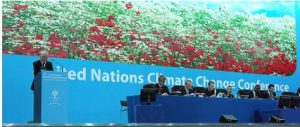
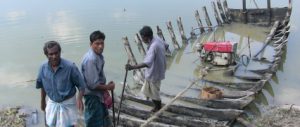
Ahead of the United Nations Climate Change Conference (COP14) in Poznan, Poland, last month, the international environmental group Greenpeace set up a “Climate Rescue Station” at an open-pit coal mine in Konin, about 100 kilometres away. Greenpeace used a range of methods to declare war on climate change and one of its main causes, the burning of coal. The activists called for the world to act — to cut down on coal use to protect the earth’s climate. I, a Chinese volunteer, witnessed and participated in those events, alongside other volunteers from around the world.
The events in Poland, set against the background of global climate change, were of particular significance for me. I can use three words to sum up those twenty days: Excitement, worry and regret.
Excitement, because being from Beijing I had never before seen any kind of resistance or protest. I had always been taught that it is better to sit and talk than to stand and act. In Poland, I had the chance to act at last. The Greenpeace events were more stimulating than most activities by other organisations, even taking on a ritual significance that was easy to get caught up in.
Climate change is happening now, and I finally had the chance to help. Part of the excitement came from finally acting on a long-standing sense of mission. If – and I mean if – worse comes to worse, if climate change accelerates and the oceans rise, I will be able to face our angry children and grandchildren and say that I did not just stand and watch — that I tried to do something, even if I was not successful.
Worry, because I was that concerned I might be arrested for my part in the protest and acquire a criminal record preventing me from returning to Europe. Although I took the risk, those concerns remained with me.
And regret, as I often did not join other volunteers on the very front line. I tended to maintain a safe distance from any “conflict” and did not do a great deal. My identity meant I had to choose to be an observer.
Many environmental NGOs were involved in December’s events in Poland, both through attending the conference and by direct action. It is hard to say which is more effective; the tactics have different aims, with the conference being about debate, and the protest about disruption. Although the main players at the conference were the national government representatives, international NGOs also had a major role. I do not believe a government can represent all its citizens, and those who are overlooked also must be heard. NGOs allow those voices to speak, and hence their presence made the conference more complete and took more people’s views into consideration.
I was one of the participants in the direct action – or disruption – at Konin. Most of our actions were reported in Poland as front-page news. Every day, visitors from around the world came to see the “Climate Rescue Station” – from the elderly to elementary-school students, and nearly a hundred journalists visited our camp. I believe that all of this serves as publicity and education. It will be remembered. It will mean that more people are aware of and concerned about the grave threat of climate change, and therefore attempts to rescue the climate have a greater chance of success.
I think, too, that many young urban Chinese – a group I belong to – have little awareness of climate change. It is not a matter of concern for them. Whether or not it exists, climate change is distant from their lives. I can understand that they are more concerned with practical issues like today’s consumer prices and unemployment rates than with disasters that may happen decades in the future.
But I have never been a practical person. My hero is the Spanish literary character Don Quixote and I am interested in “impractical” issues. I believe that the invisible process of climate change and the economic crisis enveloping us are equally important. But while the economic crisis eventually will pass, climate change may not be reversible. I believe that climate change is an incredibly urgent issue, a matter of life and death both for humanity and other forms of life. If we do not take action, if we allow the concentration of greenhouse gases to continue to increase, we will deserve the abuse that future generations will heap upon us.
The failure to move forward at Poznan left me disappointed. It will not be easy to achieve greater success at the talks Copenhagen (COP15) in December 2009, but I still have hope. I hope that my country and others can discuss real action to reduce greenhouse-gas emissions. I hope that all nations abandon their nonsensical excuses and sit down together and produce solutions. I hope these nations will accept their responsibilities, and not become an embarrassment to their own citizens. Otherwise, it will be those citizens who pay the price of government inaction.
What is your view on the outcome of the Poznan conference? What expectations do you have for COP15 in Copenhagen in December? Can the world come up with the necessary post-Kyoto climate agreement in 2009?
Share your ideas with us on the forum!
Yuan Weijian is a freelance writer with a long-term interest in climate change.
Homepage photo by Greenpeace/Will Rose