Food

What’s the next Silent Spring?

If Rachel Carson, author of the groundbreaking expose on pesticides, were alive today, what environmental crisis would she expose?
English
It’s 50 years since US author Rachel Carson wrote her groundbreaking book Silent Spring, an expose on the dangerous impact of pesticides used in farming on wildlife and our own health.
 
At the time she was ridiculed, hounded and unfairly criticised. But in the end her message proved too strong and has been widely credited for the US ban on the pesticide DDT.
 
As environmentalists applaud her legacy, an interesting question to ask is, if she was still alive today what subject would she be writing about it? What environmental issue is being underplayed or ignored by policymakers and industry?
 
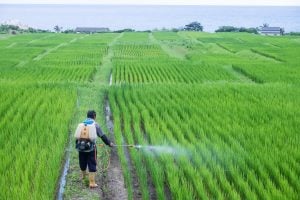
Despite the success of her book, the overuse and misuse of pesticides around the world is still a major problem. In a disturbing report on pesticide use in China, a local environmental official explained that "if the guidelines say to use one bottle cap’s worth of pesticide, the farmers will use three, just to be sure."
 
There is more scientific knowledge today about the impact of environmental toxins, including pesticides, on our health. But campaigners are still calling for more action to tackle issues like mercury poisoning from coal-fired power stations and bishenol-A (BPA), a chemical used in a number of everyday plastics.
 
In 2010, a report from the US president’s Cancer Panel said the number of cancers caused by our growing exposure to environmental toxins had been "grossly underestimated". Biologist Sandra Steingraber who produced a film on the issue, still says there’s a "taboo about telling industry and agriculture that practices must change to prevent cancer".
 
In terms of human health, there are also growing concerns about the overuse of antibiotics in animal agriculture and human health. Health experts fear that some types of intensive farming (seen as essential for increasing meat consumption), particularly pig and poultry units, have become too dependent on sub-therapeutic doses of antibiotics designed to promote animal growth. The result is the spread of antibiotic-resistance and potentially, new superbugs that are untreatable with existing antibiotics.
 
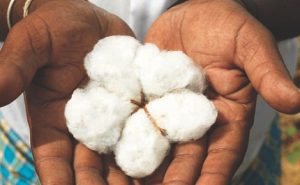
More recently, there has been a study suggesting GM crops can cause health damage in rats, though claims about harmful impacts on humans are as yet unproven. 
 
However, the biggest challenge faced by humans is something largely unknown half a century ago, namely climate change and the impacts of rising levels of greenhouse gases. What for example, will be the implications of an ice-free Arctic or the release of methane emissions from melting icecaps and runaway climate change
 
The failure of the major polluting countries to agree to reduce carbon emissions and tackle climate change is probably the biggest silence of all.
 

Cookies Settings

Dialogue Earth uses cookies to provide you with the best user experience possible. Cookie information is stored in your browser. It allows us to recognise you when you return to Dialogue Earth and helps us to understand which sections of the website you find useful.

Required Cookies

Required Cookies should be enabled at all times so that we can save your preferences for cookie settings.

Dialogue Earth - Dialogue Earth is an independent organisation dedicated to promoting a common understanding of the world's urgent environmental challenges. Read our privacy policy.

Cloudflare - Cloudflare is a service used for the purposes of increasing the security and performance of web sites and services. Read Cloudflare's privacy policy and terms of service.

Functional Cookies

Dialogue Earth uses several functional cookies to collect anonymous information such as the number of site visitors and the most popular pages. Keeping these cookies enabled helps us to improve our website.

Google Analytics - The Google Analytics cookies are used to gather anonymous information about how you use our websites. We use this information to improve our sites and report on the reach of our content. Read Google's privacy policy and terms of service.

Advertising Cookies

This website uses the following additional cookies:

Google Inc. - Google operates Google Ads, Display & Video 360, and Google Ad Manager. These services allow advertisers to plan, execute and analyze marketing programs with greater ease and efficiency, while enabling publishers to maximize their returns from online advertising. Note that you may see cookies placed by Google for advertising, including the opt out cookie, under the Google.com or DoubleClick.net domains.

Twitter - Twitter is a real-time information network that connects you to the latest stories, ideas, opinions and news about what you find interesting. Simply find the accounts you find compelling and follow the conversations.

Facebook Inc. - Facebook is an online social networking service. China Dialogue aims to help guide our readers to content that they are interested in, so they can continue to read more of what they enjoy. If you are a social media user, then we are able to do this through a pixel provided by Facebook, which allows Facebook to place cookies on your web browser. For example, when a Facebook user returns to Facebook from our site, Facebook can identify them as part of a group of China Dialogue readers, and deliver them marketing messages from us, i.e. more of our content on biodiversity. Data that can be obtained through this is limited to the URL of the pages that have been visited and the limited information a browser might pass on, such as its IP address. In addition to the cookie controls that we mentioned above, if you are a Facebook user you can opt out by following this link.

Linkedin - LinkedIn is a business- and employment-oriented social networking service that operates via websites and mobile apps.