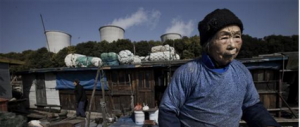
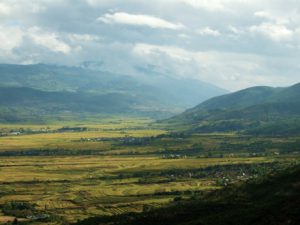
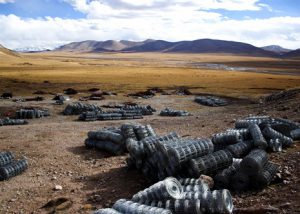
Hopeful is a film about how Chinese NGO Friends of Nature and a group of lawyers from the American Bar Association have come together to fight for justice for the village of Xinglong in southern China. The legal case, due to be decided in the next few months, accuses a factory of dumping 5,000 tonnes of chomium 6 into a nearby reservoir, causing cancer rates in the village to soar.
We spoke to director Jonah Kessel to find out a little bit more about the film.
How did you come across the story and what motivated you to write about this particular story?
I try to dedicate my time and involve myself with projects that have an ethical backbone. At the same time, I want everything I do to have a bit of a cinematic feel. We live in an over saturated media environment and people are just numb to dull or repetitive content. So my goal is always to try to reach an audience who might not normally tune in to this type of content. Often times, this means trying to make a boring thing interesting.
So when Friends of Nature and the American Bar Association approached me about this project I was excited because they gave me full creative freedom to try to make a traditionally non-visual topic (environmental legal reform) into a format that would be interesting topically and to our modern visual aesthetic. When topics like this come along, stories that I feel are important to let people know about, the topic and film become the priority, and money becomes secondary.
What’s your take on environmental progress and consciousness in China today?
China’s Machiavellian approach to economic development has come at a heavy price in terms of the environment. However, after working with Friends of Nature and a number of other NGOs in China, its clear to me that younger generations won’t stand for environmental crimes like their parents did. Between pressure from the outside world and this new generation of Chinese coming of age, an improved environmental consciousness and environmental legal reform are on the way. And while change doesn’t happen overnight, there are clear signs of hope for China’s environment. At the same time, there is a tremendous amount of damage to repair and some difficult issues that the state must confront.
See also: China’s new leaders must respect environmental rights, or face crisis
What audience did you have in mind when you made this film?
Our target audience for this film is actually other Chinese NGOs and grassroots environmental organisations in China. We wanted to show that even ordinary people can stand up to environmental criminals and this amendment to the law gives them the power to do so, in an official way. We also wanted to show that change happens, not from individuals actions, but from the actions of many. In this case, lawyers, NGO workers and scientists are working together.
However, I think the message here goes beyond just NGOs and beyond China. Creating a sustainable future for our planet means everyone needs to be involved. This might come in the form or information availability, transparency or more active roles, like Chang Cheng is playing in this film — but regardless, its everyone’s responsibility. In that sense our audience is everyone.
Have you had any feedback yet on the film?
The film actually hasn’t been "officially" released. This is kind of a soft release to the English language audience, but our primary Chinese audience hasn’t seen it yet. Friends of Nature will release it online (on Chinese hosted sites) before the end of the year. However, our initial feedback from the few who have seen it has been very positive, so its a good sign off the bat. I hope we can circulate this to as many people as possible — the first step in creating meaningful change is simply letting people know what’s going on.
Jonah Kessel is a multimedia journalist based in Beijing and working for the New York Times. His film ‘Hopeful’ is in Chinese but with English subtitles and available to watch on vimeo.