Pollution

Why should soil pollution data be kept a “state secret”?

The Ministry of Environmental Protection (MEP) has refused Beijing lawyer Dong Zhengwei’s request for soil pollution data – claiming the data is a “state secret.”
English
In late January this year, Beijing lawyer Dong Zhengwei submitted two freedom of information requests to the Ministry of Environmental Protection (MEP), asking for the methodology used and data collected during a nationwide survey of soil pollution, and for details of the sources of soil pollution and measures being taken to prevent it. 
 
On February 24 the MEP provided this information — except for the data collected during the survey, which is described as a “state secret”.
 
Dong does not believe the MEP has adequate reasons to do this. He wrote on his blog that the 10th article of China’s open information regulations requires governments at county-level and above to proactively disclose information. And according to the 11th article, information on environmental protection, monitoring and surveys are key areas for disclosure. Soil pollution data should, therefore, be disclosed. 
 
Dong said that “the 9th article of the Law on Guarding State Secrets does not explicitly list environmental information as a type of state secret. If it is to be regarded as a state secret, confirmation is required from the appropriate level of the National Administration for the Protection of State Secrets.” The MEP’s reply included no such confirmation. 
 
He told chinadialogue that the refusal was probably due to the fact that pollution is severe, hard to manage and will upset the public. Soil pollution can impact the human body via food, groundwater and the air, affecting human health and homes – the public should have the right to know and supervise. 
 
China’s soil pollution problem is both chronic and severe. As early as 2006, the State Environmental Protection Agency (later the MEP) and the Ministry of Land invested one billion yuan in a nationwide survey of the issue. According to the newspaper Southern Weekend, that study took four years, but despite eager media anticipation, none of the gathered data has been released. 
 
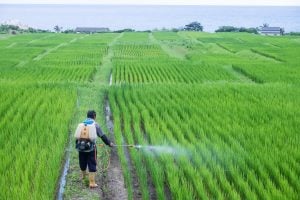
China’s soil pollutants come mostly from agricultural chemicals; heavy metals such as cadmium, arsenic and mercury released by mines; and oil and fuel. Soil pollution can spread to food and water – something that was brought to public attention in 2011, when Caixin.com published a report on cadmium-contaminated rice, and the Yunnan Information Daily covered river pollution from dumped chromium. 
 
Ma Jun, director of the Institute for Public and Environmental Affairs, told Legal Daily that soil pollution data is a sensitive matter, and that the MEP could adopt the same method used with PM 2.5 data – partial publication and explanations, backed up with measures to improve things. 
 
Dong himself has already applied for a reconsideration of the decision, in the hope that the data will yet be disclosed.  
Cookies Settings

Dialogue Earth uses cookies to provide you with the best user experience possible. Cookie information is stored in your browser. It allows us to recognise you when you return to Dialogue Earth and helps us to understand which sections of the website you find useful.

Required Cookies

Required Cookies should be enabled at all times so that we can save your preferences for cookie settings.

Dialogue Earth - Dialogue Earth is an independent organisation dedicated to promoting a common understanding of the world's urgent environmental challenges. Read our privacy policy.

Cloudflare - Cloudflare is a service used for the purposes of increasing the security and performance of web sites and services. Read Cloudflare's privacy policy and terms of service.

Functional Cookies

Dialogue Earth uses several functional cookies to collect anonymous information such as the number of site visitors and the most popular pages. Keeping these cookies enabled helps us to improve our website.

Google Analytics - The Google Analytics cookies are used to gather anonymous information about how you use our websites. We use this information to improve our sites and report on the reach of our content. Read Google's privacy policy and terms of service.

Advertising Cookies

This website uses the following additional cookies:

Google Inc. - Google operates Google Ads, Display & Video 360, and Google Ad Manager. These services allow advertisers to plan, execute and analyze marketing programs with greater ease and efficiency, while enabling publishers to maximize their returns from online advertising. Note that you may see cookies placed by Google for advertising, including the opt out cookie, under the Google.com or DoubleClick.net domains.

Twitter - Twitter is a real-time information network that connects you to the latest stories, ideas, opinions and news about what you find interesting. Simply find the accounts you find compelling and follow the conversations.

Facebook Inc. - Facebook is an online social networking service. China Dialogue aims to help guide our readers to content that they are interested in, so they can continue to read more of what they enjoy. If you are a social media user, then we are able to do this through a pixel provided by Facebook, which allows Facebook to place cookies on your web browser. For example, when a Facebook user returns to Facebook from our site, Facebook can identify them as part of a group of China Dialogue readers, and deliver them marketing messages from us, i.e. more of our content on biodiversity. Data that can be obtained through this is limited to the URL of the pages that have been visited and the limited information a browser might pass on, such as its IP address. In addition to the cookie controls that we mentioned above, if you are a Facebook user you can opt out by following this link.

Linkedin - LinkedIn is a business- and employment-oriented social networking service that operates via websites and mobile apps.