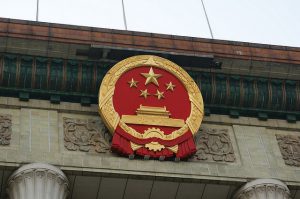
China’s outgoing premier Wen Jiabao vowed that the government would solve the country’s ever-worsening pollution in his final work report yesterday as he opened the annual session of parliament.
But coming amid rising public concern about China’s air, water and soil quality, Wen’s environmental exhortations met with a mixed reception.
Addressing the 3,000 or so representatives gathered for the annual meeting of the National People’s Congress, the premier, who is due to retire this month, said: “[the government] should be determined to solve pressing environmental problems closely related to the public interest, such as air pollution, water pollution and soil toxification.
“[The government] should comply with people’s great expectation for the environment and work hard to improve the construction of an eco-civilisation…Environmental issues affect public welfare, the future of our offspring and the whole nation.”
China’s official Communist Party newspaper People’s Daily praised the outgoing premier for being “straightforward with no empty words”. “The straightforward style brings about freshness rather than plainness,” it said.
While state-owned media rushed to praise Wen’s call to “let the people see the hope from our practical actions,” environmentalists were more cautious about the influence Wen’s words may have on future environmental policies.
“After listening to the premier’s report, I’m now most worried about environmental destruction in the name of building a Beautiful China and deforestation of wild woods in the name of afforestation,” veteran environmentalist Feng Yonfeng wrote on microblogging platform Sina weibo, the Chinese equivalent of Twitter.
chinadialogue’s Beijing editor Liu JIanqiang warned that if the people responsible for environmental destruction were to keep their jobs, then the future may look darker than Wen’s speech suggested.
“Under the premier’s leadership, China’s environment has rapidly deteriorated in the past 10 years and especially in the past five years. Why doesn’t the report show any gesture of apology?” he asked on weibo. “If the people responsible remain in office, then the promise to ‘let people see hope’ might become ‘let people see desperation’.”
Qiao Mu, a journalism professor from Beijing Foreign Studies University, was also pessimistic about the new government’s ability to tackle environmental issues. Qiao told chinadialogue: “Until China changes its current development model which uses GDP growth to measure officials’ performance, the pollution problem won’t be solved fundamentally.”
Others said they hoped to see more than promises on environmental issues and emphasised transparency as a tool for tackling pollution.
Yan Lan, one of China’s best-known female presenters, wrote on her microblog: “Premier Wen has mentioned severe air, water and soil pollution in the government work report. [It shows that] environmental issues now have impacts on public health and safety. According to the Ministry of Environment Protection’s 12th Five-Year plan, the quality of as much as 55% of groundwater in 200 Chinese cities is relatively bad or very bad.
"Groundwater pollution is more difficult to detect and ordinary people don’t know whether their health is endangered. Could we kickstart official transparency by releasing information about groundwater pollution? ”
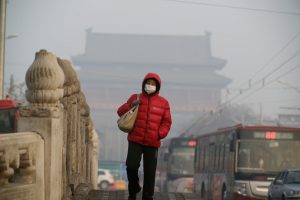
The words from Wen, who will be replaced by Li Keqiang as premier this month, have come amid a major pollution crisis. The recent smog affecting Beijing and much of northern China, and allegations of groundwater pollution caused by factories illegally pumping wastewater underground, have given environmental issues unprecedented profile in the lead up to the NPC’s annual session.